CURRENT AFFAIRS | 22 SEPTEMBER 2026
On 22 September 2026 the Ministry of Civil Aviation signed 21 Memoranda of Understanding with States and Union Territories to open the next ten-year phase of UDAN — Ude Desh ka Aam Naagrik, the Regional Connectivity Scheme. The agreements were tripartite in substance: the Ministry, the participating State or UT government, and the Airports Authority of India (AAI). At the same event the Ministry launched a “Challenge Mode” portal through which State governments and UT administrations can themselves nominate airstrips and helipads for development. The New Delhi signing was attended by Civil Aviation Minister Kinjarapu Rammohan Naidu, Minister of State Murlidhar Mohol, Secretary Samir Kumar Sinha and AAI Chairman Vipin Kumar.
Speaking at the ceremony, the Minister of State said the next phase aims to add 120 new destinations and to facilitate travel for an additional four crore passengers over ten years. Modified UDAN was described as resting on four pillars: affordability for passengers, sustainability of operations, a transparent Challenge Mode framework for project selection, and the promotion of indigenous manufacturing. Those details are as reported on the day by PTI wire copy; the scheme numbers used below come from the PIB Research backgrounder of 17 July 2026 and the Ministry’s own RCS-UDAN Manual on civilaviation.gov.in.
What exactly is “Modified UDAN”?
UDAN is not new. Per the PIB backgrounder, the Regional Connectivity Scheme — UDAN was launched in October 2016 as the central component of the National Civil Aviation Policy, 2016, the first such policy the Union Government had announced. The first UDAN flight, Shimla to Delhi, was flagged off in April 2017.
What was approved this year is a successor scheme. The Modified UDAN Scheme was launched on 4 July 2026 and runs for ten years, from FY 2026–27 to FY 2035–36, with a total outlay of ₹28,840 crore. Its components, as set out by PIB, are worth memorising because they are the kind of structured breakdown an examiner likes:
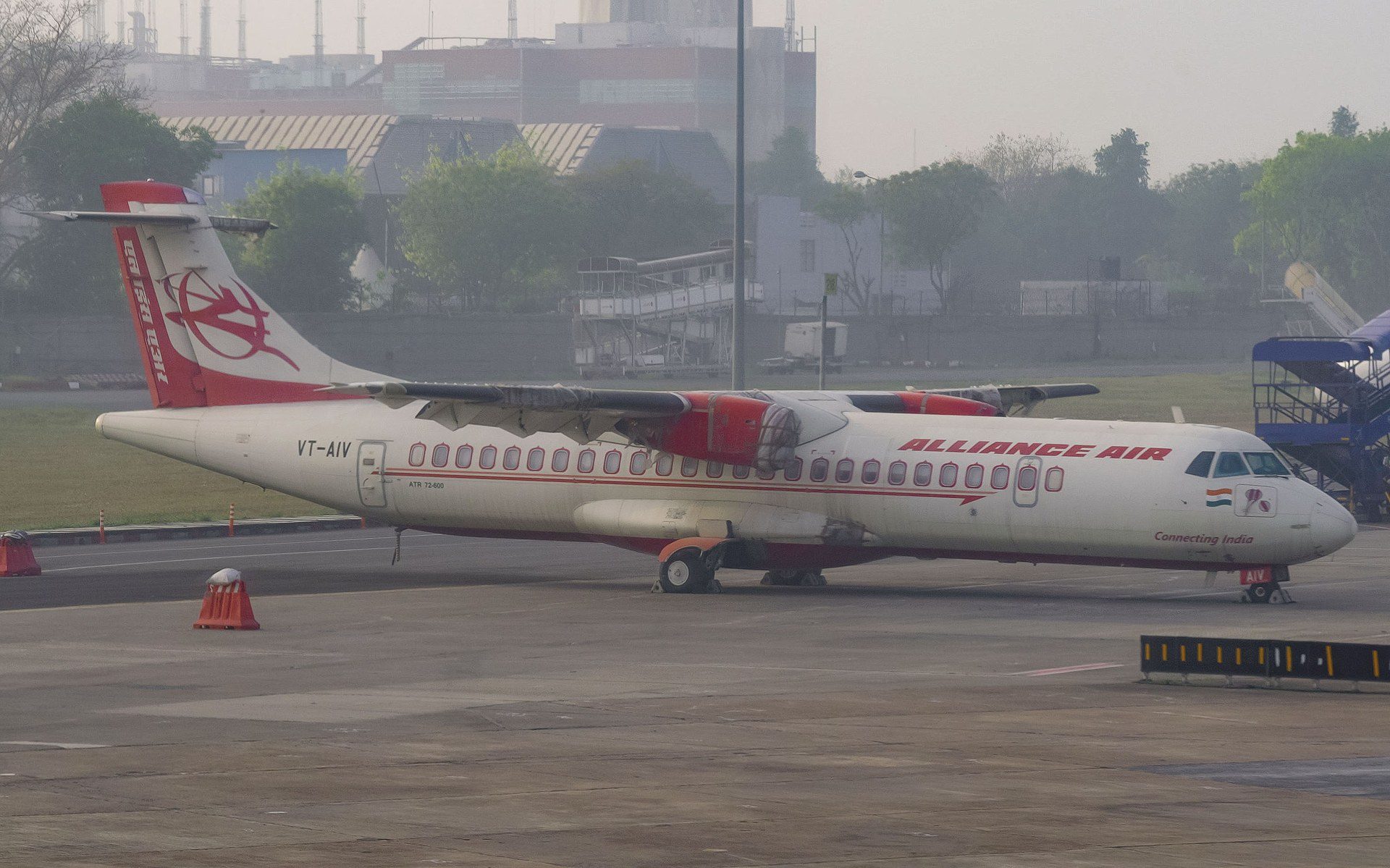
Development of aerodromes — 100 airports to be developed from existing unserved airstrips, with a proposed outlay of ₹12,159 crore over eight years. Modern helipads — 200 helipads at an estimated ₹15 crore each, totalling ₹3,661 crore. Viability Gap Funding — ₹10,043 crore over ten years, with support to an airline on a route for up to five years, a tapered funding mechanism beginning in the third year, and route exclusivity limited to three years. Operation and maintenance support — ₹2,577 crore, expected to support roughly 441 aerodromes for three years, capped at ₹3.06 crore per annum per airport and ₹0.90 crore per annum per heliport or water aerodrome. Finally, an Atmanirbhar Bharat component proposing two HAL Dhruv helicopters for Pawan Hans and two HAL Dornier aircraft for Alliance Air.
Note the trap. The figure ₹2,577 crore circulated in September as if it were the scheme’s outlay. It is not — it is the O&M sub-component alone, against a total of ₹28,840 crore. Reading a component figure as a headline figure is exactly the error a data question is built to catch.
Background & Framework
Civil aviation is a Union subject. Entry 29 of the Union List (List I, Seventh Schedule) covers “Airways; aircraft and air navigation; provision of aerodromes; regulation and organisation of air traffic and of aerodromes; provision for aeronautical education and training and regulation of such education and training provided by States and other agencies.” Entry 30 adds carriage of passengers and goods by railway, sea or air. Parliament therefore legislates here, and the Directorate General of Civil Aviation (DGCA) is the safety and licensing regulator while the Airports Authority of India owns and operates much of the airport estate.
The governing statute has changed. The Bharatiya Vayuyan Adhiniyam, 2024 (Act No. 16 of 2024) received the President’s assent on 11 December 2024; by its Section 43(1), “The Aircraft Act, 1934 is hereby repealed.” The new Act governs the design, manufacture, maintenance, possession, use, operation, sale, export and import of aircraft, and applies to Indian citizens and India-registered aircraft wherever they are, and to foreign-registered aircraft while in or over India.
Because aviation is a Union subject but land, VAT on aviation turbine fuel, security and utilities are State-controlled, delivery needs State cooperation. Hence the instrument used on 22 September is a Memorandum of Understanding, not a statute or a Centre-imposed direction — a textbook illustration of cooperative federalism.
How the scheme actually works
Four mechanisms carry UDAN, and each is examinable.
One: reverse bidding. The RCS-UDAN Manual describes a transparent, two-stage e-bidding process in which a route is awarded to the qualified operator quoting the lowest Viability Gap Funding per seat. Airlines, not the Government, propose the routes — a demand-driven design resting on the premise that an operator best knows which regional route fits its network.
Two: the fare cap. Airfare for an air distance of about 500 km (roughly one hour) on a fixed-wing aircraft, or a 30-minute helicopter journey, is capped at ₹2,500, indexed primarily to inflation, with proportionate pricing for other distances. Crucially, the cap applies only to 50 per cent of capacity — the “RCS seats”; the rest sells at market fares.
Three: the Regional Connectivity Fund (RCF). The National Civil Aviation Policy provided for a levy on flights, per departure, on domestic routes — excluding Category II/IIA routes, RCS routes themselves, and aircraft under 80 passenger seats. The proceeds go into the RCF and fund VGF. The Manual notes that large countries such as the United States, Canada, Brazil and Australia support regional connectivity through public funding; UDAN instead funds it from within the sector.
Four: non-monetary concessions. AAI levies no Terminal Navigation Landing Charges on RCS flights and permits self-ground-handling; States commit to reduced or waived VAT on ATF and to security, fire and utility services at concessional rates. VGF is allocated across five geographical regions — North, West, South, East and North-east — and capped annually per airline.
The CLAT Angle
This story is most likely to appear as a GK/Current Affairs passage with a set of factual and inferential questions: which Ministry, how many MoUs, what the Challenge Mode portal does, which Entry of which List covers air navigation. But it also supports a genuine legal-reasoning construction. A passage can state a principle — a subsidy is justified where a service produces public benefits that a private operator cannot capture in the fare — and then ask you to apply it: is VGF for a thinly-flown hill route justified? Is a fare cap on half the seats a price control or a targeted subsidy? Does a route exclusivity of three years create an impermissible monopoly, or is it the minimum needed to make entry rational?
Watch the vocabulary: viability gap funding, cross-subsidy, reverse auction, tapered support, cooperative federalism, unserved and underserved aerodrome. And note the critical question a passage may invite: a scheme financed by a levy on air travellers is a transfer from one set of flyers to another — is that a defensible way to fund a public purpose, or should it come from general taxation?
The record, and the honest tensions
The scheme’s achievements are substantial. As on 15 July 2026, PIB records 679 routes connecting 95 airports, heliports and water aerodromes, more than 3.58 lakh flights and over 1.68 crore passengers since launch. By the 22 September event, wire reports put the figures at 687 routes, 95 aerodromes, 3.66 lakh flights and 1.71 crore passengers. Over the same decade, India’s operational airports rose from 74 in 2014 to 165 as on 15 July 2026, and India is now the world’s third-largest domestic aviation market.
Two tensions deserve a student’s attention. First, the funding model. The Ministry’s own Manual records with some pride that UDAN “has not required any budgetary support from the Central Government”. Modified UDAN, with a ₹28,840 crore outlay, is a different proposition: infrastructure creation on this scale cannot be financed by a sectoral levy alone. The Manual also records what happened when the levy failed — during the COVID-19 suspension of scheduled operations in early 2020, the RCS levy could not be collected for over two months, creating financial constraints on the RCF. A levy-funded scheme is procyclical: it raises least when connectivity is most fragile.
Second, sustainability. The very existence of a three-year O&M window for roughly 441 aerodromes, and of tapered VGF that thins from the third year, is an admission that small aerodromes carry high recurring costs against thin revenue. Building a terminal is the easy part; keeping a daily flight on it is the hard part. Whether Challenge Mode — where States nominate the airstrips they want, and so stake their own credibility on the demand — improves that record is what this phase will be judged on.
Key Facts
- 21 MoUs signed on 22 September 2026 between the Ministry of Civil Aviation, participating States/UTs and the Airports Authority of India.
- A Challenge Mode portal was launched, letting States and UTs nominate airstrips and helipads for development.
- UDAN = Ude Desh ka Aam Naagrik; launched October 2016 under the National Civil Aviation Policy, 2016; first flight Shimla–Delhi, April 2017.
- Modified UDAN launched 4 July 2026; runs FY 2026–27 to FY 2035–36; total outlay ₹28,840 crore.
- Targets: 100 new airports (₹12,159 crore) and 200 modern helipads (₹15 crore each; ₹3,661 crore).
- VGF ₹10,043 crore over ten years; support up to five years; tapering from year three; route exclusivity three years.
- O&M support ₹2,577 crore for about 441 aerodromes for three years — ₹3.06 crore/year per airport, ₹0.90 crore/year per heliport or water aerodrome.
- Fare cap ₹2,500 for ~500 km / one hour fixed-wing or 30 minutes by helicopter, on 50% of seats, indexed to inflation.
- Routes awarded by two-stage e-bidding to the operator quoting the lowest VGF per seat.
- Regional Connectivity Fund financed by a per-departure levy on domestic flights, excluding Category II/IIA and RCS routes and aircraft under 80 seats.
- As on 15 July 2026: 679 routes, 95 aerodromes, 3.58 lakh flights, 1.68 crore passengers; operational airports 74 (2014) to 165.
- Constitutional hook: Union List Entry 29; governing statute now the Bharatiya Vayuyan Adhiniyam, 2024, which repealed the Aircraft Act, 1934.
Memory Hook / Mnemonic
For the four pillars of Modified UDAN remember “ASCI” — Affordability, Sustainability, Challenge Mode, Indigenous manufacturing. For the four components and their money, use “AHVO”: Aerodromes 12,159 · Helipads 3,661 · VGF 10,043 · O&M 2,577 — all inside a total of 28,840. One line for the targets: “100 airports, 200 helipads, 120 destinations, 4 crore flyers, 10 years, ₹28,840 crore.” And for the funding idea: “The busy route pays for the quiet one” — the levy fills the Regional Connectivity Fund that pays the VGF.
Practice Quiz — 10 CLAT-Style Questions
Click an option to reveal the answer and explanation.