
CURRENT AFFAIRS | MAY 14, 2026
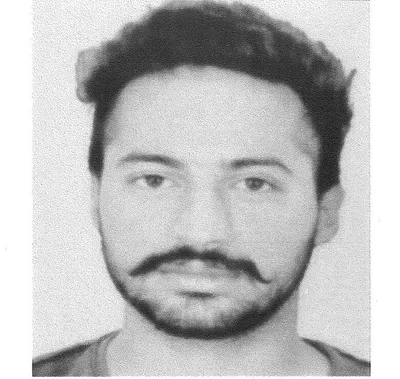
Six years after he slipped out of India, Iqbal Singh @ ‘Shera’ walked back through Indira Gandhi International Airport — this time in handcuffs. On May 13, 2026, hours after Portuguese authorities formally handed him over, the National Investigation Agency (NIA) arrested the Punjab-born fugitive at IGI Airport and produced him before Patiala House Court, which granted a 2-day transit remand. Shera is alleged to be the mastermind of a sprawling Punjab-wide narco-terror network that smuggled heroin from Pakistan via the Hizbul Mujahideen channel, and funnelled the cash through hawala to Kashmir-based HM operatives to bankroll terror.
The extradition is the latest invocation of the India-Portugal Extradition Treaty 1989 — the same instrument used in 2005 to bring 1993 Mumbai blasts accused Abu Salem back to India. Shera had fled India in 2020 after a non-bailable warrant was issued; an Interpol Red Notice followed in June 2021. The CBI is India’s nodal authority for Interpol matters; the case itself is being investigated by the NIA under a cocktail of charges: NIA Act 2008 + UAPA 1967 + NDPS Act 1985 + PMLA 2002 + Section 120B IPC.
1. Article 51(c) — Foster respect for international law and treaty obligations.
2. Article 253 — Parliament’s power to legislate to give effect to international treaties/conventions.
3. Extradition Act, 1962 — Domestic statute giving effect to extradition treaties.
4. India-Portugal Extradition Treaty, 1989 — Used in the Abu Salem (2005) and Shera (2026) extraditions.
5. National Investigation Agency Act, 2008 — Constitutes NIA; NIA Amendment Act, 2019 added extra-territorial reach (Section 1(2)).
6. Unlawful Activities (Prevention) Act, 1967 — Sections 15-17, 18A; UAPA Amendment, 2019 allowed individuals to be designated terrorists.
7. NDPS Act, 1985 — Sections 21 (heroin), 25 (proceeds), 29 (conspiracy).
8. PMLA, 2002 — ED probe into hawala channels.
9. Section 120B IPC (now Section 61 BNS, 2023) — Criminal conspiracy.
The ‘narco-terror’ label is doctrinally important. Indian courts have repeatedly held — most notably in State v. Mohammed Yousuf Shah (NIA Spl Ct, Jammu) — that drug-smuggling proceeds used to finance UAPA-listed groups constitute terror funding, not ordinary trafficking, and the higher UAPA burden applies. The NIA’s case alleges Shera ran the supply chain end-to-end: heroin moved across the Punjab border via drone and human couriers; cash was washed through hawala in Dubai and Lahore; portions were routed to HM operatives in Kashmir Valley for arms, recruitment, and explosives.
1. Extradition principles — Double criminality, specialty rule, non-extradition for political offences.
2. Abu Salem extradition (2005) — SC of India in Abu Salem Abdul Qayoom Ansari v. State of Maharashtra, 2011 recognised Portuguese government’s ‘rule of speciality’ assurance limiting maximum sentence.
3. Designation of terrorists — UAPA Amendment Act, 2019 lets the Centre declare individuals as terrorists (Schedule 4); Sajal Awasthi v. UoI challenge is pending.
4. Bail under UAPA — Section 43D(5) creates a stringent ‘twin test’ bar; NIA v. Zahoor Ahmad Shah Watali (2019).
5. NIA Act vires — State of Chhattisgarh v. UoI challenge to constitutionality is pending in SC.
6. Federalism & investigation — NIA can take over investigation; State concurrence not needed after 2019 amendment.
The international-law dimension is equally rich. Extradition typically rests on a bilateral or multilateral treaty plus a domestic enabling statute. Without a treaty, extradition can still be requested under the ‘reciprocity’ arrangement (Section 3(4), Extradition Act 1962), though it is rare. Core doctrines applied include double criminality (offence must be a crime in both jurisdictions), the specialty rule (a person extradited can only be tried for the offences mentioned in the extradition order), and the political offence exception (most treaties exclude political offences but explicitly include terrorism).
– Accused: Iqbal Singh @ ‘Shera’ (Punjab native).
– Date of arrest: May 13, 2026 (IGI Airport, Delhi).
– Investigating agency: NIA (transit remand 2 days, Patiala House Court).
– Outfit linked: Hizbul Mujahideen (UAPA-listed, founded 1989, also UN-listed via Res 1373 framework).
– Fled in: 2020 (NBW pending).
– Interpol Red Notice: June 2021.
– Extradition treaty: India-Portugal Extradition Treaty 1989.
– Cross-charges: NIA Act + UAPA + NDPS + PMLA + IPC 120B.
– Precedent: Abu Salem extradited from Portugal in 2005 under the same treaty.
For aspirants, the Shera story is an ideal cross-fertilising current-affairs item: it connects international law (treaty interpretation, extradition doctrine), criminal law (UAPA, NDPS, conspiracy), institutional law (NIA, ED, CBI, Interpol), and constitutional law (Articles 51, 253, federal investigation) — all in one case file.
Practice Quiz — 10 CLAT-Style Questions
Click an option to reveal the answer and explanation.