CURRENT AFFAIRS | 24 SEPTEMBER 2026
On 21 September 2026 the National Steering Committee (NSC) of the Ministry of Skill Development and Entrepreneurship (MSDE) approved a Strategic Investment Plan (SIP) worth ₹320 crore for the Kurukshetra ITI Cluster in Haryana under the PM-SETU scheme — Pradhan Mantri Skilling and Employability Transformation through Upgraded ITIs. According to the PIB release issued by MSDE that afternoon (Release ID 2312980), the approval takes the cumulative investment sanctioned under PM-SETU to ₹2,491 crore across 10 ITI clusters. Jindal Naveen Avsar Limited will partner the Government of Haryana as the cluster’s Anchor Industry Partner.
Read as a headline, this is a routine sanction. Read as an exam topic, it is something better: a single, well-documented illustration of how a modern centrally sponsored scheme is actually engineered — co-funded by three parties, part-financed by multilateral banks, implemented through a special purpose vehicle, and released against measurable outcomes rather than against invoices. Almost every element in that sentence is a concept the CLAT General Knowledge and Legal Reasoning sections can test.
What the cluster actually is
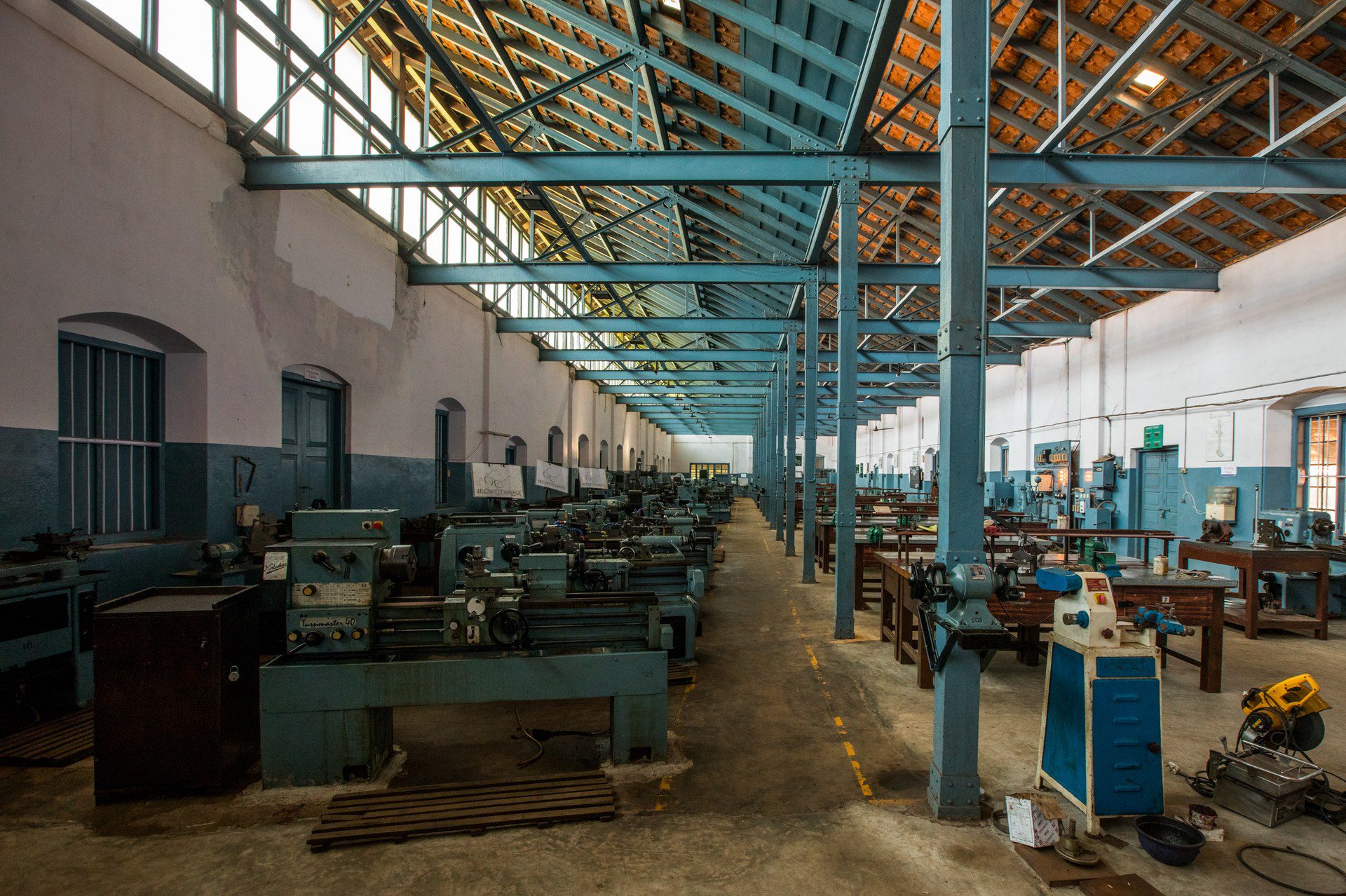
The Kurukshetra cluster will be built on the Hub-and-Spoke model that PM-SETU prescribes, and will comprise seven Government ITIs. Government ITI, Kurukshetra is the Hub ITI. The six Spoke ITIs named in the release are Government ITI (Women), Kurukshetra; Government ITI, Kaithal; Government ITI (Women), Kaithal; Government ITI, Pehowa; Government ITI, Pabnawa; and Government ITI (Women), Ambala City. Three of the seven are women’s institutes — a detail worth noticing, because participation of women in industrial trades has been one of the weakest numbers in Indian vocational training.
The ₹320 crore is not a grant to be spent freely. PIB says it will fund infrastructure strengthening, modernisation of training facilities, introduction of industry-aligned courses, and measures to improve employability outcomes. The industry partner is expected to work on curriculum development, infrastructure, training delivery, faculty engagement, apprenticeships, industry exposure and placement support. Jindal Naveen Avsar Limited is already the industry partner for the Barbil ITI Cluster in Odisha, where a Strategic Investment Plan of ₹240 crore has been approved.
Background & Framework
PM-SETU was approved by the Union Cabinet on 7 May 2025 as a Centrally Sponsored Scheme, pursuant to announcements made in the Budget 2024-25 and Budget 2025-26. Its total outlay is ₹60,000 crore, split as Central Share ₹30,000 crore, State Share ₹20,000 crore and Industry Share ₹10,000 crore, with co-financing to the extent of 50% of the Central share by the Asian Development Bank and the World Bank, equally. It has two components. Component I upgrades 1,000 Government ITIs — 200 Hub ITIs and 800 Spoke ITIs — with smart classrooms, modern labs, digital content and new industry-aligned trades. Component II augments the capacity of five National Skill Training Institutes (NSTIs) at Bhubaneswar, Chennai, Hyderabad, Kanpur and Ludhiana, including sector-specific National Centres of Excellence for Skilling and stronger training-of-trainers facilities. The Cabinet release records the targets: 20 lakh youth skilled over five years and 50,000 trainers given pre-service and in-service training. It also records the scheme’s governing idea in one phrase — ITIs are to become “government-owned, industry-managed” institutes of skills, delivered through an industry-led Special Purpose Vehicle (SPV) model.
How an approval like this is produced
A PM-SETU ITI cluster is not sanctioned in a single step, and PIB has described the sequence in successive replies laid before Parliament. Selection of ITIs is led by the State or UT Government in consultation with industry, because ITIs are State-run institutions. Each State constitutes a State Steering Committee headed by the Chief Secretary. The State floats an Expression of Interest and then a Request for Proposal; an industry player responds with a Strategic Investment Plan; the selected partner forms the Special Purpose Vehicle. At the apex sits the National Steering Committee, chaired by the Secretary, MSDE, which sets the vision, finalises operational guidelines, monitors implementation and makes course corrections — and which is the body that cleared Kurukshetra.
Money does not move merely because a plan is approved. Progress under PM-SETU is monitored through six Disbursement Linked Indicators (DLIs), periodically reviewed through independent third-party verification, for which the Indian Institute of Management Indore has been engaged. The six DLIs cover employment outcomes for graduates of supported ITIs, access to better-quality training programmes, governance and management of supported ITIs, State-level governance and leadership, quality of training at NSTIs, and national governance and leadership. A DLI framework is the standard instrument of World Bank and ADB programme lending: the borrower is paid on verified results, not on expenditure.
The CLAT Angle
Two families of questions sit here. The first is straight General Knowledge: match the scheme to its ministry, its outlay, its funding split, its model and its year of Cabinet approval. Examiners love schemes whose acronym and full form diverge — PM-SETU is not a bridge scheme, and the expansion (Skilling and Employability Transformation through Upgraded ITIs) is the trap. The second is Legal Reasoning and comprehension on federalism. A passage can state a rule — “education, including technical education, and vocational and technical training of labour, is in the Concurrent List; a centrally sponsored scheme therefore requires State co-funding and State-led selection” — and then test application: may the Union directly select an ITI in a State that has not constituted a Steering Committee? Must a State accept an anchor partner it did not shortlist? What follows when the State share is not released? Learn the working vocabulary as well: centrally sponsored scheme (shared Centre–State funding) versus central sector scheme (fully Union-funded), special purpose vehicle, anchor industry partner, hub-and-spoke, and disbursement linked indicator.
The constitutional and institutional map
Vocational training sits precisely where the Constitution puts it. Entry 25 of List III, the Concurrent List, in the Seventh Schedule reads: “Education, including technical education, medical education and universities, subject to the provisions of entries 63, 64, 65 and 66 of List I; vocational and technical training of labour.” That entry was substituted by the Constitution (Forty-second Amendment) Act, 1976, which moved education out of the State List into the Concurrent List. Concurrency is the legal reason a Union skilling scheme must be built with the States rather than over them, and the structural reason the outlay carries a ₹20,000 crore State share at all.
On the Directive Principles side, Article 41 requires the State, within the limits of its economic capacity and development, to make effective provision for securing the right to work, to education and to public assistance in cases of unemployment, old age, sickness and disablement. Article 21A, inserted by the Constitution (Eighty-sixth Amendment) Act, 2002 and brought into force on 1 April 2010, guarantees free and compulsory education to children between six and fourteen — it stops short of vocational training, which is why schemes, not rights, carry this field.
Institutionally, the Ministry of Skill Development and Entrepreneurship was created in November 2014. The Directorate General of Training (DGT) under it administers long-term training through ITIs. The regulator is the National Council for Vocational Education and Training (NCVET), notified on 5 December 2018, formed by merging the erstwhile National Council for Vocational Training and the National Skill Development Agency; it recognises and regulates awarding bodies and assessment agencies and approves qualifications, which are placed on the National Skills Qualifications Framework (NSQF). Short-term skilling runs through PMKVY, now in its 4.0 phase. Apprenticeships run under the Apprentices Act, 1961 through the National Apprenticeship Promotion Scheme (NAPS), launched in August 2016, and the older National Apprenticeship Training Scheme (NATS) of 1973. Finally, the National Education Policy 2020 set the target that by 2025 at least 50% of learners through the school and higher education system shall have exposure to vocational education.
Key Facts
- Event: NSC of MSDE approved a ₹320 crore Strategic Investment Plan for the Kurukshetra ITI Cluster, Haryana, on 21 September 2026 (PIB Release ID 2312980).
- Cumulative PM-SETU investment: ₹2,491 crore across 10 ITI clusters.
- Anchor Industry Partner: Jindal Naveen Avsar Limited, also partner for the Barbil ITI Cluster, Odisha (₹240 crore SIP).
- Cluster shape: seven Government ITIs — Government ITI, Kurukshetra as Hub; six Spokes, three of them women’s ITIs.
- PM-SETU full form: Pradhan Mantri Skilling and Employability Transformation through Upgraded ITIs.
- Cabinet approval: 7 May 2025, as a Centrally Sponsored Scheme; announced in Budgets 2024-25 and 2025-26.
- Outlay: ₹60,000 crore — Centre ₹30,000 cr, States ₹20,000 cr, Industry ₹10,000 cr; ADB and World Bank co-finance 50% of the Central share, equally.
- Scale: 1,000 Government ITIs (200 Hub + 800 Spoke); 5 NSTIs at Bhubaneswar, Chennai, Hyderabad, Kanpur, Ludhiana.
- Targets: 20 lakh youth skilled over five years; 50,000 trainers trained.
- Governance: NSC chaired by Secretary, MSDE; State Steering Committees chaired by Chief Secretaries; six DLIs verified by IIM Indore.
- Minister: Shri Jayant Chaudhary, Minister of State (Independent Charge), MSDE.
- Constitutional hook: Concurrent List Entry 25 (as substituted by the 42nd Amendment, 1976); Article 41; Article 21A (86th Amendment, 2002).
The case, and the caution
The case for PM-SETU is stated plainly in the Cabinet release. Financial assistance under earlier ITI schemes was “suboptimal”; infrastructure upkeep, capacity expansion and capital-intensive new trades were never fully funded; and vocational training, in the government’s own words, “remains less aspirational.” The same release records that the ITI network has expanded by nearly 47% since 2014, to 14,615 institutes with 14.40 lakh enrolment. Scale was never the binding constraint. Quality, employability and prestige were.
The caution is equally visible in the design. A scheme that depends on a ₹20,000 crore State contribution is only as fast as the fiscal space of the slowest State, and the recorded progress — States constituting committees, floating EOIs and RFPs at different speeds — shows exactly that unevenness. An “industry-managed” institute raises a governance question that is not merely administrative: a public asset is placed under the operational influence of a private partner selected through a State procurement process, which is precisely the territory in which questions of transparency, conflict of interest and accountability arise. And a DLI-based, multilaterally co-financed design imports an external verification discipline that is a strength — results must be proved — and a dependency that is worth noting. For an aspirant, holding both readings at once is the point: the design is thoughtful, and thoughtful designs still have to survive implementation.
Memory Hook / Mnemonic
Fix the money with “3-2-1 makes 60” — ₹30,000 cr Centre, ₹20,000 cr States, ₹10,000 cr Industry, total ₹60,000 crore. Fix the shape with “200 hubs, 800 spokes, 5 NSTIs, 1,000 ITIs.” Fix the Kurukshetra sanction as “320 for 7, taking 10 clusters to 2,491.” And fix the constitutional anchor with “Entry 25 is Concurrent — so the Centre pays, the State picks, industry runs.”
Practice Quiz — 10 CLAT-Style Questions
Click an option to reveal the answer and explanation.