CURRENT AFFAIRS | 12 MAY 2026
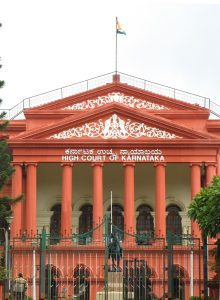
A Supreme Court bench led by Chief Justice of India Surya Kant, with Justice Joymalya Bagchi, on 11 May 2026 declined to pass further directions in the Andhra Pradesh High Court junior-lawyer controversy after the matter was amicably resolved between the HC Chief Justice and the Andhra Pradesh Bar Association. The bench, however, used the occasion to issue a stern pan-judiciary instruction: members of the judiciary at all levels must exhibit patience, compassion and a spirit of encouragement, especially towards junior advocates and first-generation practitioners.
The trigger was a viral 4 May 2026 video of Justice Tarlada Rajasekhar Rao of the AP High Court threatening a young advocate with 24-hour police custody during a hearing. The Supreme Court Bar Association (SCBA), Bar Council of India (BCI) and several State Bars had written to the CJI demanding institutional action. The SC took suo motu cognizance, registered two writ petitions, and now closes the matter without formal sanction — relying instead on a moral-cum-jurisprudential pronouncement.
Constitutional Framework
Article 142(1) is the source of the SC’s unique “complete justice” jurisdiction. It empowers the Court to pass “such decree or order as is necessary for doing complete justice in any cause or matter pending before it.” The High Courts, despite Article 226’s wide writ jurisdiction, have no equivalent power.
Removal of a High Court judge is governed by Article 217(1)(b) read with Article 124(4)/(5) — the same impeachment process applicable to SC judges. Grounds: proved misbehaviour or incapacity. A 2/3 majority of members present and voting, with a majority of total membership, in each House of Parliament is required.
Where impeachment is disproportionate, the SC’s “in-house procedure” — crystallised in C. Ravichandran Iyer v Justice A.M. Bhattacharjee (1995) — allows the CJI to constitute a peer-judge committee to inquire into complaints. This is the path most likely to have been triggered here had the AP HC CJ not closed the matter at the institutional level.
Why CLAT 2027 Cares
This is prime Legal Reasoning material. CLAT loves three threads from this story: (1) the difference between Article 142 “complete justice” and Article 32/226 writ jurisdiction; (2) the in-house mechanism vs the formal impeachment route under Article 217(1)(b); and (3) the contempt jurisdiction under the Contempt of Courts Act 1971 — particularly the truth-as-defence reform introduced by the 2006 amendment to Section 13.
A passage may also ask about judicial accountability v judicial independence — both features of the “basic structure” per Kesavananda Bharati (1973) and Indira Gandhi v Raj Narain (1975).
Key Facts — Judicial Conduct Framework
| Provision / Case | Effect |
|---|---|
| Article 124(4) | SC judge removal — proved misbehaviour or incapacity |
| Article 217(1)(b) | HC judge removal — same procedure as SC judges |
| Article 142 | SC’s complete-justice power (HC has no equivalent) |
| Article 215 | HC is a court of record with contempt power |
| Contempt of Courts Act 1971 s.2(c) | Defines criminal contempt |
| Contempt of Courts Act 1971 s.13 | Truth as defence (2006 amendment) |
| C. Ravichandran Iyer (1995) | In-house procedure for judicial misconduct |
| K. Veeraswami (1991) | CJI’s prior consultation required to prosecute a sitting judge |
Article 142 — The Workhorse of “Complete Justice”
The SC has, in recent years, increasingly leaned on Article 142 to resolve matters that strict statutory remedies cannot address. Notable uses include Shilpa Sailesh v Varun Sreenivasan (2023), where a Constitution Bench held that the SC can grant a decree of divorce on the ground of irretrievable breakdown of marriage; the Vehicular Emissions case, where the Court mandated CNG conversion in Delhi; and the recent direction to close the AP HC junior lawyer matter.
Important caveat: the SC itself in Supreme Court Bar Association v Union of India (1998) ruled that Article 142 cannot be used to override express statutory provisions. The power is “supplementary”, not “supplanting.”
Contempt Jurisdiction — The Other Lever
Both the SC (Article 129) and HCs (Article 215) are courts of record with inherent contempt power. The Contempt of Courts Act 1971 classifies contempt as civil (Section 2(b) — wilful disobedience) and criminal (Section 2(c) — scandalising the court, interfering with judicial proceedings, or obstructing administration of justice). The 2006 amendment to Section 13 permits truth as a valid defence if it is “in public interest” and the request is “bona fide.”
Mnemonic for the Exam Hall
PCE = Patience + Compassion + Encouragement — the CJI Surya Kant Court’s three-word rule for the Indian judiciary.
For the constitutional cluster: 124-129-142-215-217 = SC removal · SC contempt · SC complete justice · HC court of record · HC judge service. Cases to memorise: K. Veeraswami (1991), C. Ravichandran Iyer (1995), SCBA v UoI (1998), Shilpa Sailesh (2023).
Likely CLAT Probes
- Whether the AP HC judge could have been formally proceeded against under Article 217 read with 124(4) — and the political feasibility of impeachment for a single courtroom outburst.
- Whether the SC’s “moral instruction” via Article 142 binds the AP HC under Article 141 (law declared by SC binding on all courts).
- Distinguishing contempt of court (1971 Act) from violation of Bar Council of India’s professional ethics rules under the Advocates Act 1961.
Pair this story with the NJAC verdict — Supreme Court Advocates-on-Record Association v Union of India (2015) — which struck down the 99th Constitutional Amendment and reaffirmed the Collegium system. CLAT 2027 examiners will probably weave both into a single Legal Reasoning passage on the judicial-accountability v judicial-independence balance.
Practice Quiz — 10 CLAT-Style Questions
Click an option to reveal the answer and explanation.