CURRENT AFFAIRS | 9 JUNE 2026
9 June 2026 — Tuesday’s newsroom for CLAT 2027 aspirants. Below is one of ten passage-led current-affairs explainers built on India’s constitutional, statutory and policy framework.
Constitutional & Statutory Framework
- SIPRI Yearbook 2026 — Stockholm International Peace Research Institute’s annual assessment of global armaments.
- Nuclear Non-Proliferation Treaty (NPT), 1968 — India is NOT a signatory; recognises 5 nuclear-weapon States.
- Comprehensive Nuclear Test-Ban Treaty (CTBT), 1996 — India has neither signed nor ratified.
- India’s “No First Use” (NFU) doctrine — formally articulated in 1999; under periodic political review.
- Indo-US Civil Nuclear Agreement (123 Agreement), 2008 — ended India’s civil-nuclear isolation.
- Nuclear Suppliers Group (NSG) — multilateral export-control cartel; India seeks membership.
- Nuclear Triad — capacity to deliver nuclear weapons by land, air and sea.
- INS Arihant / Arihant-class SSBN — India’s sea-based deterrent platform.
- Article 51 (DPSP) — promotion of international peace and security.
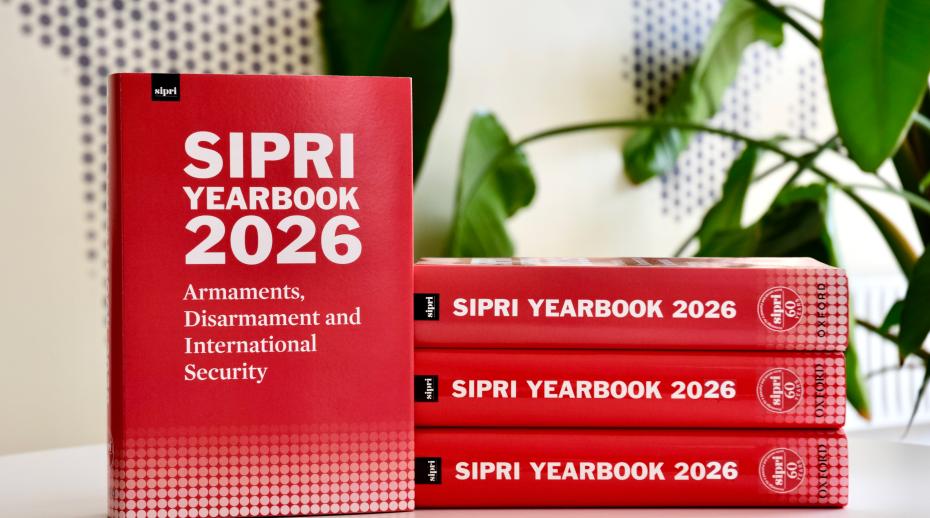
India’s nuclear warhead stockpile has grown to approximately 190 warheads as of January 2026 (up from 180 a year earlier), with about 12 already in deployed status, according to the SIPRI Yearbook 2026 released by the Stockholm International Peace Research Institute on Monday 8 June 2026. Pakistan’s stockpile, the report adds, has held steady at around 170 warheads, while China continues a rapid build-out of a sea-based nuclear triad. Across the nine nuclear-armed States, the global inventory now stands at roughly 12,187 warheads, of which 9,745 are in military stockpiles considered potentially operationally available.
The nine States — the United States, Russia, the United Kingdom, France, China, India, Pakistan, North Korea and Israel — between them account for the entirety of global nuclear capability. The bulk remains concentrated in the US and Russia, with France and the UK at the next tier. China and India, the report observes, may now occasionally deploy a small number of warheads mounted on missiles during peacetime — a meaningful shift from the long-standing pattern of warheads being stored separately from launchers.
On India specifically, SIPRI highlights two operational developments. First, the move toward canisterised missiles — where the warhead is sealed inside the launch tube — reduces the time between political decision and weapon-release, and is consistent with a deterrent posture that values readiness alongside survivability. Second, the increasing tempo of sea-based deterrence patrols by INS Arihant-class submarines suggests that India may have begun deploying a small number of warheads on K-15 / K-4 SLBMs in peacetime.
The strategic significance is doctrinal as much as numerical. India’s 1999 nuclear doctrine, refined in 2003, rests on Credible Minimum Deterrence and an explicit No First Use posture coupled with massive retaliation. The shift toward canisterised, sea-launched, ready-to-fire systems does not by itself contradict NFU — but it sharpens the question of how “ready” a No First Use force should be, and at what point pre-mating of warheads with delivery vehicles erodes the firebreak NFU is meant to provide.
India’s diplomatic position is structurally unusual. India is not a signatory to the NPT (1968), which it has consistently described as discriminatory because it recognises only five nuclear-weapon States — those that tested before 1 January 1967. India also has not signed the CTBT (1996). At the same time, the 2008 Indo-US Civil Nuclear Agreement (the 123 Agreement) and the NSG waiver of the same year ended India’s civil-nuclear isolation, and India has applied for full NSG membership — a bid blocked principally by China.
For Pakistan, SIPRI notes a continuing focus on diversifying delivery systems and accumulating fissile material; the nascent Pakistani sea-based triad, anchored on cruise missiles fired from Agosta-class submarines, is the most-watched development. For China, the report flags an unusually rapid build-out of SSBN-launched capabilities — relevant to the wider Indo-Pacific balance.
Key Facts at a Glance
| Field | Detail |
|---|---|
| Report | SIPRI Yearbook 2026, released 8 June 2026 |
| India stockpile | ~190 warheads (up from 180); ~12 deployed |
| Pakistan stockpile | ~170 warheads (stable) |
| Global total | ~12,187 warheads across 9 States; ~9,745 in military stockpiles |
| 9 nuclear-armed States | USA, Russia, UK, France, China, India, Pakistan, DPRK, Israel |
| India’s sea leg | K-15 / K-4 SLBMs on INS Arihant-class SSBNs |
| India treaties | Not a party to NPT (1968) or CTBT (1996); 123 Agreement (2008) with US |
| Doctrine | Credible Minimum Deterrence; No First Use (1999, refined 2003); Massive Retaliation |
CLAT 2027 Angle
NPT 1968 (India not a signatory); CTBT 1996 (India not a signatory); India’s ‘No First Use’ doctrine declared 1999, refined 2003; Credible Minimum Deterrence; Indo-US 123 Agreement 2008; Nuclear Suppliers Group (NSG); Stockholm International Peace Research Institute as a global research body; Article 51 (DPSP) — international peace and security. Expect Current Affairs questions on the SIPRI numbers, GK pairings on India’s treaty position, and Legal Reasoning on dualism + treaty-implementation.
Mnemonic — Memory Aid
“NPT-CTBT-NSG” — the three multilateral regimes India’s nuclear policy navigates: NPT (not signed, considered discriminatory), CTBT (not signed, reserves testing option), NSG (seeking full membership; got a one-time 2008 waiver). For doctrine, remember “NFU + CMD + MR” — No First Use, Credible Minimum Deterrence, Massive Retaliation. For the triad: “Air-Land-Sea” — Mirage/Rafale + Agni + INS Arihant.
Test Yourself — 10-Question Quiz
Take the interactive quiz below to reinforce these concepts:
Practice Quiz — 10 CLAT-Style Questions
Click an option to reveal the answer and explanation.