
CURRENT AFFAIRS | 9 JUNE 2026
9 June 2026 — Tuesday’s newsroom for CLAT 2027 aspirants. Below is one of ten passage-led current-affairs explainers built on India’s constitutional, statutory and policy framework.
Constitutional & Statutory Framework
- PM Suryaghar Yojana — Rooftop solar mission targeting 1 crore households; up to 300 free units/month.
- PM-KUSUM — Pradhan Mantri Kisan Urja Suraksha evam Utthan Mahabhiyan; solarises agriculture pumps.
- Article 48A (DPSP) — duty of the State to protect and improve the environment.
- Article 51A(g) (Fundamental Duty) — citizen’s duty to protect the natural environment.
- Paris Agreement 2015 — Indian NDCs: 45% emission-intensity cut and 50% non-fossil electricity by 2030.
- Net-Zero by 2070 — announced at COP26 Glasgow (Nov 2021).
- Electricity Act 2003 — governing legislation for distribution, tariffs and renewable obligations.
- National Action Plan on Climate Change (NAPCC), 2008 — parent framework, with the National Solar Mission as one of its eight missions.
- Estimates Committee of Parliament — financial committee that flagged uneven uptake of PM Suryaghar.
The Estimates Committee of Parliament, in its review of India’s decentralised-solar push, has flagged uneven state-wise uptake of PM Suryaghar Yojana and PM-KUSUM — even as solar power now accounts for nearly 30% of the country’s installed electricity capacity and India added more than 50 GW of solar in 2025 alone, second globally only to China. The report comes at a moment when the combined Rs 95,000-crore budget for the two flagship programmes is delivering uneven results, with five states cornering the bulk of the gains.
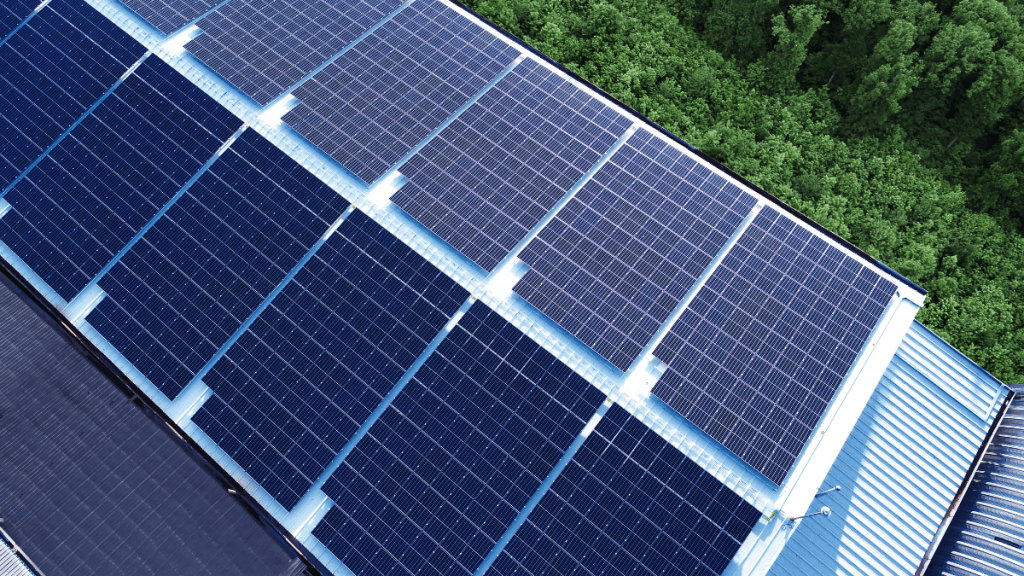
PM Suryaghar Yojana targets installation of rooftop solar units on one crore households. Every beneficiary receives free electricity up to 300 units a month, along with a cash subsidy for the equipment cost. As of 31 May 2026, more than 10.9 lakh new homes have been installed under the scheme — against an interim target of 14 lakh.
PM-KUSUM (Pradhan Mantri Kisan Urja Suraksha evam Utthan Mahabhiyan) is aimed at farmers. It helps them set up small solar plants on unused land, install grid-connected or standalone solar water pumps, and either sell surplus solar power to the grid or save on diesel and electricity bills for irrigation. The dual logic is income augmentation and reduction of the agricultural electricity-subsidy bill that state DISCOMs absorb.
The five best-performing states — Gujarat, Maharashtra, Uttar Pradesh, Kerala and Rajasthan — between them account for nearly 70% of the roughly 33 lakh rooftop installations done so far. The under-performers are West Bengal, Punjab, Karnataka, Bihar and Tamil Nadu. The Estimates Committee’s key diagnostic insight is that uptake is shaped less by solar irradiance and more by the underlying retail-tariff and state-subsidy architecture.
Where states already provide heavy electricity subsidies — Karnataka’s subsidy bill was Rs 27,000 crore last year and Tamil Nadu’s was Rs 15,700 crore — household incentive to invest in rooftop solar is weak, because grid power is already nearly free. Conversely, Gujarat, Kerala and Maharashtra, with relatively higher tariffs for upper-consumption tiers, see strong rooftop adoption because the payback period collapses. The mismatch is partly behavioural and partly structural.
The Estimates Committee report concludes that if PM Suryaghar is fully implemented, it could save the government around Rs 75,000 crore every year in electricity costs — through avoided generation, reduced DISCOM losses and lower subsidy outgo. The constitutional and treaty-law architecture sits behind this: Article 48A and Article 51A(g) frame environmental duty; the Paris Agreement (2015) and India’s Net-Zero by 2070 pledge at COP26 (Glasgow, 2021) frame the international obligations; and the Electricity Act 2003, read with the National Solar Mission under NAPCC (2008), provides the statutory scaffolding.
Key Facts at a Glance
| Field | Detail |
|---|---|
| Scheme 1 | PM Suryaghar Yojana — rooftop solar on 1 crore homes; 300 free units/month + subsidy |
| Scheme 2 | PM-KUSUM — solar pumps + plants for farmers |
| Combined outlay | ~Rs 95,000 crore |
| Progress (May 2026) | 10.9 lakh homes (vs interim target of 14 lakh); ~33 lakh rooftop installations cumulatively |
| Top 5 states | Gujarat, Maharashtra, UP, Kerala, Rajasthan (~70% of installations) |
| Under-performers | West Bengal, Punjab, Karnataka, Bihar, Tamil Nadu |
| Estimated annual saving | ~Rs 75,000 crore if fully implemented (Estimates Committee) |
| Climate framework | Paris 2015; NDC (45%/50% by 2030); Net-Zero 2070 (COP26 Glasgow) |
CLAT 2027 Angle
Article 48A (DPSP) — protection of environment; Article 51A(g) (Fundamental Duty); Paris Agreement 2015 and India’s NDCs (45% emission-intensity cut, 50% non-fossil electricity by 2030); Net-Zero by 2070 (announced COP26 Glasgow 2021); Electricity Act 2003; National Solar Mission under NAPCC 2008. Expect Current Affairs MCQs on Suryaghar/KUSUM numbers, GK on COP-pledges, and Legal Reasoning on the State’s environmental duty.
Mnemonic — Memory Aid
“SURYA-KUSUM-48A-51A(g)” — pair the two flagship schemes with the two environmental Articles. SURYA = rooftop households (300 free units), KUSUM = farm pumps and solar-on-fallow-land. Tariff-arithmetic mnemonic: “High tariff = high adoption” — Gujarat/Kerala/Maharashtra (high tariff) lead; Karnataka/TN (heavily subsidised power) lag. Climate-numbers chant: “45-50-2070” — 45% emission-intensity cut, 50% non-fossil electricity by 2030, Net-Zero by 2070.
Test Yourself — 10-Question Quiz
Take the interactive quiz below to reinforce these concepts:
Practice Quiz — 10 CLAT-Style Questions
Click an option to reveal the answer and explanation.