CURRENT AFFAIRS | 11 MAY 2026
CLAT GK + CONSTITUTIONAL LAW & RELEVANT AREA
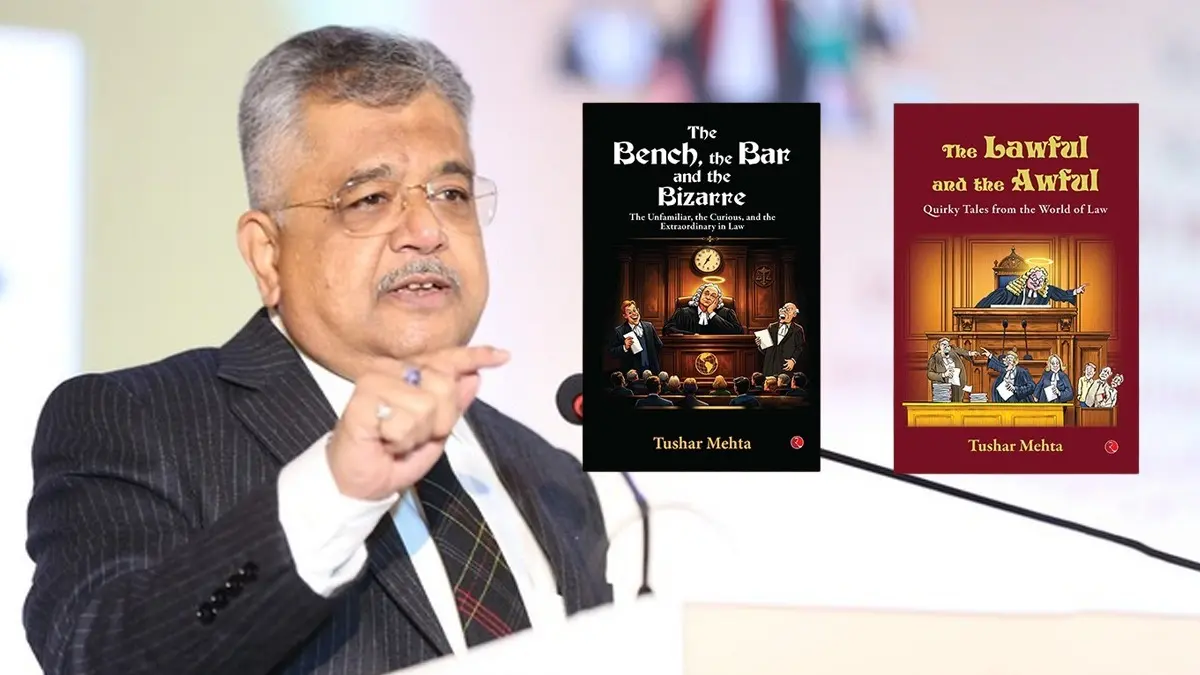
At the May 10, 2026 launch of Solicitor General Tushar Mehta’s two new books — The Bench, the Bar and the Bizarre and The Lawful and Awful — at Bharat Mandapam in Delhi, Union Home Minister Amit Shah delivered a remarkably constitutional-law-flavoured address that has since been widely cited by commentators on separation-of-powers doctrine. Sharing the stage with Chief Justice of India Surya Kant and Attorney General R. Venkataramani, Shah argued that “the strength of democracy does not come from confrontation — it comes from institutional balance and mutual dignity,” adding that the Constitution-makers had intentionally designed Parliament, the Executive and the Judiciary as “three fundamental pillars” meant to maintain harmony, not to oppose one another.
The setting is significant: a Solicitor General’s literary work being unveiled jointly by the Home Minister and the CJI is itself a near-textbook illustration of inter-institutional comity. Shah’s central claim — that in 76 years of constitutional life, every political and structural change in India has been absorbed “without the shedding of a single drop of blood” — directly echoes the doctrinal architecture that the Supreme Court has slowly built around the Basic Structure of the Constitution since Kesavananda Bharati (1973). For CLAT 2027 aspirants, the speech is a live hook into a syllabus zone the paper returns to year after year: separation of powers, judicial review, constitutional conventions, and the rolling tension between Articles 50, 124 and 245.
Constitutional / Legal Framework
Articles in play: Article 50 (separation of judiciary from executive — DPSP), Article 122 and 212 (legislative privilege barring judicial inquiry into proceedings of Houses), Article 144 (civil and judicial authorities to act in aid of the Supreme Court), Articles 13, 32 and 226 (judicial review), Article 245 (territorial extent of Parliament’s law-making power).
Foundational cases: Kesavananda Bharati v State of Kerala (1973) — Parliament cannot alter the Constitution’s basic structure or identity; L. Chandra Kumar v Union of India (1997) — judicial review under Articles 32 and 226 is itself part of the basic structure; I.R. Coelho v State of Tamil Nadu (2007) — laws placed in the Ninth Schedule after 24 April 1973 are still subject to basic-structure review; Shamsher Singh v State of Punjab (1974) — recognised constitutional conventions as legally weighty; Ram Jawaya Kapur v State of Punjab (1955) — India follows functional overlap, not strict American-style separation.
Why This Matters for CLAT 2027
Separation of powers and basic structure are CLAT staples — they have appeared, in some form, in the Legal Reasoning section of nearly every paper since 2020. A topical political quote from a sitting Home Minister, delivered in front of a sitting CJI, is exactly the kind of “anchor passage” CLAT setters favour for principle-fact reasoning sets. Aspirants should be ready to spot a passage on Shah’s speech and connect it to (a) the doctrine that separation of powers in India is read INTO Articles 50 and 245 rather than expressly written, (b) the Kesavananda triad of judicial review, basic structure and limited amending power, and (c) the textually unwritten but functionally indispensable role of constitutional conventions.
Key Facts at a Glance
| Aspect | Detail |
|---|---|
| Event | Launch of Tushar Mehta’s books at Bharat Mandapam, New Delhi, 10 May 2026 |
| Speakers | HM Amit Shah, CJI Surya Kant, AG R. Venkataramani, SG Tushar Mehta |
| Books | The Bench, the Bar and the Bizarre; The Lawful and Awful |
| Constitution adopted / in force | 26 Nov 1949 / 26 Jan 1950 (76 years in force) |
| Constitution Day | 26 November (instituted 2015) |
| Three pillars (per Shah) | Parliament + Executive + Judiciary — “balance, not opposition” |
Mnemonic
BJL = Balance · Judicial · Legislative — three pillars not in conflict but in harmony.
B stands for Balance (Article 50 separation), J for Judicial review (Articles 13/32/226), L for Legislative supremacy within constitutional limits (Articles 122/245). The trio together gives you the “institutional balance” Shah invoked.
Test Yourself — 10-Question Quiz
Practice Quiz — 10 CLAT-Style Questions
Click an option to reveal the answer and explanation.