Teejan Bai (1956–2026): The Voice That Made the Mahabharata Sing
On a summer day in 2026, India fell a little quieter. Teejan Bai, the legendary exponent of Pandavani and one of the most recognisable folk voices this country has produced, passed away at the age of 69. For millions who had watched her stand on a stage, tambura raised like a warrior’s weapon, thundering out the battles of the Mahabharata, it felt as though a living link to India’s oral epic tradition had been severed. As students preparing for the CLAT, it is worth pausing to understand not only who she was, but why a folk artist from a small village near Bhilai came to be honoured with three Padma awards and mourned by the Prime Minister of India.
What Is Pandavani?
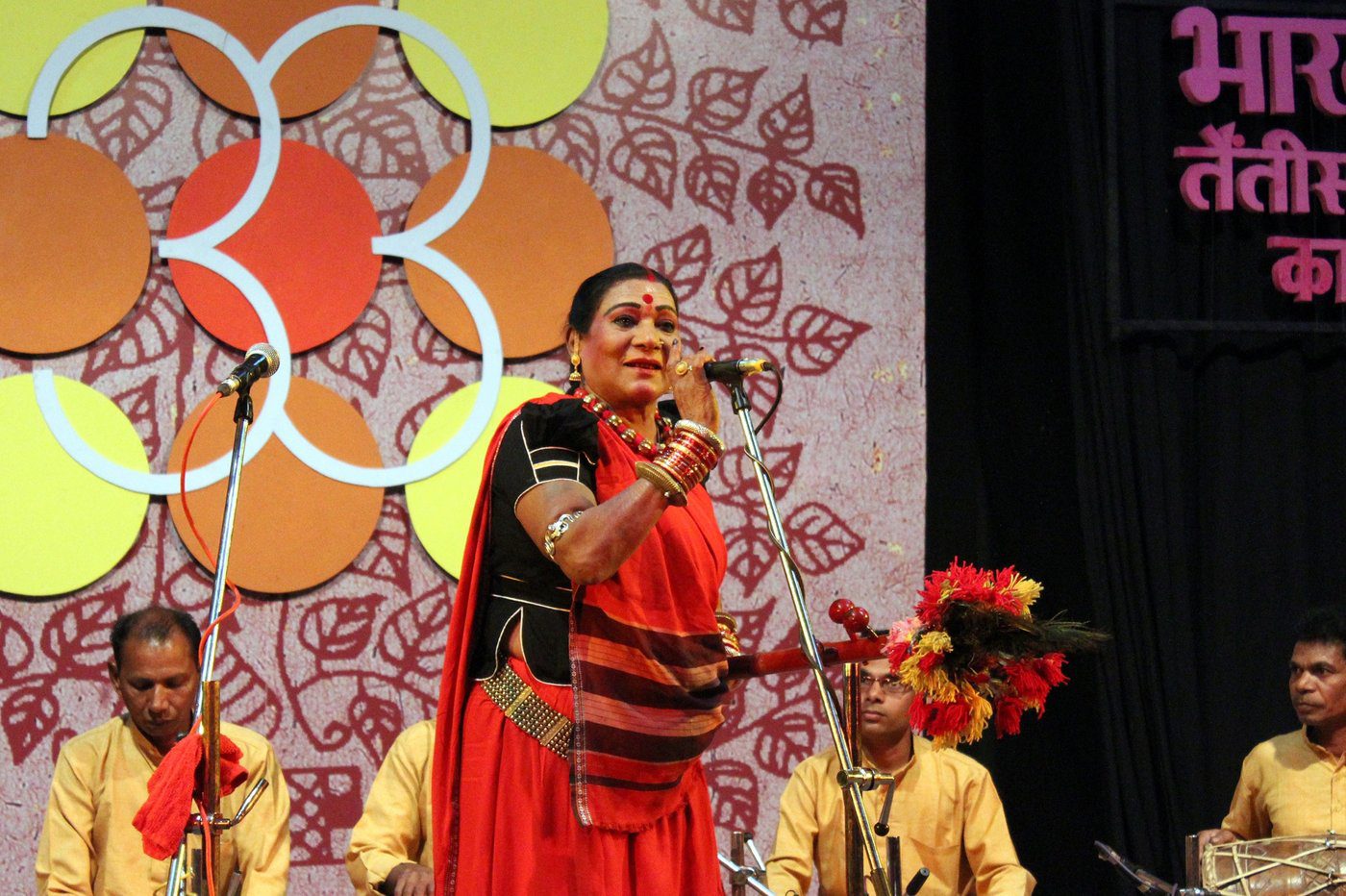
Pandavani is a folk performing-art form native to Chhattisgarh. The word itself points to its subject: the tales of the Pandavas. It is the oral, sung narration of stories drawn from the Mahabharata, performed by a lead singer who both narrates and acts out the great episodes of the epic, supported by a small chorus and instrumentalists. In Pandavani, the performer does not merely recite; she becomes Bhima swinging his mace, she becomes Draupadi in the assembly hall, she becomes the narrator weeping over Karna’s fate. It is theatre, music and storytelling fused into a single art.
Traditionally, Pandavani is performed in two distinct styles. The Vedamati style is the more sober, seated form, where the artist narrates while sitting. The Kapalik style is the dramatic, standing form, in which the performer rises, wields a tambura (a stringed instrument, sometimes a dotara) as a prop that transforms into a chariot, a mace, a bow or a serpent as the story demands, and moves with theatrical swagger. It is a physically demanding, commanding style, and for centuries it was performed almost exclusively by men.
The Barrier She Broke
Teejan Bai’s greatest achievement was not merely mastering Pandavani, but doing so in the Kapalik style as its first woman performer. In a form once reserved for men, a young girl choosing to stand and perform with dramatic power was, in its time, an act of quiet rebellion. She broke a centuries-old barrier not with slogans but with sheer talent and persistence.
She was born in 1956 in Ganiyari, a village near Bhilai in Chhattisgarh, into the Pardhi community. Her early training came from her maternal grandfather, Brijlal Pardhi, who taught her the verses and rhythms of the epic. Married at the age of twelve, she nonetheless refused to give up singing, a decision that carried real social cost in her circumstances. Her defiance was rewarded not with immediate fame but with slow, hard-earned recognition.
Discovery and a Life on the World Stage
The turning point came in the 1970s, when the noted playwright and theatre pioneer Habib Tanvir discovered and promoted her. Tanvir, himself a towering figure in Indian theatre known for bringing folk performers into the mainstream, recognised in Teejan Bai a rare and electric talent. Under his encouragement, she moved from village performances to national and then international stages, carrying the Mahabharata of Chhattisgarh to audiences across the world.
She performed for Prime Minister Indira Gandhi and appeared at prestigious cultural venues such as Bharat Bhavan in Bhopal. Over her long career she is estimated to have trained more than two hundred students, ensuring that the tradition she elevated would not die with her. In an art form that survives by transmission from one living voice to the next, this act of teaching may be as important as any performance she ever gave.
A Cascade of National Honours
India’s highest civilian honours below the Bharat Ratna are the Padma awards, conferred in a clear order of precedence: the Padma Vibhushan is the highest, followed by the Padma Bhushan, and then the Padma Shri. Teejan Bai received all three across the decades, a rare distinction that maps the arc of her rising national stature.
- Padma Shri in 1988 — the first national recognition.
- Padma Bhushan in 2003 — marking her elevation to national eminence.
- Padma Vibhushan in 2019 — the second-highest civilian award of the Republic.
Alongside the Padma series, she received the Sangeet Natak Akademi Award in 1995. The Sangeet Natak Akademi is India’s national academy for music, dance and drama, and its awards are the state’s foremost recognition of performing artists. Upon her passing, the Prime Minister paid tribute to her, a mark of how completely a folk voice from rural Chhattisgarh had become a figure of national significance.
The Instrument, the Style and the Craft
To understand why Teejan Bai was so admired, it helps to picture what a Kapalik-style performance actually involves. The tambura she carried is more than a musical instrument; in her hands it became a living prop. Held one way, it was the mace of Bhima; raised another way, it was the bow of Arjuna; swung across the stage, it became a serpent or a chariot. A single performer, moving through the assembly hall of the Kauravas or the forests of exile, played every character in turn — narrator, hero, villain and grieving mother — switching voice, posture and rhythm in an instant. This is enormously demanding, and to sustain it across performances lasting hours, night after night, required stamina as much as artistry. That she did all of this as a woman, in a form built around male physicality and voice, only deepens the achievement.
Intangible Cultural Heritage and the Oral Epic
Teejan Bai’s story sits at the heart of a larger idea: intangible cultural heritage. Unlike a monument or a manuscript, an art form like Pandavani exists only so long as living people perform it. It is passed from grandfather to granddaughter, from teacher to student, through voice and gesture rather than through stone or paper. The world’s great oral epic traditions — of which India has many — depend on such performers to survive. When one of them dies, a repository of memory and craft is lost, unless it has been passed on. That is precisely why her two hundred students matter so much: each one is a vessel carrying the tradition forward into a generation she will not see.
India recognises this fragility in its cultural policy. Bodies such as the Sangeet Natak Akademi exist precisely to document, support and reward living traditions before they fade. Teejan Bai’s career — from a village in Chhattisgarh to global stages and back to teaching the young — is almost a textbook illustration of how a folk tradition can be lifted from obscurity, celebrated nationally, and then deliberately renewed through transmission. Her life reminds us that heritage is not only what we inherit from the past but what we choose to keep alive for the future.
The CLAT Angle
For a CLAT aspirant, Teejan Bai’s life is a rich and reliable source of both static General Knowledge and current affairs, and her passing is exactly the kind of obituary of a national cultural figure that examiners favour.
On the static-GK front, remember the essentials: Pandavani is a folk art of Chhattisgarh based on the Mahabharata; Teejan Bai was the first woman to perform it in the Kapalik style; and she was mentored by Habib Tanvir. Be precise about the Padma awards hierarchy — Vibhushan above Bhushan above Shri — because CLAT and other competitive papers frequently test whether candidates can order these correctly. Note too the Sangeet Natak Akademi as the national academy for the performing arts; questions often pair an artist with the correct academy (Sahitya Akademi for literature, Lalit Kala Akademi for fine arts, Sangeet Natak Akademi for performing arts).
On the reasoning and current-affairs front, an obituary passage about her may be used to test comprehension: separating the years of her awards, matching the art form to its home State, or drawing an inference about the significance of a woman breaking into a male-dominated tradition. In legal-aptitude and inference sets, her life can anchor questions about cultural rights, the protection of intangible heritage, and the constitutional value placed on India’s composite culture under provisions such as the Fundamental Duties, which ask every citizen to value and preserve the rich heritage of our composite culture. Keeping her key facts in mind — the village of Ganiyari, the three Padma awards with their years, and the Kapalik style — will serve you well across GK, current affairs and comprehension alike.
Teejan Bai leaves behind a stage that will feel emptier and a tradition that, thanks to her, is far stronger than she found it. Honouring her is not only good exam preparation; it is a small act of remembering a national treasure.
Test Yourself — Daily Quiz
Practice Quiz — 10 CLAT-Style Questions
Click an option to reveal the answer and explanation.