UDAN’s Next Phase: ₹29,000 Crore for Regional Air Connectivity, Viability Gap Funding, and India’s Aviation Ambition
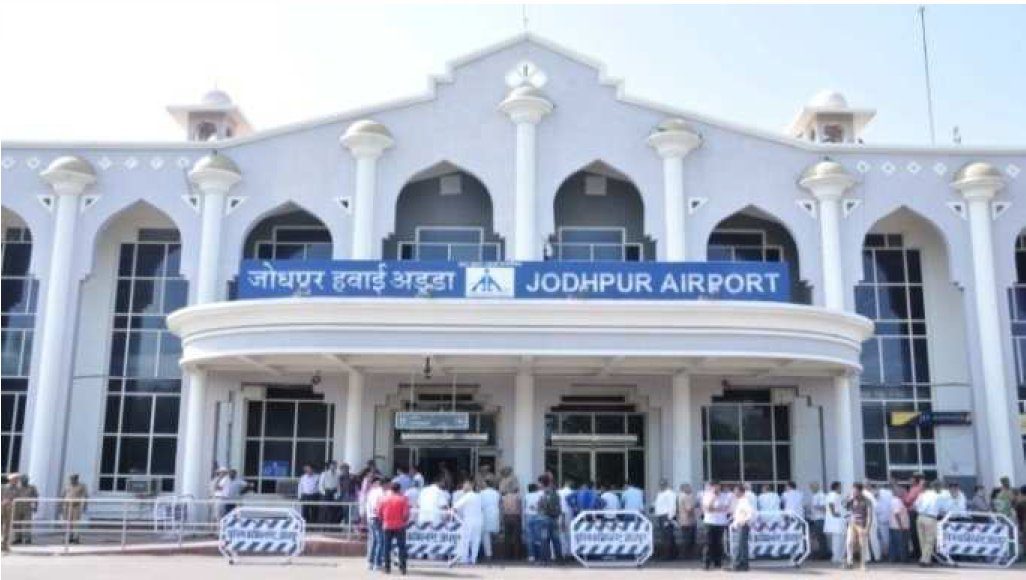
On July 4, 2026, the Prime Minister launched the next phase of the UDAN (Ude Desh ka Aam Naagrik) scheme at Jodhpur Airport, Rajasthan, committing approximately ₹29,000 crore to expand regional air connectivity across India. The announcement covered a comprehensive package: development of 100 new aerodromes, construction of 200 heliports in hilly and aspirational districts, viability gap funding to keep airline operations on thin regional routes financially sustainable, operations-and-maintenance support for aerodromes, and a push toward Atmanirbhar aviation through procurement of indigenously designed HAL Dhruv helicopters and Dornier aircraft. Union Minister of Civil Aviation Kinjarapu Rammohan Naidu presided over the event alongside the Prime Minister.
UDAN, formally the Regional Connectivity Scheme (RCS), was first launched in 2016 under the National Civil Aviation Policy (NCAP) 2016 with the explicit intent of democratising air travel — making it accessible to citizens in smaller towns and remote regions who had previously been priced out of the aviation market. This new phase represents the most ambitious expansion of the scheme since its inception, and it carries significant doctrinal, constitutional, and policy implications that CLAT aspirants must understand.
What Is UDAN and Why Was It Created?
The UDAN scheme addresses a structural problem in India’s aviation market: routes connecting smaller cities and towns are often commercially unviable because passenger demand is insufficient to cover the full operating costs of an airline. Left entirely to market forces, airlines concentrate their capacity on high-traffic trunk routes — Delhi-Mumbai, Bengaluru-Hyderabad, Chennai-Kolkata — while smaller cities receive little or no scheduled service. This market failure has spatial consequences: regions without air connectivity suffer from slower economic development, lower investment, and reduced access to healthcare and education for their residents.
UDAN was designed as a policy intervention to correct this market failure using Viability Gap Funding (VGF) — a financial instrument through which the government subsidises airlines to operate on routes that would otherwise be loss-making. In return for receiving VGF, airlines agree to offer a certain number of seats at capped, affordable fares on the designated regional routes. The scheme is jointly funded by the central government and the state governments where the routes operate, with state governments typically contributing through waivers of airport charges, VAT concessions on aviation turbine fuel, and direct VGF contributions.
The VGF Mechanism: Public Finance Meets Market Design
The concept of Viability Gap Funding is a cornerstone of infrastructure economics and public finance in India. It is used across sectors — roads, ports, power, and airports — wherever private investment is socially desirable but commercially insufficient. The logic is straightforward: a project or service has high social value but cannot attract private capital purely on the basis of user charges or revenue projections. The government calculates the “gap” between the project’s commercial returns and the level of return necessary to attract private participation, then fills that gap with a public subsidy.
In the UDAN context, the gap is computed as the difference between the full operating cost of running a regional route and the revenue the airline can realistically earn at capped fares from the available passenger base. The government disburses VGF to the airline on a per-seat or per-flight basis, making the route viable. The new phase allocates ₹10,043 crore specifically for VGF — the largest single line item after aerodrome development — reflecting the government’s recognition that subsidising operations is as important as building physical infrastructure.
100 New Aerodromes: Infrastructure, Cooperative Federalism, and Land
The development of 100 new aerodromes at a cost of ₹12,159 crore is the largest infrastructure component of the new phase. Aerodrome development in India is principally carried out by the Airports Authority of India (AAI), a statutory body constituted under the Airports Authority of India Act, 1994. The AAI manages civil enclaves at defence-operated airports, upgrades existing airstrips, and develops greenfield airports in partnership with state governments and private developers.
Building a new aerodrome requires land — and land acquisition in India is governed by the Right to Fair Compensation and Transparency in Land Acquisition, Rehabilitation and Resettlement Act, 2013 (LARR Act), which mandates social impact assessment, multi-crop land avoidance, and consent from affected families in certain cases. State governments play a critical role in facilitating land availability, which is why UDAN’s cooperative-federalism architecture — where states share costs and remove regulatory friction — is essential to project success.
The scheme’s cooperative federalism dimension is significant: states that waive airport charges and contribute to VGF get more routes, attracting airline traffic and the associated economic activity. This creates a competitive incentive for states to participate actively, which is different from pure central-sector schemes where the central government bears all costs.
200 Heliports: Connectivity for the Unreachable
The allocation of ₹3,661 crore for the construction of 200 heliports is targeted specifically at districts where fixed-wing aerodrome development is geographically impossible or prohibitively expensive: hilly terrain, island territories, and aspirational districts.
The Aspirational Districts Programme (now rechristened the Aspirational Districts and Blocks Programme) was launched in 2018 to accelerate socio-economic development in 112 districts across India that lag on composite indices covering health, nutrition, education, agriculture, water resources, financial inclusion, and basic infrastructure. Many of these districts are in northeastern India, Jharkhand, Odisha, Chhattisgarh, Madhya Pradesh, and Uttar Pradesh — regions where ground connectivity is poor and aviation connectivity is essentially nonexistent. Heliports can serve these areas as both emergency-response infrastructure (medical evacuation, disaster relief) and as regular connectivity hubs for passengers and cargo.
The inclusion of heliports also reflects the HAL Dhruv helicopter element of the Atmanirbhar thrust. The Advanced Light Helicopter (ALH) Dhruv, manufactured by Hindustan Aeronautics Limited (HAL), is the primary indigenous platform proposed for operating on the new helipad network. HAL also manufactures the Dornier Do 228 aircraft under licence from Germany’s RUAG Aerospace, which is slated for use on short regional routes. Privileging these platforms in procurement is an application of Atmanirbhar Bharat to aviation — using government procurement to drive demand for domestic defence and aerospace manufacturing.
The Role of AAI and DGCA
Two regulatory bodies govern civil aviation in India. The Airports Authority of India (AAI) is the infrastructure authority — it owns, manages, and develops airports, and provides air traffic services. The Directorate General of Civil Aviation (DGCA) is the safety and economic regulator — it licenses pilots, certifies aircraft, issues air operator permits to airlines, and regulates fares and route operations. Both operate under the overarching framework of the Aircraft Act, 1934 and the Aircraft Rules, 1937, which are the primary legislation governing civil aviation in India.
Under UDAN, the Ministry of Civil Aviation designates routes, AAI develops or upgrades the aerodromes, and DGCA ensures that the operators receiving VGF are properly licensed and meet safety standards. The three-way relationship between the ministry, AAI, and DGCA is an institutional structure that CLAT aspirants should understand as an example of how policy design, infrastructure development, and safety regulation are functionally separated across different statutory bodies within the same sector.
UDAN as a Public Goods and Merit Goods Problem
From the perspective of economic theory, regional air connectivity sits at the intersection of two conceptual categories. It is not a pure public good in the technical sense (it is excludable — airlines can refuse to carry non-paying passengers, and seats are rivalrous), but it shares characteristics of a merit good: a service whose social value exceeds what consumers would voluntarily pay for it, and which is likely to be under-provided by markets without government intervention. Merit goods theory justifies public subsidisation of services like education, healthcare, vaccination, and — in this framing — basic transport connectivity for remote communities.
The UDAN scheme is thus a conscious application of merit-goods logic to aviation policy. The government does not nationalise airlines or run them directly (a pure public-goods approach), but it corrects market failure through targeted subsidies — VGF — that preserve the efficiency of competitive markets while ensuring social equity in access. This policy design is conceptually sophisticated and CLAT questions may require students to identify and articulate this logic.
O&M Support: The Sustainability Problem
A persistent criticism of Indian airport infrastructure schemes is that new airstrips are built but then fall into disrepair because operations revenue is insufficient to cover maintenance. The new UDAN phase addresses this with a ₹2,577 crore allocation for operations and maintenance (O&M) support, acknowledging that viability requires not just capital investment but recurring operational subsidies for low-traffic airports that cannot generate commercial revenue from retail or cargo fees.
Why This Matters for CLAT
- Statutory bodies and their functions: The AAI Act, the Aircraft Act, and the DGCA’s regulatory mandate are essential knowledge; CLAT often tests whether students can correctly identify which body performs which function in multi-body regulatory schemes.
- Public finance instruments: Viability Gap Funding as a fiscal tool — how it works, when it is appropriate, and how it differs from direct government expenditure or subsidies — is a recurring GK and reasoning topic relevant to many schemes beyond aviation.
- Cooperative federalism: The cost-sharing and charge-waiver architecture of UDAN is a model of cooperative federalism in action; understanding how central schemes engage state governments is fundamental to constitutional governance questions.
- Atmanirbhar Bharat in procurement: The preference for HAL Dhruv and Dornier aircraft is an application of the Make in India/Atmanirbhar doctrine to government procurement; this links to the same public procurement framework discussed in GFR-related topics.
- Policy design and market failure: Recognising aviation connectivity as a merit-goods problem — and VGF as the corrective instrument — demonstrates the kind of analytical thinking CLAT legal reasoning questions reward.
Conclusion
The next phase of UDAN, launched at Jodhpur on July 4, 2026, is more than an infrastructure announcement. It is a statement about how India intends to govern geographic inequality in economic opportunity: not by nationalising aviation or mandating loss-making routes without compensation, but by designing a cooperative, subsidy-backed scheme that aligns public goals with private capacity. The ₹29,000 crore commitment — split across aerodrome development, heliports, VGF, O&M support, and indigenous aircraft procurement — reflects a sophisticated understanding of the multiple market failures that limit regional connectivity: infrastructure gaps, commercial unviability of thin routes, recurring maintenance under-funding, and import dependence in aviation hardware. For CLAT aspirants, UDAN offers a rich intersection of constitutional law, statutory bodies, public finance, economic policy, and cooperative federalism — all in a single current-affairs story that rewards careful analysis.
Test Yourself — Daily Quiz
Practice Quiz — 10 CLAT-Style Questions
Click an option to reveal the answer and explanation.