CURRENT AFFAIRS | 25 MAY 2026
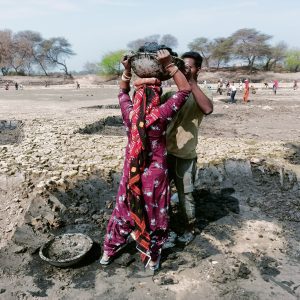
On 25 May 2026 — Ganga Dashami — the Rajasthan Government’s Watershed Development & Soil Conservation Department launched the Vande Ganga Jal Sanrakshan – Jan Abhiyan 2026, a 12-day water-conservation campaign culminating on 5 June 2026 (World Environment Day). CM Bhajan Lal Sharma flagged it off from the historic Ramgarh Dam in Jaipur, doing shramdaan. The campaign converges PMKSY (Pradhan Mantri Krishi Sinchayee Yojana, 2015) with Rajasthan’s flagship Mukhyamantri Jal Swavalamban Abhiyan (MJSA, since 2016).
For CLAT 2027 students this is a one-shot revision of every environment/water article, doctrine, and scheme on the syllabus — Art 21, Art 48A, Art 51A(g), Sch VII water-list entries, the Public Trust Doctrine, and a comparison of PMKSY/JJM/Atal Bhujal/Namami Gange.
Constitutional & Legal Framework
- Article 21 — Right to clean water as part of right to life (Subhash Kumar v Bihar, 1991)
- Article 48A — DPSP, protection of environment
- Article 51A(g) — Fundamental Duty to protect environment
- Sch VII List II Entry 17 — Water (State subject)
- Sch VII List I Entry 56 — Inter-state rivers (Centre)
- Inter-State River Water Disputes Act 1956 — Adjudication mechanism under Art 262
- Easements Act 1882 — Riparian rights
- Public Trust Doctrine — MC Mehta v Kamal Nath (1997)
CLAT 2027 Angle
Maps onto SDG 6 (water and sanitation) and India’s Nationally Determined Contributions. Differentiate Jal Jeevan Mission (2019, rural piped tap-water), PMKSY (2015, irrigation — Har Khet Ko Pani), Atal Bhujal Yojana (2019, groundwater management in 7 states with World Bank support), Catch the Rain (2021), and Namami Gange Mission (2014, NMCG under Min. of Jal Shakti). Vande Ganga Jal Sanrakshan is a state-Centre convergence model — useful for legal-reasoning passages on cooperative federalism.
Key Facts at a Glance
| Item | Detail |
|---|---|
| Campaign period | 25 May → 5 June 2026 (12 days) |
| Start | Ganga Dashami |
| End | World Environment Day |
| State / Department | Rajasthan / Watershed Dev. & Soil Conservation |
| Central scheme converged | PMKSY (2015) |
| State scheme converged | MJSA (since 2016) |
| Flag-off site | Ramgarh Dam, Jaipur |
| Sub-campaign | “Hariyalo Rajasthan” + KarmBhumi–MatruBhumi |
Mnemonic: “GANGA”
- Ground-water recharge focus
- Abhiyan = 12-day window (Ganga Dashami → WED)
- Namami Gange runs parallel under NMCG
- Gram-level KarmBhumi–MatruBhumi harvesting
- Art 48A + 51A(g) constitutional anchor
Landmark Cases
- Subhash Kumar v State of Bihar (1991) — Right to clean water/air read into Art 21
- Narmada Bachao Andolan v UoI (2000) — Balancing development and displacement
- MC Mehta v Kamal Nath (1997) — Public Trust Doctrine enshrined
- MC Mehta v UoI (Ganga pollution series) — Polluter pays + cleanup directives
Practice Quiz
Practice Quiz — 10 CLAT-Style Questions
Click an option to reveal the answer and explanation.