CURRENT AFFAIRS | 12 JUNE 2026
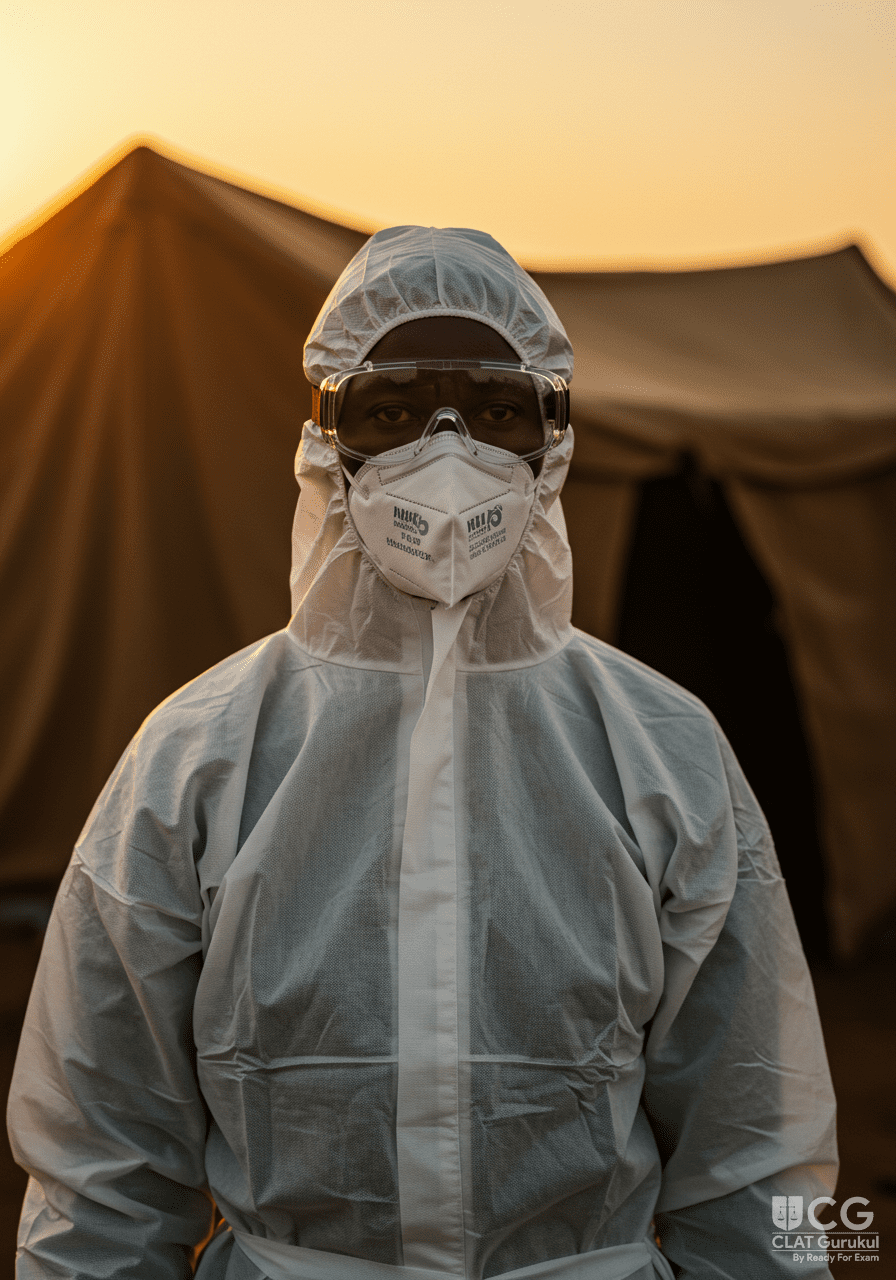
The World Health Organization has sounded its highest alarm. On 16 May 2026, the WHO declared the Ebola outbreak in the Democratic Republic of the Congo a Public Health Emergency of International Concern (PHEIC), the apex level of global health alert. What makes this outbreak especially worrying is its cause: the Bundibugyo strain, against which existing vaccines and treatments are far less effective.
For CLAT aspirants, this is a window into the world of international organisations and global health governance. The PHEIC mechanism, the International Health Regulations and the WHO’s structure are recurring themes in the GK and Current Affairs section.
Beyond the science, the story is about institutions: how the world coordinates when a disease threatens to cross borders, and why legal frameworks matter as much as medicine.
What Happened
The outbreak, centred in the DR Congo with spillover into Uganda, is caused by the Bundibugyo ebolavirus rather than the Zaire strain that current countermeasures target. By the second week of June, there were roughly 635 confirmed infections and about 127-129 deaths in the DRC plus two in Uganda, with a case-fatality rate estimated between 25% and 50%.
Armed conflict and weak health infrastructure have severely hampered the response, meaning the true scale is likely higher than reported. The PHEIC declaration aims to mobilise international resources, funding and coordination under a binding legal framework.
- WHO declared a PHEIC on 16 May 2026, its highest level of alarm.
- Caused by the Bundibugyo ebolavirus (not the Zaire strain targeted by existing vaccines).
- Centred in DR Congo, with spillover to Uganda.
- ~635 confirmed infections; ~127-129 deaths in DRC + 2 in Uganda; CFR ~25%-50%.
- Response hampered by armed conflict and weak health infrastructure.
Constitutional / Legal Framework
A PHEIC is declared under the International Health Regulations (IHR), 2005, a legally binding instrument that obliges states to detect, report and respond to public-health risks. The declaration is made by the WHO Director-General on the advice of an Emergency Committee. The WHO is a UN specialized agency headquartered in Geneva, led by Director-General Dr Tedros Adhanom Ghebreyesus. Prior PHEICs include COVID-19, mpox, polio, Zika and the 2014 and 2019 Ebola outbreaks.
CLAT Angle
For CLAT 2027, expect questions on what a PHEIC is, who declares it (the WHO Director-General, not the UN Secretary-General), and the legal basis (IHR 2005). The WHO’s status as a UN specialized agency and its Geneva HQ are static GK staples. A list-based question may ask you to identify which disease was not a past PHEIC, rewarding careful recall.
Key Facts
| Item | Detail |
|---|---|
| Declaration | PHEIC, 16 May 2026 |
| Strain | Bundibugyo ebolavirus |
| Epicentre | DR Congo (spillover to Uganda) |
| Confirmed infections | ~635 |
| Deaths | ~127-129 (DRC) + 2 (Uganda) |
| Case-fatality rate | ~25%-50% |
| Framework | International Health Regulations (IHR), 2005 |
| WHO DG / HQ | Dr Tedros Adhanom Ghebreyesus / Geneva |
Mnemonic / Memory Hook
“PHEIC = Peak Health Emergency, IHR 2005, Congo (Bundibugyo).” Remember the decider: “DG Declares” (Director-General, on Emergency Committee advice). WHO HQ = Geneva, “G for Global.”
Conclusion
The Congo Ebola PHEIC underscores how a binding global framework, the IHR 2005, springs into action when disease threatens to cross borders. For aspirants, it is a clean, high-yield lesson in international health governance and the architecture of the WHO.
Practice Quiz — 10 CLAT-Style Questions
Click an option to reveal the answer and explanation.