CURRENT AFFAIRS | 10 JUNE 2026
10 June 2026 — Wednesday’s newsroom for CLAT 2027 aspirants. Below is one of ten passage-led current-affairs explainers built on India’s constitutional, statutory and policy framework.
Constitutional & Statutory Framework
- World Health Organization (WHO) — the UN specialised agency for international public health; HQ Geneva.
- International Health Regulations (IHR), 2005 — the binding legal framework on cross-border health emergencies.
- PHEIC — Public Health Emergency of International Concern; declared by the WHO Director-General on Emergency Committee advice.
- Ebola Virus Disease (EVD) — severe, often fatal; spreads via bodily fluids; the Zaire strain is the most lethal.
- rVSV-ZEBOV vaccine — used in ring-vaccination to contain Ebola outbreaks.
- Africa CDC — the African Union’s continental public-health agency, leading the regional response.
- SDG-3 — UN Sustainable Development Goal 3: ensure healthy lives and well-being for all.
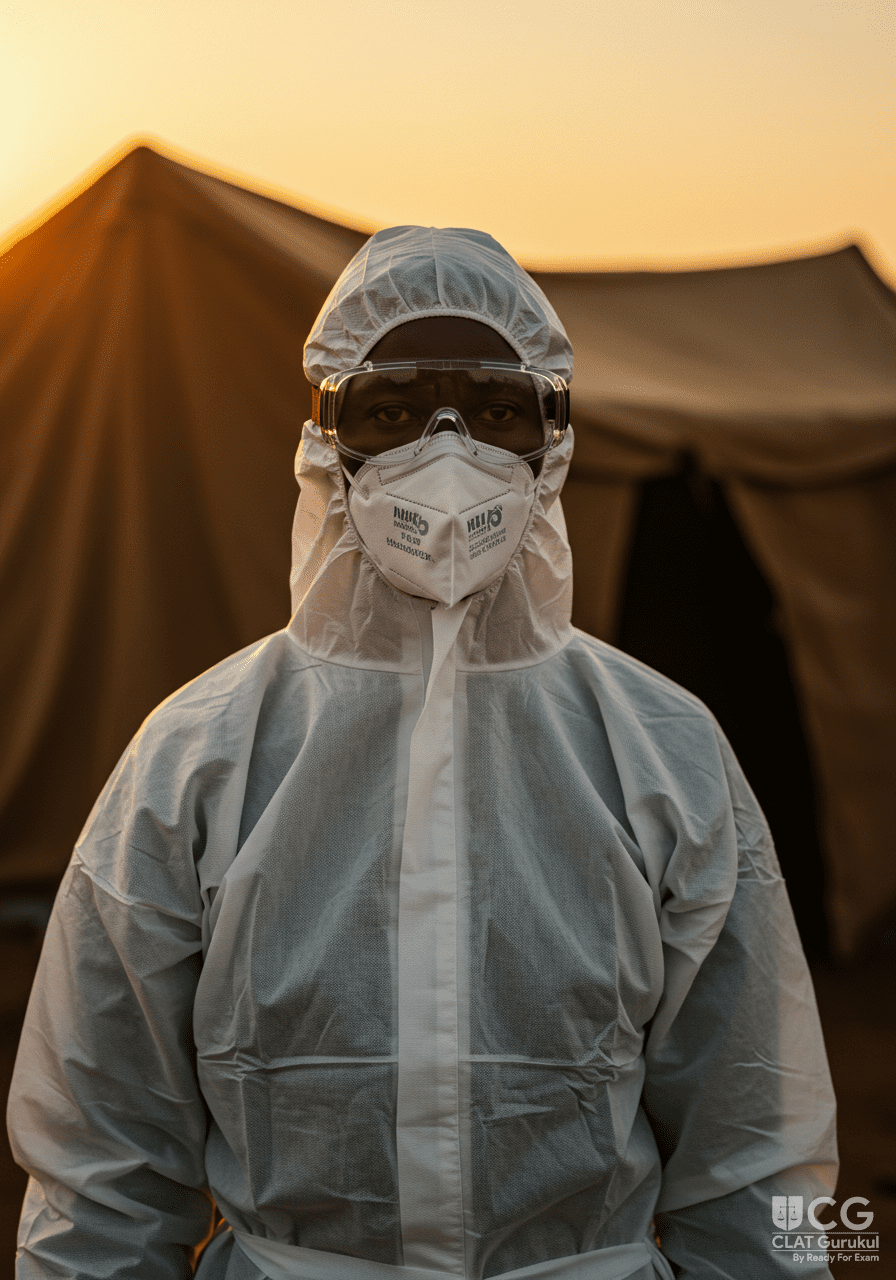
The Democratic Republic of Congo is battling one of the largest Ebola outbreaks ever recorded — over 550 confirmed cases and more than 100 deaths — even as medics in the eastern provinces of North Kivu and Butembo run desperately short of the most basic protective equipment: masks, boots and gowns. The crisis is testing not just Congo’s fragile health system but the entire architecture of global health governance built around the World Health Organization and its International Health Regulations.
Ebola Virus Disease (EVD) is a severe and frequently fatal illness that spreads through contact with the bodily fluids of infected people or animals. The Zaire strain — the variant circulating in the DRC — is the most lethal, with historical case-fatality rates running very high in the absence of treatment. The disease’s ferocity is compounded in eastern DRC by armed conflict, displacement and the collapse of supply chains, which together have driven up the cost of personal protective equipment just when it is most needed. Some 34 healthcare workers have already been infected, with 19 confirmed cases among them.
Weeks earlier the WHO declared the outbreak a Public Health Emergency of International Concern (PHEIC) — the highest alarm in its repertoire. A PHEIC is declared by the WHO Director-General, acting on the advice of an Emergency Committee, under the International Health Regulations (IHR), 2005. The IHR is a legally binding instrument on all WHO member states; it obliges countries to detect, assess, notify and respond to events that may constitute international health emergencies, while balancing public-health protection against unnecessary interference with trade and travel.
The response on the ground is being coordinated by the International Rescue Committee (IRC) and the Africa CDC — the African Union’s continental health agency — amid aid cuts and logistical bottlenecks. Only about a quarter of the critical supplies needed for the next three months are currently re-positioned and ready, a shortfall that public-health experts warn could allow the outbreak to widen. A central tool in containment is the rVSV-ZEBOV vaccine, deployed through “ring vaccination” — immunising the contacts, and contacts-of-contacts, of confirmed cases to throw a protective cordon around the infection.
For CLAT aspirants, the episode is a clean test of international-organisation knowledge: the WHO’s mandate, the IHR 2005 as the binding legal backbone, the PHEIC mechanism, and the broader frame of UN Sustainable Development Goal 3 (good health and well-being). It also surfaces a recurring governance dilemma — that the institutions designed to coordinate a global response depend on financing and equity in supply that often arrive late, unevenly, and at a premium when they are needed most.
Key Facts at a Glance
| Field | Detail |
|---|---|
| Outbreak | Ebola in DRC (North Kivu, Butembo) — one of the largest ever |
| Toll | 550+ confirmed cases; 100+ deaths; 34 health workers infected (19 confirmed cases) |
| WHO action | PHEIC declared — highest-level international health alarm |
| Legal backbone | International Health Regulations (IHR), 2005 — binding on member states |
| Responders | International Rescue Committee (IRC) + Africa CDC |
| The virus | EVD spreads via bodily fluids; Zaire strain most lethal |
| Vaccine / tactic | rVSV-ZEBOV via ring vaccination; SDG-3 frame |
CLAT 2027 Angle
WHO mandate and HQ; International Health Regulations (IHR) 2005 as the binding legal backbone; the PHEIC mechanism and who declares it; Ebola (Zaire strain, rVSV-ZEBOV ring vaccination); Africa CDC; SDG-3. Expect international-organisation GK on PHEIC and IHR 2005, and current-affairs MCQs on the DRC outbreak numbers.
Mnemonic — Memory Aid
“IHR-2005 → PHEIC → DG” — read the WHO emergency ladder backwards from the alarm: the Director-General declares a PHEIC on Emergency-Committee advice, under the binding IHR 2005. For the disease: “Zaire = most lethal; rVSV-ZEBOV = the ring vaccine.” And remember the agency triangle “WHO (global) – Africa CDC (continental) – IRC (field)”, all serving SDG-3 (good health).
Test Yourself — 10-Question Quiz
Take the interactive quiz below to reinforce these concepts:
Practice Quiz — 10 CLAT-Style Questions
Click an option to reveal the answer and explanation.