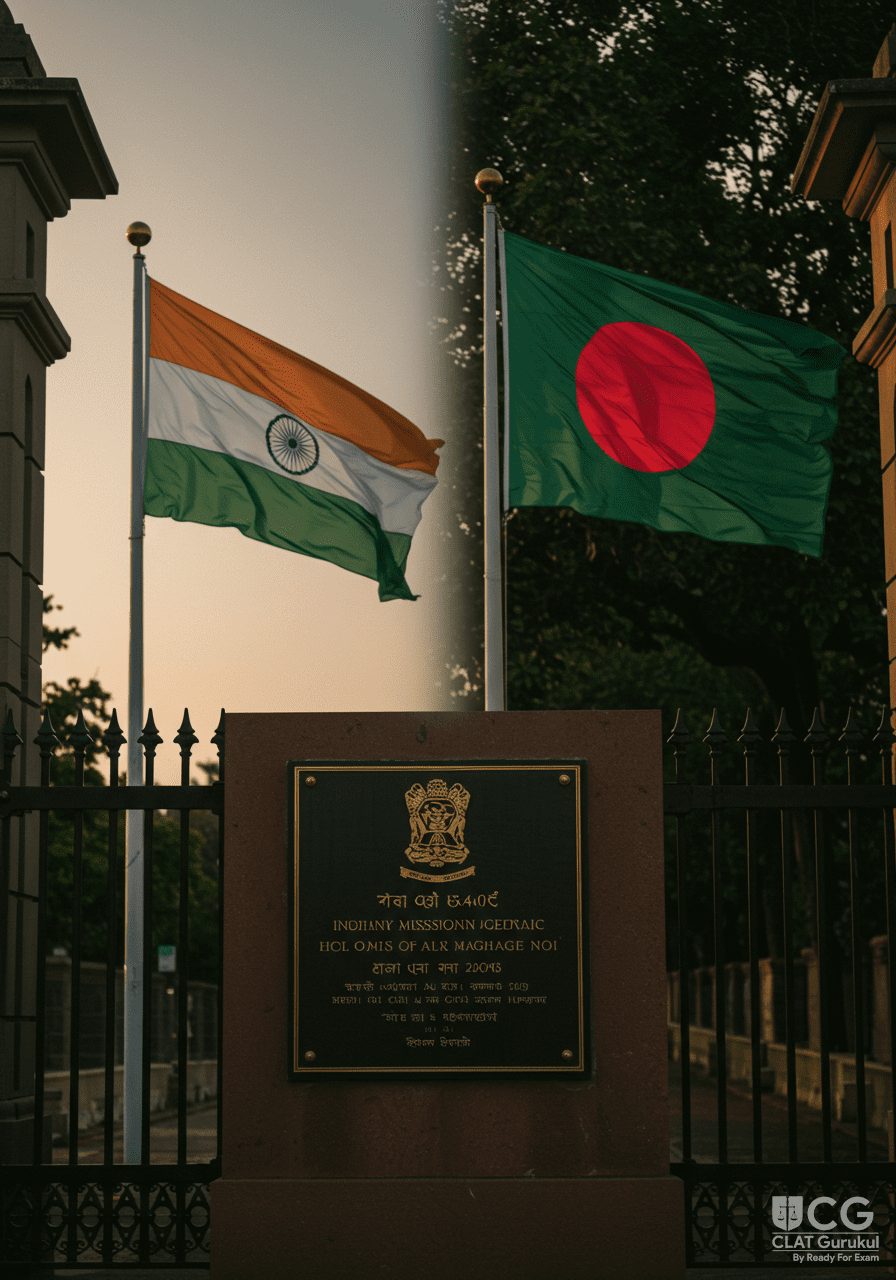
The Bangladesh-Turkey decision (6 June 2026) to form a joint ministerial-level committee on defence and foreign affairs — announced after FM Hakan Fidan met PM Tarique Rahman in Dhaka — operationalises a Dhaka-Ankara-Islamabad strategic triangle, with Bayraktar TB2 drones already in the Pakistan Army’s inventory, and tests the elasticity of India’s Indira Doctrine, Act East policy, and the BIMSTEC Charter 2022 framework anchored under Art. 51 DPSP.
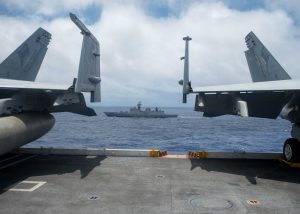
Fidan’s three-day visit produced an explicit upgrade: ‘this visit constituted the first step towards elevating Bangladesh-Turkey relations to the strategic level.’ The two sides decided on annual joint office consultations between foreign + defence ministers and identified climate change, trade and investment, joint production, and regional/international matters of mutual interest as cooperation pillars. For India, the Turkey-Pakistan defence channel — Bayraktar TB2 drones, MILGEM-class corvettes, Turkish Aerospace Hurjet trainers — has been operational since the late 2010s. Adding Bangladesh as the third vertex creates a continuous strategic corridor along India’s western + eastern flanks. The Indian Navy’s Op Sankalp escort architecture in the Gulf of Aden and the Indo-Pacific Oceans Initiative (IPOI 2019) become more important; so does India’s BIMSTEC leadership.
📜 Constitutional / Statutory Anchor
BIMSTEC Charter 2022 — operationalised in 2022 at the Colombo Summit, the seven-member Bay of Bengal forum (BD, Bhutan, India, Nepal, Sri Lanka, Myanmar, Thailand) has India as its largest member; the Charter institutionalises the Secretariat in Dhaka. UNCLOS 1982 — Articles 121 (regime of islands) + 76 (continental shelf) + the EEZ regime under Part V govern maritime-boundary disputes; India + Bangladesh resolved their maritime boundary at the 2014 PCA award. Art. 51 DPSP — directs the State to promote international peace + security and encourage settlement of disputes by arbitration. Indira Doctrine (de-facto, post-1971) — South-Asian regional primacy assumed by India; informed Indian intervention in Bangladesh Liberation War (1971), Sri Lanka IPKF (1987-90), and the 1988 Maldives Op Cactus.
The institutional significance is that India’s neighbourhood architecture is being tested simultaneously on three fronts: a hostile western neighbour with Turkish-Chinese hardware, a north-eastern neighbour now openly courting Ankara, and the Bay of Bengal littoral being courted by China through ports + infrastructure. The legal anchors for India’s response are non-trivial. Art. 51 DPSP, while non-justiciable, has been invoked by the Supreme Court in Vellore Citizens Welfare Forum v. UoI (1996) 5 SCC 647 and Vishaka v. State of Rajasthan (1997) 6 SCC 241 to read international obligations into domestic law. The BIMSTEC Charter 2022 — unlike SAARC, which has been paralysed since 2016 — provides a working multilateral forum that excludes Pakistan.
🎯 Key Facts at a Glance
- Joint committee announced 6 June 2026 after Fidan-Rahman meeting in Dhaka.
- Annual joint office consultations between FM + defence ministers to be institutionalised.
- Turkey already supplies Bayraktar TB2 drones + MILGEM corvettes to Pakistan.
- BIMSTEC Secretariat in Dhaka; Charter 2022 at Colombo Summit; 7 members.
- India + Bangladesh resolved maritime boundary by 2014 PCA award under UNCLOS 1982 Annex VII.
- Op Sankalp — Indian Navy’s continuous escort + maritime security architecture in the Gulf of Aden.
Comparable frameworks elsewhere place the move in context. NATO’s Article 5 collective-defence model has no analogue in South Asia; SAARC has been frozen since 2016. The closest equivalent is the QUAD (India, US, Japan, Australia) — but QUAD is consultative, not treaty-bound. China’s Belt and Road Initiative — already touching Bangladesh through Chittagong port investments — adds a third dimension. The Turkey-Pakistan-Bangladesh axis is not yet a formal alliance, but the language (‘strategic relations’, ‘joint production’) signals direction. India’s response is likely to layer through BIMSTEC, IPOI 2019, the Indian Navy’s Mission Sagar / HADR record (Sri Lanka 2022 econ crisis, Maldives 2014 water crisis, Myanmar Cyclone Mocha 2023), and bilateral defence offsets with Bangladesh and Sri Lanka.
⚖️ CLAT Angle
Expect a Legal Reasoning passage on Art. 51 DPSP read with the UNCLOS regime, with principle-application questions on whether India can invoke maritime jurisdiction under UNCLOS Art. 76 or Annex VII against an adverse boundary claim. Vellore Citizens Welfare Forum v. UoI (1996) 5 SCC 647 on the precautionary principle as customary international law and Vishaka v. State of Rajasthan on incorporating international norms via Art. 51(c) are anchor cases. A Current Affairs set may test BIMSTEC’s seven members, the Charter’s 2022 date, and the IPOI’s seven pillars.
What to watch next: the date + agenda of the first joint office consultation; Turkey’s Hurjet trainer sale to Bangladesh; whether BIMSTEC’s next summit operationalises the Bay-of-Bengal Security Initiative; and whether the Indian Navy’s Op Sankalp footprint is extended eastward. Expect a Lok Sabha question on the implications during the monsoon session.
💡 Why This Matters for CLAT 2027 Aspirants
India’s neighbourhood + multilateral architecture is a recurring CLAT-CA theme. Memorise BIMSTEC’s 7 members + 2022 Charter + Dhaka Secretariat, UNCLOS Part V (EEZ) + Annex VII (arbitral tribunal), Art. 51 DPSP four clauses, Indira Doctrine (informal), and Vishaka/Vellore as principles bridging Art. 51 into domestic law.
📝 Test Yourself — 10-Question Quiz
Take the interactive quiz below to reinforce these concepts:
Practice Quiz — 10 CLAT-Style Questions
Click an option to reveal the answer and explanation.