CURRENT AFFAIRS | 9 JUNE 2026
9 June 2026 — Tuesday’s newsroom for CLAT 2027 aspirants. Below is one of ten passage-led current-affairs explainers built on India’s constitutional, statutory and policy framework.
Constitutional & Statutory Framework
- Article 81 — composition of the Lok Sabha; ceiling on territorial-constituency seats.
- Article 82 — readjustment of seats after each Census, by Parliament-made law.
- Article 170 — composition of Legislative Assemblies of States; mirrors Art. 81 logic for Vidhan Sabhas.
- Article 327 — power of Parliament to make laws on elections to Parliament and State Legislatures.
- Article 332 — reservation of seats for SC/STs in State Legislative Assemblies.
- 106th Amendment 2023 (Nari Shakti Vandan Adhiniyam) — 33% women’s reservation in Lok Sabha + Assemblies, contingent on first delimitation after 2026 Census.
- 42nd, 84th & 87th Amendments — successively froze the inter-state seat allocation at 1971 / 2001 Census figures until “first Census after 2026”.
- Delimitation Commission Act 2002 — statutory authority for redrawing constituency boundaries.
- Kesavananda Bharati (1973) & SR Bommai (1994) — basic-structure doctrine; federalism as a basic feature.
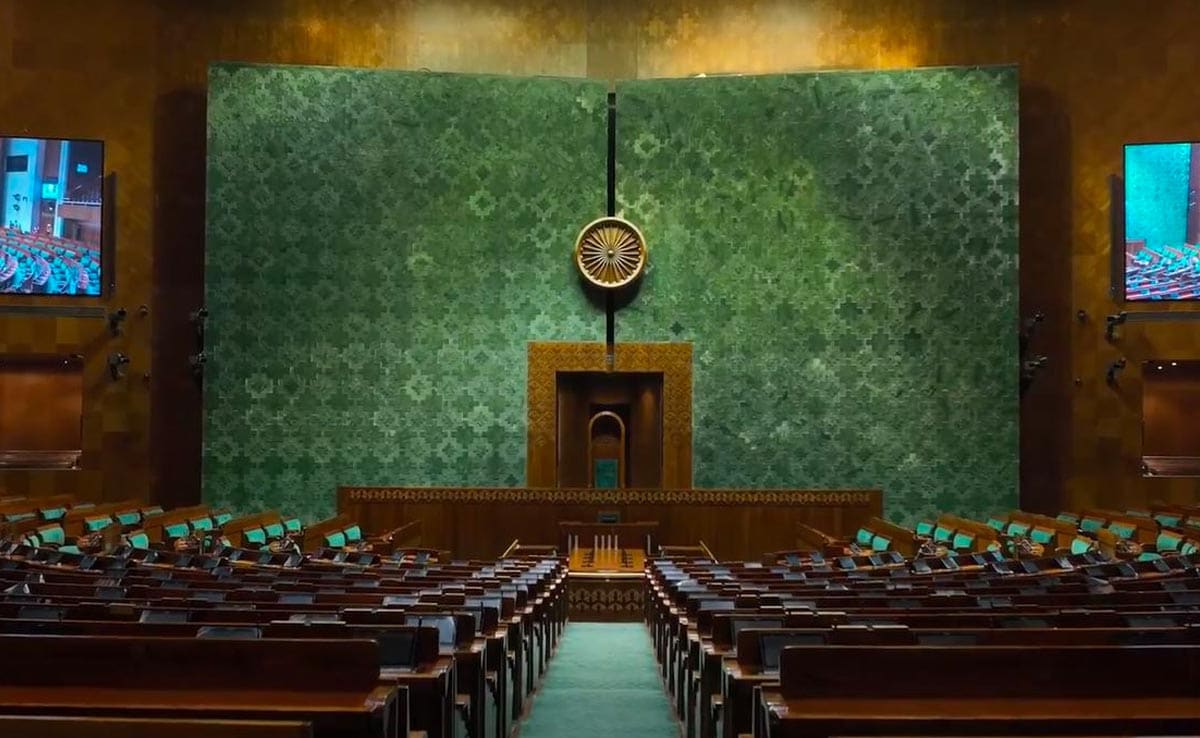
Two months after the Centre’s first attempt was defeated on the floor of the Lok Sabha in April 2026, the Modi government is working to reintroduce the Constitution (One Hundred and Thirty-First Amendment) Bill 2026, along with the Delimitation Bill 2026 and the Union Territories Laws (Amendment) Bill 2026, in a package that would push Lok Sabha strength from 543 to 816 and finally operationalise women’s reservation under the Nari Shakti Vandan Adhiniyam. The 131st Amendment is the structural piece that would unfreeze Article 81(3) and let the first post-2026 delimitation actually happen.
The political fault-line is North vs South. Southern states — Tamil Nadu, Kerala, Andhra Pradesh, Telangana and Karnataka — have argued that any delimitation indexed to population would penalise states that delivered on the demographic transition. DMK MP Kanimozhi Karunanidhi led the opposition charge in the April debate, warning that the federal compact would tilt decisively toward the Hindi belt.
To break the deadlock the Centre is now reportedly working on a no-loser formula: no state’s existing Lok Sabha share would be reduced, and the additional seats — taking the House from 543 to 816 — would be allocated in proportion to current population. Under the modelled distribution, Uttar Pradesh would jump from 80 to 143 seats (+63), Bihar from 40 to 79 (+39), while Tamil Nadu would rise from 39 to 49, Kerala from 20 to 30 and Andhra Pradesh from 25 to 38.
Article 81(3) currently freezes the allocation of Lok Sabha seats and the division of states into territorial constituencies at the “last preceding Census” — until the figures of the first Census taken after 2026 are published. The 42nd Amendment (1976) first imposed this freeze, the 84th (2001) extended it to 2026, and the 87th (2003) shifted the data-source to the 2001 Census while keeping the seat-share frozen at 1971. The 131st Amendment is the constitutional key that unlocks all of this.
Once enacted, a Delimitation Commission constituted under the separate Delimitation Bill 2026 will redraw boundaries for the expanded Lok Sabha and for the State Legislative Assemblies under Article 170. Past Commissions (1952, 1962, 1972, 2002) have functioned as quasi-judicial bodies whose orders cannot be challenged in any court — a feature courts have repeatedly upheld since Meghraj Kothari v. Delimitation Commission (1967).
The constitutional stakes go beyond seat arithmetic. In Kesavananda Bharati v. State of Kerala (1973) 4 SCC 225 the Supreme Court held that Parliament’s amending power under Article 368 cannot abrogate the basic structure; in SR Bommai v. UoI (1994) 3 SCC 1 federalism was expressly declared a basic feature. Any “no-loser” formula must therefore survive a basic-structure challenge — particularly the argument that proportional growth concentrated in the North could erode the political equality of the southern states within the Union.
Key Facts at a Glance
| Field | Detail |
|---|---|
| Bill | Constitution (131st Amendment) Bill 2026 + Delimitation Bill 2026 + UT Laws (Amendment) Bill 2026 |
| What it does | Unfreezes Art. 81(3); enables first post-2026 delimitation; operationalises 106th Amendment (women’s reservation) |
| House strength | 543 → 816 Lok Sabha seats (proposed) |
| UP gain | 80 → 143 seats (+63); Bihar 40 → 79 (+39) |
| Southern gain | TN 39 → 49; Kerala 20 → 30; AP 25 → 38 |
| Formula on the table | “No-loser” — no state loses existing seats; growth allocated proportionally |
| Anchor cases | Kesavananda Bharati (1973); SR Bommai (1994); Meghraj Kothari (1967) |
CLAT 2027 Angle
Articles 81, 82, 170, 327, 332 — composition of Lok Sabha and State Legislatures; delimitation; Census; the 42nd, 84th and 87th Constitutional Amendments freezing seat-share; the 106th Amendment (Nari Shakti Vandan Adhiniyam, 2023) on women’s reservation; basic-structure doctrine and federal balance — Kesavananda Bharati (1973), SR Bommai (1994). Expect Legal Reasoning passages on amendment procedure and basic structure; Current Affairs sets on the ‘no-loser’ formula; and Polity GK on Article 81(3)’s text.
Mnemonic — Memory Aid
“81-82-170 + 327-332 + 106” — the six numbers that govern delimitation. Read them as a phone-style chant: 81 (Lok Sabha composition) → 82 (readjustment after Census) → 170 (State Assembly mirror) → 327 (Parliament’s election-law power) → 332 (SC/ST reservation) → 106th (women’s reservation, locked to first post-2026 delimitation). Remember “42-84-87” as the three freeze-amendments and “816 minus 543 = 273” as the size of the proposed expansion.
Test Yourself — 10-Question Quiz
Take the interactive quiz below to reinforce these concepts:
Practice Quiz — 10 CLAT-Style Questions
Click an option to reveal the answer and explanation.