CURRENT AFFAIRS | 25 MAY 2026
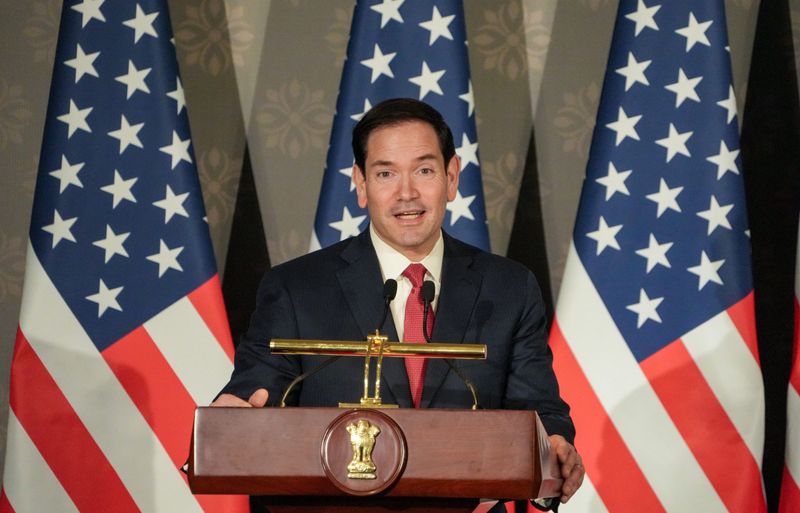
On 24 May 2026, the Embassy of the Islamic Republic of Iran in New Delhi formally rejected US Secretary of State Marco Rubio’s remark that Iran “must give up its enriched uranium.” The Embassy’s statement underlined that Iran’s nuclear programme is peaceful, that Iran is a signatory to the NPT (Treaty on the Non-Proliferation of Nuclear Weapons), that its facilities are IAEA-safeguarded, and that “the use of nuclear science is a legitimate and inalienable right under the NPT.” Tehran also rejected President Trump’s claim that he brokered the Operation Sindoor ceasefire between India and Pakistan.
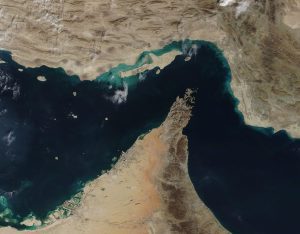
Separately, on Truth Social, President Trump signalled “no rush” for an Iran deal and confirmed the US blockade on Iranian ships in the Strait of Hormuz remains “in full force.” A draft Memorandum of Understanding on a peace track is “largely negotiated”, with daylight remaining on enriched-uranium fate, ~$25B in frozen Iranian assets, Hormuz reopening, and the sequencing of sanctions relief.
Constitutional & Legal Framework
- NPT, 1968 — Article IV: inalienable right to peaceful nuclear use; Article III: IAEA safeguards on non-NWS parties.
- IAEA Statute, 1957 — created the Vienna-headquartered Agency to verify peaceful use.
- JCPOA, 2015 — Iran’s enrichment capped at 3.67%; US withdrew 2018; UNSCR 2231 endorsed JCPOA.
- UN Charter Article 2(4) — prohibition on use of force; Article 51 — inherent right of self-defence.
- UNCLOS, 1982 Article 38 — right of transit passage through straits used for international navigation (eg Hormuz).
- India: Atomic Energy Act, 1962 §3 & §14 — fissile material and licensing.
- India is NOT a party to the NPT — but is a de-facto nuclear-weapon State (1974 PNE; 1998 Pokhran-II).
- UNSC Resolution 2231 (2015) — endorsed the JCPOA; set the “snapback” mechanism.
CLAT 2027 Angle
This story is rich on two doctrines. One — transit passage: Iran has never ratified UNCLOS, but transit passage through Hormuz is recognised as customary international law (CIL); ICJ Oil Platforms (Iran v. US, 2003) further restricts US use of force in the Gulf. Two — peaceful nuclear use: Article IV NPT is “inalienable” but conditional on Articles I-III non-proliferation duties. India’s stake: roughly 60%+ of India’s Gulf crude transits Hormuz, making escalation a direct hit on India’s energy security and current-account stability. Pair with Nicaragua v. US (1986) for the broader customary self-defence doctrine.
Key Facts Table
| Embassy statement | 24 May 2026 (New Delhi) |
| NPT | Signed 1968; in force 1970 |
| India & NPT | NOT a signatory |
| JCPOA enrichment cap | 3.67% (Iran current ~60%) |
| Strait of Hormuz width | ~21 nautical miles narrowest |
| Global oil through Hormuz | ~20% |
| India’s Gulf crude share | ~60% via Hormuz |
Cases: ICJ Oil Platforms — Iran v. US (2003), United States Diplomatic and Consular Staff in Tehran — Tehran Hostages (1980), Nicaragua v. US (1986).
Mnemonic — HORMUZ
- Hormuz transit passage — UNCLOS Article 38
- Oil Platforms — ICJ 2003 limits self-defence claim
- Right to peaceful U-235 — NPT Article IV
- MoU on peace deal “largely negotiated”
- US blockade on Iranian ships still in full force
- Zone of ~$25B frozen Iranian assets pending
Practice Quiz — 10 CLAT-Style Questions
Click an option to reveal the answer and explanation.