CURRENT AFFAIRS | 25 MAY 2026
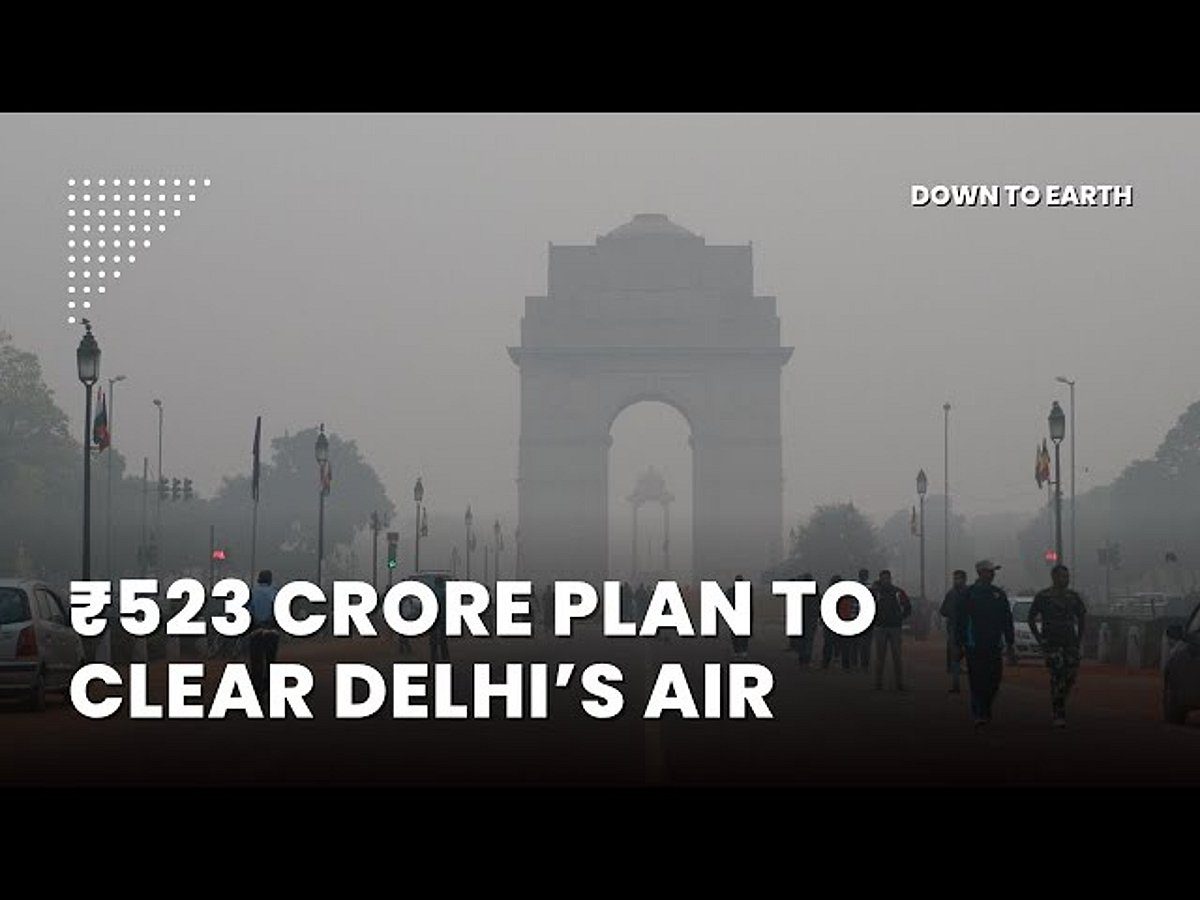
A yearlong Indian Express investigation (published 25 May 2026) tore the lid off Delhi’s killer dust crisis. Per the 2016 IIT-Kanpur source apportionment study, road dust contributes ~38% of Delhi’s PM2.5 and 28% of PM10. Against the CAQM-recommended fleet of ~505 Mechanical Road Sweeping Machines (MRSMs), the MCD operates only 76 — an ~80% shortfall. Worse, fleet deployment is concentrated on a few VIP corridors: 5 of 52 designated routes account for 18% of total sweeping distance. One kilometre of road can hold up to 145 kg of loose dust. MCD has now committed to adding 70 more MRSMs by October 2026 alongside real-time fleet tracking.
A 2025 CSIR-NEERI + IIT Delhi joint study independently corroborated the IIT-Kanpur finding — road silt drives “alarmingly high levels” of PM10 across the capital. For CLAT, this story neatly bridges the Article 21 right to a clean environment, the CAQM Act, 2021 architecture and the MK Ranjitsinh (2024) doctrine of a right against climate change.
Constitutional & Legal Framework
- Article 21 — Right to a clean and pollution-free environment (Subhash Kumar v. State of Bihar, 1991).
- Article 48A (DPSP) — State to protect & improve the environment and safeguard forests and wildlife.
- Article 51A(g) (FD) — Fundamental duty to protect and improve the natural environment.
- Air (Prevention & Control of Pollution) Act, 1981 §16, §21 — CPCB powers and consent regime.
- Environment Protection Act, 1986 §3, §5, §7 — Centre’s powers; legal anchor for GRAP via §5 directions.
- NGT Act, 2010 §14, §15, §17 — original jurisdiction over substantial environmental questions.
- CAQM Act, 2021 — Statutory Commission for Air Quality Management in NCR & Adjoining Areas (replaced EPCA).
- Motor Vehicles Act §190 — emission-norm offences.
CLAT 2027 Angle
This story tests three doctrines. One: the MC Mehta v. Union of India vehicular pollution series — the 1998 CNG mandate is its showpiece. Two: MK Ranjitsinh v. UoI (2024) — the Great Indian Bustard judgment recognising a right against the adverse effects of climate change under Articles 14 + 21. Three: Vardhaman Kaushik v. UoI (NGT, 2014) — dust-control directions. GRAP Stages I–IV derive their legal sanctity from CAQM Act + EPA §5. Expect a Legal Reasoning passage asking whether the MRSM shortfall makes the State’s executive inaction justiciable.
Key Facts Table
| Road-dust share | 38% of PM2.5; 28% of PM10 (IIT-Kanpur 2016) |
| MRSM fleet | 76 (vs ~505 recommended) — ~80% short |
| Route concentration | 5 of 52 routes = 18% of sweeping distance |
| Loose dust load | Up to 145 kg per km of road |
| New machines | +70 MRSMs by October 2026 |
| CAQM Act | Passed 2021 (replaced EPCA) |
| NCAP target | ~40% PM2.5 reduction in non-attainment cities by 2026 |
Cases: MC Mehta v. UoI (vehicular pollution series), Subhash Kumar v. State of Bihar (1991), MK Ranjitsinh v. UoI (2024), Vardhaman Kaushik v. UoI — NGT (2014), Vellore Citizens Welfare Forum v. UoI (1996).
Mnemonic — DUST
- Deficit — MRSM fleet ~80% short
- Urban PM2.5 — 38% road-dust share
- Source — 2016 IIT-Kanpur source apportionment
- Tribunal & statute — NGT Act 2010 + CAQM Act 2021
Practice Quiz — 10 CLAT-Style Questions
Click an option to reveal the answer and explanation.