Current Affairs Science & Tech Polity & Nation CLAT 2027 CLAT GK
13 May 2026 · Source: The Indian Express, Delhi Edition · Reuters · PIB · Live Law
The Solid Waste Management Rules, 2026 — notified by the Ministry of Environment, Forest and Climate Change (MoEFCC) under the Environment (Protection) Act, 1986, and effective from 1 April 2026 — are facing a growing federalism critique. A coalition of urban local body associations and waste-management researchers has argued that the new framework ‘bypasses subsidiarity, ignores municipal autonomy under the 74th Amendment, and reduces waste to a technocratic compliance exercise.’
📌 Key Facts at a Glance
- India generates ~1.62 lakh tonnes/day of solid waste; only 70% is collected, ~40% scientifically processed
- Rules notified under Environment (Protection) Act, 1986; effective 1 April 2026
- 74th Constitutional Amendment / 12th Schedule places SWM with Urban Local Bodies
- Indore (consistent SBM No. 1) spends ₹240/tonne; Delhi spends ₹2,800/tonne under centralised model
- Best-practice cases: Indore, Alappuzha (Kerala), Vellore (TN) — all ward-level, decentralised
Background
Mandatory wet-dry-hazardous tri-segregation at source; Extended Producer Responsibility (EPR) expanded to cover all packaging; penalties up to ₹50 lakh on bulk waste generators; landfill mining mandated within 5 years; and a digital traceability dashboard linking every Urban Local Body (ULB) to the Central Pollution Control Board (CPCB).
Main Analysis
The federalism objection
Critics argue that waste management is a 12th Schedule subject under Item 6 (public health, sanitation, conservancy and solid waste management) — therefore squarely in ULB domain. The Rules transfer effective monitoring and enforcement upward to MoEFCC and CPCB without proportionate fiscal devolution — what the 73rd/74th Amendment Implementation Review (2022) calls an ‘unfunded mandate’.
The decentralisation argument
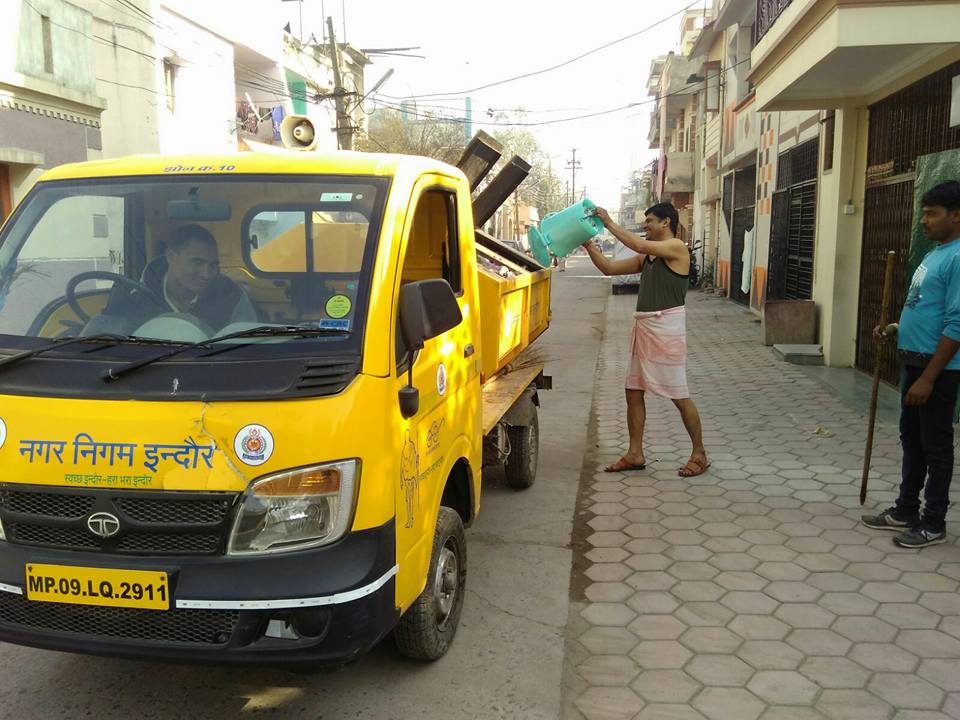
Case studies from Indore (consistent SBM No. 1 since 2017), Alappuzha (Kerala), and Vellore (TN) show that decentralised, ward-level composting with local entrepreneurship — not centralised digital dashboards — drives outcomes. Indore spends ₹240/tonne on processing; Delhi spends ₹2,800/tonne under a more ‘centralised’ scheme. The informal sector — India’s 1.5–4 million waste pickers handling 20% of recyclables — is provided ‘formalisation’ under the new rules, but ULB associations argue this should be ULB-designed, not Delhi-designed.
The compliance risk
Of India’s 5,000+ ULBs, fewer than 800 have full property-tax digitisation. Mandating real-time digital traceability without commensurate capacity-building is ‘an unfunded mandate’ — violating the spirit of the Finance Commission’s recommendations. The 16th Finance Commission, currently drafting its report, has flagged ULB fiscal capacity as a structural concern.
🎯 Key Takeaways
- Rules notified under Environment (Protection) Act, 1986; effective 1 April 2026
- India generates ~1.62 lakh tonnes/day solid waste; ~30% uncollected, ~60% unprocessed
- 74th Amendment / 12th Schedule places SWM with Urban Local Bodies
- New rules: tri-segregation, EPR, digital traceability, landfill mining in 5 years
- Best practice: Indore (₹240/tonne) vs Delhi (₹2,800/tonne); decentralisation wins
📚 Glossary
- 74th Constitutional Amendment, 1992
- Inserted Part IX-A into the Constitution, recognising municipalities and providing the 12th Schedule of 18 functional items, including solid waste management.
- Subsidiarity
- Principle that decisions should be taken at the lowest competent level of governance; closely tied to fiscal federalism and the spirit of the 74th Amendment.
- EPR (Extended Producer Responsibility)
- Policy that holds producers responsible for the post-consumer stage of their product’s life cycle, especially packaging waste.
- Environment (Protection) Act, 1986
- Umbrella legislation post-Bhopal gas tragedy; gives the Centre wide powers to issue rules and regulations through MoEFCC and CPCB.
Test Yourself — 10 MCQs
Attempt the 10-question quiz below. Answers and explanations reveal after each click.
Practice Quiz — 10 CLAT-Style Questions
Click an option to reveal the answer and explanation.
CLAT Gurukul · By Ready For Exam · Bihar’s premier coaching for CLAT 2027 · Mentor Helpline: 7033005444