

CURRENT AFFAIRS | 22 SEPTEMBER 2026
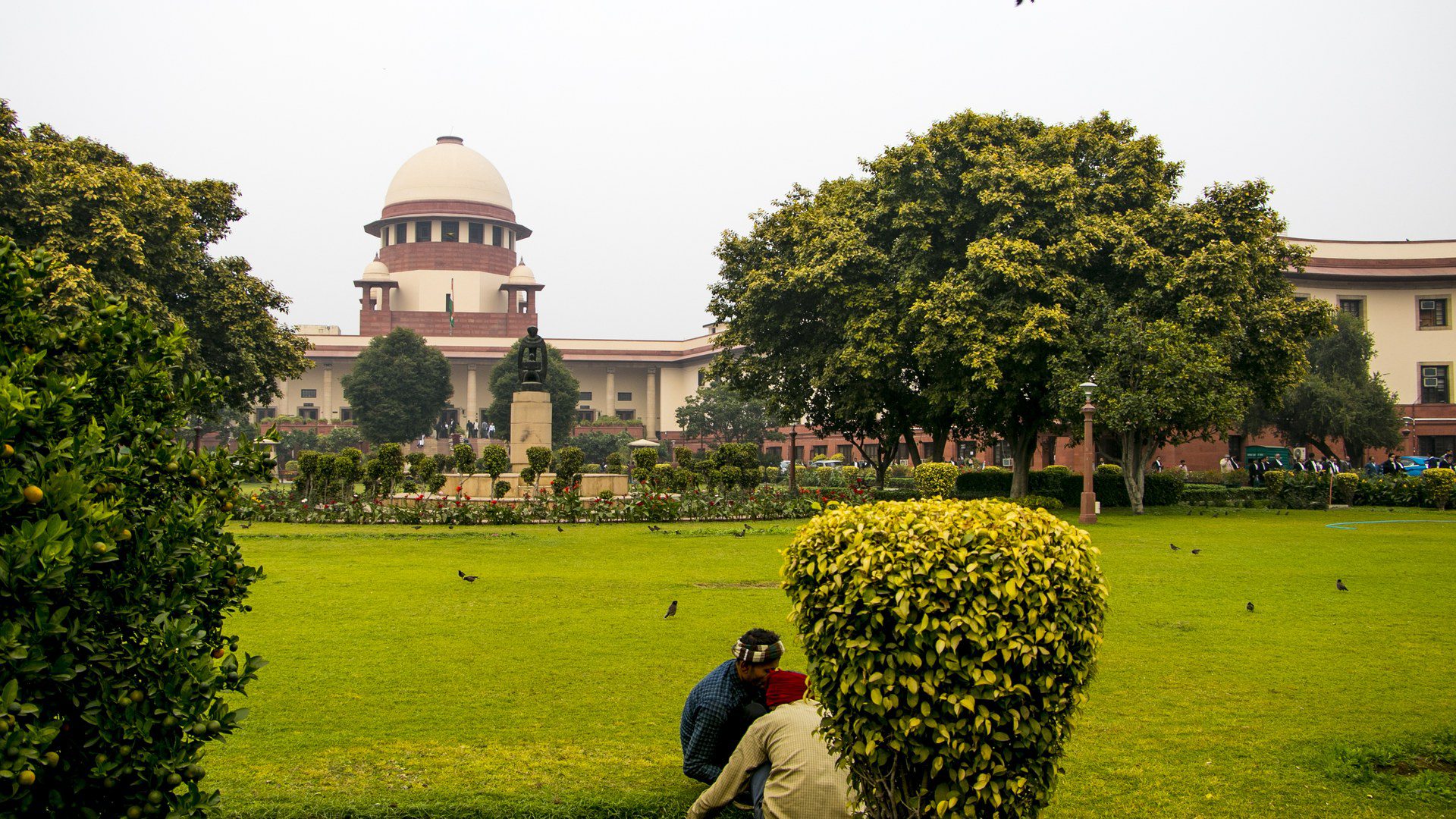
On 22 September 2026 a seven-judge Constitution Bench of the Supreme Court heard and reserved judgment on a question that has waited twenty-seven years for an answer: may a State legislature levy a surcharge, additional tax or cess that is calculated on an already validly levied sales or purchase tax? The lead matter is Arjun Flour Mills v. State of Orissa, Civil Appeal No. 8763 of 1994, reported by some outlets as State of Odisha since the State was renamed in 2011. Note the word: judgment was reserved, not delivered.
According to Supreme Court Observer’s report of the hearing, the Bench comprised Chief Justice Surya Kant and Justices K V Viswanathan, S V Bhatti, Joymalya Bagchi, N V Anjaria, Arun Palli and V Mohana. LiveLaw’s report of the same hearing named six of the seven. The levy under challenge is Section 5A of the Orissa Sales Tax Act, 1947, which imposed an additional tax of 10 per cent on dealers with annual turnover between ₹10 lakh and ₹1 crore, and 15 per cent where turnover exceeded ₹1 crore. The reference to a seven-judge Bench was made on 6 October 1999.
Why a tax on a tax is a constitutional question
Indian federalism distributes taxing power by subject matter, not by rate. The Seventh Schedule sets out three lists and Article 246 allocates them: Parliament over List I, State legislatures over List II, both over List III, with Union law prevailing on repugnancy. Article 248 with Entry 97 of List I gives Parliament the residuary power, and Article 265 supplies the discipline: no tax shall be levied or collected except by authority of law.
So every tax must be traced to an entry. A State sales tax was traced to Entry 54 of the State List. The difficulty arises when the State adds a second levy whose measure is the first tax. Is that still a tax on the sale of goods — or has it become a tax on something else, most plausibly the dealer’s income, which falls under Entry 82 of the Union List (taxes on income other than agricultural income) and is therefore beyond State competence? That single question is the whole case.
Constitutional / Legal Framework
Article 246 distributes legislative power across the three lists of the Seventh Schedule. A legislature’s competence is tested by the doctrine of pith and substance: a court looks at the true nature and character of the law, not merely its form or label, and an incidental encroachment on another list does not invalidate it. A second and closely related rule — the one this case turns on — distinguishes the subject of a tax from its measure. The subject determines competence; the measure is only the yardstick by which the amount is computed. A levy imposed on the sale of goods does not cease to be a sales tax merely because it is quantified as a percentage of the tax already payable, provided the true character of the levy remains a tax on the sale.
Article 145(3) requires a minimum of five judges for any case involving a substantial question of law as to the interpretation of the Constitution. Benches larger than five are constituted when an earlier decision is to be reconsidered, because a decision can only be overruled by a Bench larger than the one that delivered it — which is why a seven-judge Bench sits here and why a nine-judge Bench was needed to unsettle an earlier seven-judge ruling.
The precedents in play
Three older decisions frame the argument. In S. Kodar v. State of Kerala (1974), the Court upheld an additional sales tax on high-turnover dealers, characterising it as “really a tax on the sale of goods”. In Hoechst Pharmaceuticals v. State of Bihar (1983), the Court validated a surcharge computed as a percentage of the tax payable, holding that “the surcharge partakes of the nature of sales tax”. Both readings are applications of the measure-versus-subject distinction: the computation borrowed the sales tax, but the levy remained a levy on the sale.
Then came India Cement Ltd. v. State of Tamil Nadu (1990), a seven-judge decision that took the opposite route on different facts. It treated a cess on royalty from mining leases as a tax on royalty rather than on land, and held the State lacked competence to impose it. That formulation — a levy computed on X is a tax on X — is what makes India Cement awkward for the surcharge cases, and why the conflict went to seven judges.
The picture changed again in 2024. In Mineral Area Development Authority v. Steel Authority of India, a nine-judge Bench revisited that line and, as Supreme Court Observer records, superseded India Cement. During the present hearing, Solicitor General Tushar Mehta told the Bench that India Cement is no longer good law, and added that the reference may now be largely academic, since “very few matters” remain pending after the introduction of the Goods and Services Tax in 2017. Counsel for the appellants — Shubhranshu Padhi, Jay Nirupam and Pranav Giri among others — pressed the argument that legislative competence is derived from the nature of the tax rather than from the specific tax on which it is computed.
The CLAT Angle
This is close to an ideal legal-reasoning passage. A setter states the principle — the subject of a tax determines legislative competence; the measure of a tax does not — and then runs fact patterns past you. A State levies a cess of 2 per cent of the sales tax payable on every sale (competent, if the levy still falls on the sale). A State levies a cess of 2 per cent of a dealer’s total annual profit (not competent, because profit is income under Entry 82 of List I). A State levies a tax on entertainment measured by cinema ticket revenue (competent, because entertainment is the subject and revenue is only the yardstick). Also examinable as static polity: the three lists of the Seventh Schedule, Article 246 and Article 246A, residuary power under Article 248 with Entry 97 List I, Article 265, the minimum Bench strength under Article 145(3), and the rule that only a larger Bench may overrule a smaller one. Vocabulary to own: surcharge, cess, additional tax, legislative competence, pith and substance, reference, reserved judgment.
Why a pre-GST dispute still matters
An obvious objection is that the entry being litigated barely exists any more in the form it once had. The Constitution (One Hundred and First Amendment) Act, 2016 rebuilt India’s indirect tax architecture. It inserted Article 246A, which gives Parliament and State legislatures concurrent power to make laws on the taxation of goods and services, with Parliament holding exclusive power over inter-State supplies, and it created the GST Council as a constitutional body. Crucially, it narrowed Entry 54 of List II, which today covers taxes on the sale of only a defined set of goods — petroleum crude, high-speed diesel, motor spirit, natural gas, aviation turbine fuel and alcoholic liquor for human consumption — excluding inter-State and international sales of those goods. Before the amendment, Entry 54 covered taxes on the sale or purchase of goods generally, other than newspapers, subject to Entry 92A of List I.
So Entry 54 does not read today as it read in 1994, and any answer you write should say so. But the case still matters for three reasons. First, old assessments and appeals survive their statutes; liabilities crystallised before 2017 must still be decided under the law as it then stood. Second, the doctrine being settled — how to tell the subject of a tax from its measure — is entry-neutral and will govern disputes under Article 246A, under the surviving portion of Entry 54, and under State levies on liquor and fuel, which remain outside GST. Third, the Court is being asked to tidy the relationship between Kodar, Hoechst, India Cement and the 2024 nine-judge ruling, and a clean statement of that relationship is worth having whatever the tax happens to be.
Key Facts
- Date: 22 September 2026 — judgment reserved, not delivered.
- Case: Arjun Flour Mills v. State of Orissa, Civil Appeal No. 8763 of 1994.
- Bench strength: seven judges — CJI Surya Kant with Justices K V Viswanathan, S V Bhatti, Joymalya Bagchi, N V Anjaria, Arun Palli and V Mohana (as reported by Supreme Court Observer).
- Levy challenged: Section 5A, Orissa Sales Tax Act, 1947 — additional tax of 10% on turnover between ₹10 lakh and ₹1 crore, 15% above ₹1 crore.
- Reference to seven judges made on 6 October 1999.
- Competing entries: Entry 54, List II (State) against Entry 82, List I (taxes on income other than agricultural income).
- S. Kodar v. State of Kerala (1974): additional sales tax upheld as “really a tax on the sale of goods”.
- Hoechst Pharmaceuticals v. State of Bihar (1983): surcharge on tax payable “partakes of the nature of sales tax”.
- India Cement Ltd. v. State of Tamil Nadu (1990), seven judges: cess on royalty treated as a tax on royalty, not on land.
- Mineral Area Development Authority v. Steel Authority of India (2024), nine judges: superseded India Cement.
- Solicitor General Tushar Mehta submitted the reference may be largely academic post-GST, with very few matters pending.
- The 101st Constitutional Amendment, 2016 inserted Article 246A and narrowed Entry 54 of List II; GST was introduced in 2017.
What to watch, and what not to assume
Two disciplines are worth carrying away. The first is linguistic: “reserved” means the hearing is over and the Court will pronounce later, while “delivered” or “held” means a decision exists. Writing that the Court has “held” anything here would be wrong. The second is doctrinal caution: a reference of this kind is not a referendum on whether States may tax, but a narrow question about whether one computational technique keeps a levy inside one entry.
Whichever way the Court goes, the reasoning will be reusable. If the Bench affirms the Kodar and Hoechst line, the measure-versus-subject distinction is restated for the GST era. If it narrows that line, it must explain what separates a permissible measure from an impermissible one — and that explanation becomes the new test. Either way, the durable constitutional questions in a federation are rarely about how much a government may tax; they are about which government may tax, and on what.
Memory Hook / Mnemonic
Hold the core rule in five words: “Subject decides, measure merely counts.” For the entries, remember the clash as “54 sells, 82 earns” — State sales against Union income. For the bench-strength rule, “five to interpret, more to overrule” (Article 145(3); seven to revisit seven, nine to unsettle seven). And for the precedent chain, chant “Kodar, Hoechst, India Cement, MADA” — two that upheld, one that unsettled, one that superseded.
Practice Quiz — 10 CLAT-Style Questions
Click an option to reveal the answer and explanation.