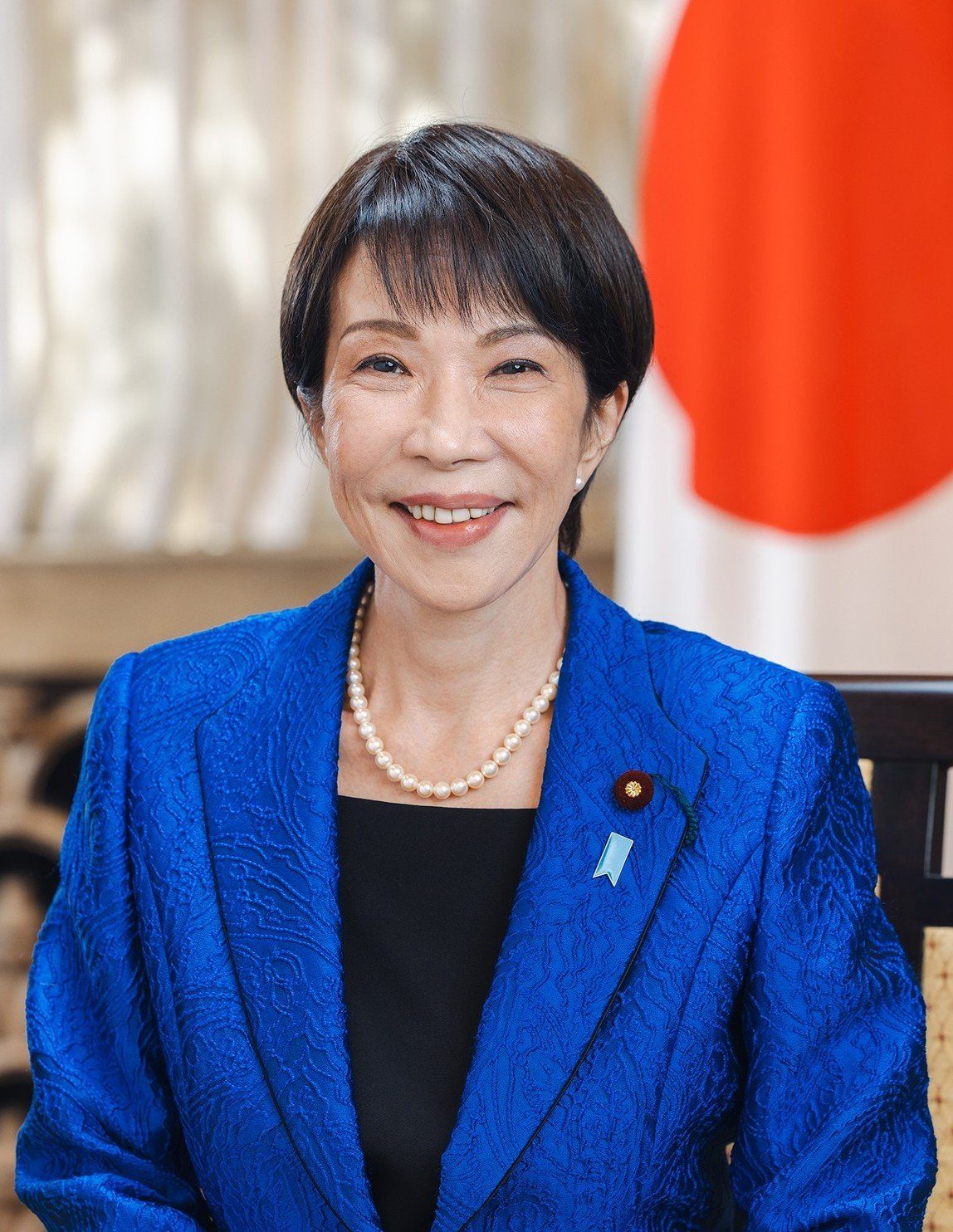
Japan’s Prime Minister Visits India: What the “Special Strategic and Global Partnership” Means for CLAT Aspirants
On 2 July 2026, the Japanese Prime Minister held summit talks with India’s Prime Minister during a three-day visit — the first India trip since taking office. Against a backdrop described as “growing uncertainty in the international situation,” the two sides reaffirmed one of Asia’s most consequential bilateral relationships. For a CLAT aspirant, a foreign leader’s visit is never just a diplomatic photo-op: it is a live classroom in bilateral treaties, strategic partnerships, the Quad, the Act East Policy, and India’s doctrine of strategic autonomy. This article unpacks the visit and the doctrinal vocabulary you must own for the General Knowledge and Current Affairs section.
What Happened
The Japanese Prime Minister arrived on a three-day state visit and held the Annual Summit with India’s Prime Minister on 2 July 2026. This was the leader’s first visit to India after assuming office, and the delegation was unusually large — a business contingent reflecting the roughly 1,400 Japanese companies that already operate in India. Japan announced that its investment target in India would be raised to ¥10 trillion.
The agenda was dominated by economic security: semiconductors and chips, rare earths and critical minerals, and building “resilient supply chains” that do not depend on a single country. The two governments also discussed a digital partnership and Artificial Intelligence, maritime security, and the Indo-Pacific. A striking new idea was an “Industrial Value Chain” linking the Bay of Bengal with India’s North-East — a connectivity-and-manufacturing corridor intended to knit Japanese capital into India’s eastern seaboard and North-Eastern states.
The India-Japan Annual Summit is a standing mechanism that has run since 2006, making this roughly the 16th such summit. The relationship was elevated to a “Special Strategic and Global Partnership” in 2014 — the highest tier India reserves for its closest partners.
The CLAT Angle
CLAT’s Current Affairs passages rarely test the raw event; they test whether you understand the framework behind it. A summit like this is a hook for at least five recurring themes: (1) how partnerships and treaties are tiered and named; (2) the Quad and the Indo-Pacific concept; (3) India’s Act East Policy; (4) the idea of economic security and critical-mineral supply chains; and (5) India’s overarching posture of strategic autonomy. Legal-reasoning passages also draw on international law vocabulary — what a “partnership” is versus a binding “treaty,” and why summits produce joint statements rather than enforceable obligations. Knowing this distinction lets you answer inference questions confidently instead of guessing.
Key Concepts Explained
Special Strategic and Global Partnership
India classifies its foreign relationships into tiers — from ordinary diplomatic ties, to a “Strategic Partnership,” up to a “Comprehensive/Special Strategic Partnership.” The 2014 upgrade with Japan to a “Special Strategic and Global Partnership” signalled that cooperation now spans defence, technology, economics and global governance, not just trade. For the exam, remember: these labels are political commitments, not treaties. They express intent and priority; they do not, by themselves, create legally binding obligations the way a ratified treaty does.
Treaty versus Partnership (the legal distinction)
A treaty is a formal, binding agreement governed by international law (the Vienna Convention on the Law of Treaties, 1969, is the reference framework). Under India’s Constitution, the power to enter into treaties flows from the Union’s authority over foreign affairs — Article 253 empowers Parliament to legislate to implement international agreements, and Entry 14 of the Union List covers “entering into treaties.” A “partnership” or “joint statement,” by contrast, is typically a statement of political intent. This is exactly the sort of contrast CLAT loves to test.
The Quad and the Indo-Pacific
The Quad (Quadrilateral Security Dialogue) groups India, Japan, the United States and Australia. It is not a military alliance and has no treaty charter; it is a consultative grouping focused on a “free, open and inclusive Indo-Pacific,” maritime security, supply-chain resilience and emerging technology. Japan and India are two of the four pillars, which is why bilateral summits often reinforce Quad priorities like resilient chip and rare-earth supply chains.
Act East Policy
India’s Act East Policy (an upgrade of the 1990s “Look East Policy,” rebranded in 2014) aims to deepen economic and strategic ties with East and Southeast Asia and to develop India’s own North-East as a gateway to the region. The proposed “Industrial Value Chain” connecting the Bay of Bengal with the North-East is a textbook Act East project — using foreign investment to integrate India’s eastern periphery into wider Asian production networks.
Economic Security and Critical Minerals
“Economic security” is the newest addition to strategic vocabulary. It treats access to semiconductors, rare earths and other critical minerals as a national-security matter, because a handful of countries dominate their processing. “Resilient supply chains” means deliberately diversifying sources so that no single supplier can coerce you. India has advanced this through initiatives such as the National Critical Mineral Mission and semiconductor incentive schemes; Japan’s ¥10-trillion investment pledge is meant to plug into exactly this agenda.
Strategic Autonomy
Even while deepening ties with Japan and the Quad, India maintains strategic autonomy — the principle, rooted in the Non-Aligned tradition, that India will not be locked into any bloc and will judge each issue on its own merits and interests. This is why India can partner closely with Japan and the US while still keeping independent relationships with Russia and dealing pragmatically with China.
Why It Matters for the Exam
Current-affairs passages built on summits reward the student who can name the tier of the relationship, distinguish a partnership from a treaty, and connect the event to doctrines like Act East and strategic autonomy. Expect questions such as: “Which grouping do India and Japan both belong to?” (the Quad); “When was the relationship upgraded to a Special Strategic and Global Partnership?” (2014); or a legal-reasoning item asking whether a joint statement binds the parties (it does not, unlike a ratified treaty). Numbers make good distractor traps — the ¥10-trillion target and ~1,400 companies are the kind of specifics that appear in “identify the correct figure” questions. Anchoring these facts to the concept, not memorising them in isolation, is how you convert a news item into exam marks.
Takeaway
A single state visit compresses a semester of international-relations doctrine into one news cycle. For CLAT, treat it as a mnemonic anchor: Japan-India = Special Strategic and Global Partnership (2014), one of four Quad pillars, driving Act East connectivity and economic-security supply chains, all under India’s umbrella of strategic autonomy. Master the vocabulary once, and every future summit becomes a question you have already prepared for.
Test Yourself — Daily Quiz
Practice Quiz — 10 CLAT-Style Questions
Click an option to reveal the answer and explanation.