Delhi’s Winter Anti-Pollution Curbs: How GRAP, the CAQM and Article 21 Converge Over the National Capital’s Air
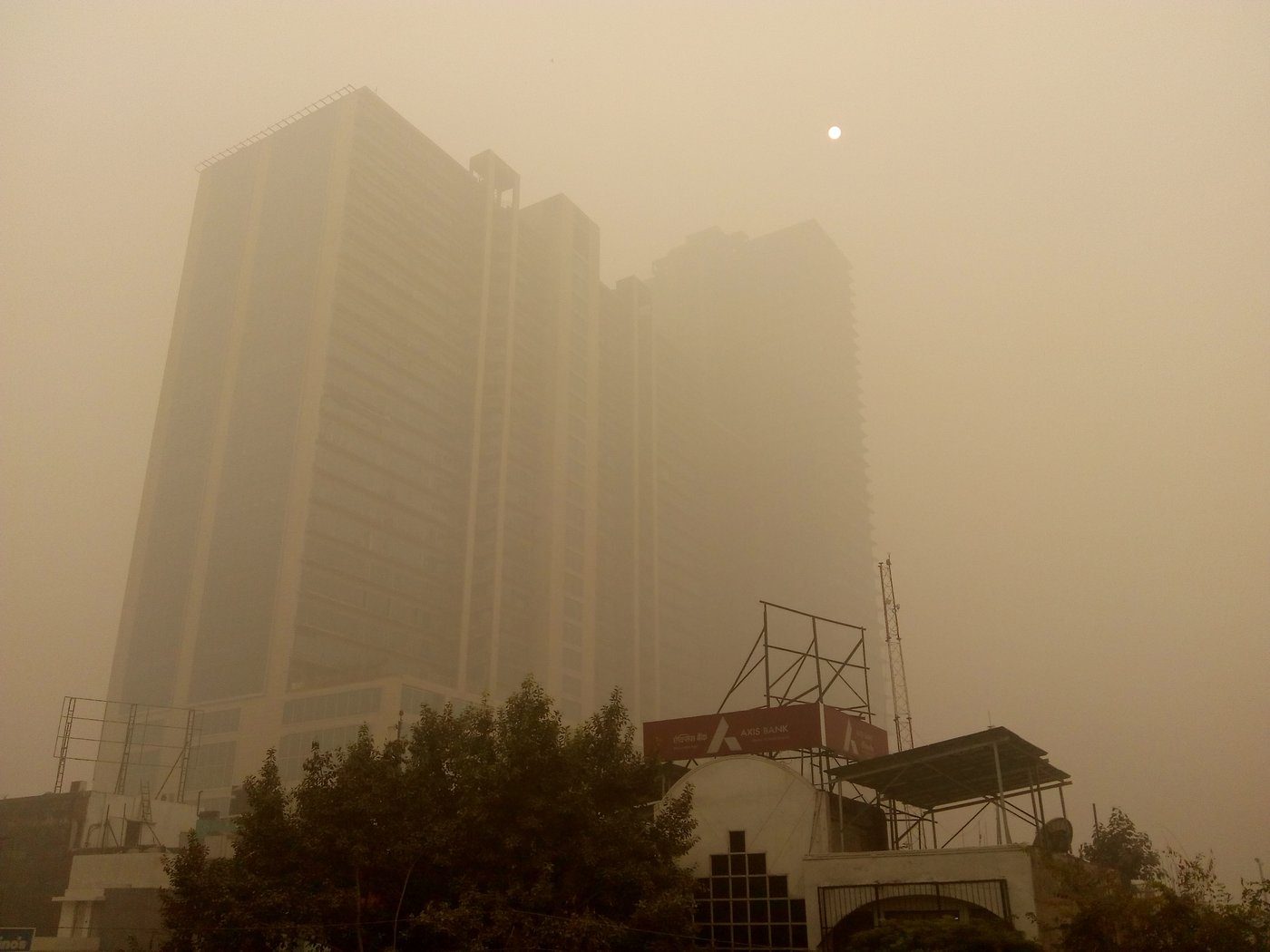
As winter approaches, the National Capital Region braces for its annual battle with toxic haze. Delhi has notified a comprehensive package of measures that will be mandatory every year from 1 November to 28 February, operating alongside the Graded Response Action Plan (GRAP). For CLAT aspirants, this is far more than a seasonal news item: it sits at the intersection of environmental statute, constitutional rights, administrative law and some of the most celebrated public-interest litigation in Indian legal history. Understanding it well can unlock questions across both the Current Affairs and Legal Reasoning sections.
What Happened
The authorities have notified a fixed-window pollution-control regime that switches on automatically each winter, when meteorological conditions trap particulate matter over the region. The key measures include a bar on non-BS-VI vehicles registered outside Delhi from 1 November; fuel to be dispensed only to vehicles carrying a valid Pollution Under Control Certificate (PUCC); and 50% physical attendance in government and private offices between 1 November and 31 January to cut vehicular load. Construction and demolition activity faces heavy restriction, tightening into a near-complete ban between 10 December and 20 January, barring essential projects. Commercial buildings above 3,000 square metres must install anti-smog guns and mist systems. The entire framework is coordinated by the Commission for Air Quality Management in the National Capital Region and Adjoining Areas (CAQM), the statutory body that oversees GRAP and issues binding directions across Delhi and its neighbouring states.
The design is significant because it front-loads preventive action rather than waiting for air quality to collapse. GRAP itself is a graded, stage-wise escalation ladder triggered by the Air Quality Index; the newly notified winter curbs layer onto it a calendar-based baseline of restrictions.
The CLAT Angle
Environmental governance is a perennial favourite in CLAT because it lets examiners test constitutional doctrine through a live factual scenario. A passage on these curbs can ask you to reason about the right to a clean and healthy environment as part of the right to life, the balance between economic activity and public health, the legitimacy of delegated rule-making by a statutory commission, and the judicial doctrines that underpin Indian environmental law. The CLAT does not require you to memorise section numbers, but it rewards students who can recognise the principles at work and apply them to a novel fact pattern. This story hands you a ready-made template: a state authority restricting private liberty (movement, trade, construction) in the name of a collective public good, reviewable against constitutional standards.
Key Concepts Explained
The CAQM Act, 2021
The Commission for Air Quality Management in the National Capital Region and Adjoining Areas Act, 2021, created a permanent statutory body with power to issue binding directions on air quality across Delhi, Haryana, Punjab, Rajasthan and Uttar Pradesh (NCR portions). It replaced a fragmented arrangement of ad-hoc bodies and gives one authority overriding coordination power, including over state pollution control boards. Its directions carry statutory force, and non-compliance can attract penalties. For CLAT, the takeaway is the idea of a specialised regulator exercising delegated legislative and executive functions.
Graded Response Action Plan (GRAP)
GRAP is a tiered emergency framework that escalates restrictions as the Air Quality Index worsens, moving through stages such as “Poor,” “Very Poor,” “Severe” and “Severe Plus.” Each stage triggers pre-defined actions — from dust control to bans on construction and non-essential trucks. It embodies the precautionary principle: act early on the risk of harm rather than waiting for proof of damage.
Article 21 and the Right to a Healthy Environment
Article 21 guarantees that no person shall be deprived of life or personal liberty except by procedure established by law. Indian courts have read “life” expansively to include the right to live with dignity, which encompasses the right to a clean and healthy environment and the right to breathe unpolluted air. Pollution that threatens health is therefore a constitutional concern, and state inaction can itself be challenged.
The M.C. Mehta Cases
The environmental jurisprudence of India is built substantially on the public-interest petitions filed by advocate M.C. Mehta. These cases produced landmark outcomes — relocation of hazardous industries, the shift of Delhi’s public transport to compressed natural gas, protection of the Taj Mahal from industrial emissions, and the articulation of the absolute liability standard for hazardous enterprises. They cemented the courts’ role as an active guardian of environmental rights and the continuing-mandamus technique of ongoing judicial supervision.
Precautionary Principle and Sustainable Development
The precautionary principle holds that where there is a threat of serious environmental harm, lack of full scientific certainty is not a reason to postpone preventive measures; the burden shifts to the party undertaking the risky activity. Sustainable development seeks to reconcile developmental needs with environmental protection so that present growth does not compromise future generations. Both principles have been recognised by the Supreme Court as part of Indian environmental law, and both explain why calendar-based winter curbs are lawful even before pollution actually spikes.
The Environment (Protection) Act, 1986
Enacted after the Bhopal gas tragedy, this umbrella legislation empowers the Central Government to take all measures necessary to protect and improve environmental quality, set standards, and restrict activities in specified areas. Much of the delegated regulation governing air quality — including the authority underpinning coordinated responses — traces to this enabling framework, which sits alongside the Air (Prevention and Control of Pollution) Act, 1981.
Why It Matters for the Exam
CLAT’s Legal Reasoning section presents a principle and a fact situation and asks you to apply one to the other. Winter pollution curbs are a superb source of such principles: proportionality (are restrictions on trade and movement proportionate to the health objective?), the reasonable-restrictions logic of Article 19 (freedom of movement and trade can be curtailed in the public interest), and the expansive reading of Article 21. The Current Affairs section, meanwhile, may test whether you can correctly identify the CAQM as the coordinating body, distinguish GRAP’s stage-based triggers from a fixed-calendar regime, and recall the doctrinal vocabulary — precautionary principle, sustainable development, polluter pays. Examiners love scenarios where individual liberty collides with collective welfare, because they reveal whether a student reasons with principles or merely recalls facts. Neutrality matters too: a good answer presents the state’s public-health rationale and the competing concerns of businesses and commuters, then resolves the conflict on the stated principle rather than on personal opinion.
Takeaway
Delhi’s winter anti-pollution package is a textbook illustration of environmental federalism in action: a statutory regulator (CAQM) enforcing a graded, precaution-driven regime (GRAP) that restricts private conduct to vindicate a constitutional right to clean air under Article 21, all within the enabling architecture of the Environment (Protection) Act, 1986. For a CLAT aspirant, the lesson is to see past the seasonal headline to the durable doctrines beneath it — the precautionary principle, sustainable development, and the judiciary’s activist legacy through the M.C. Mehta line of cases. Master this cluster and you can confidently tackle any passage where the state limits liberty in the name of the environment.
Test Yourself — Daily Quiz
Practice Quiz — 10 CLAT-Style Questions
Click an option to reveal the answer and explanation.