CURRENT AFFAIRS | 29 MAY 2026
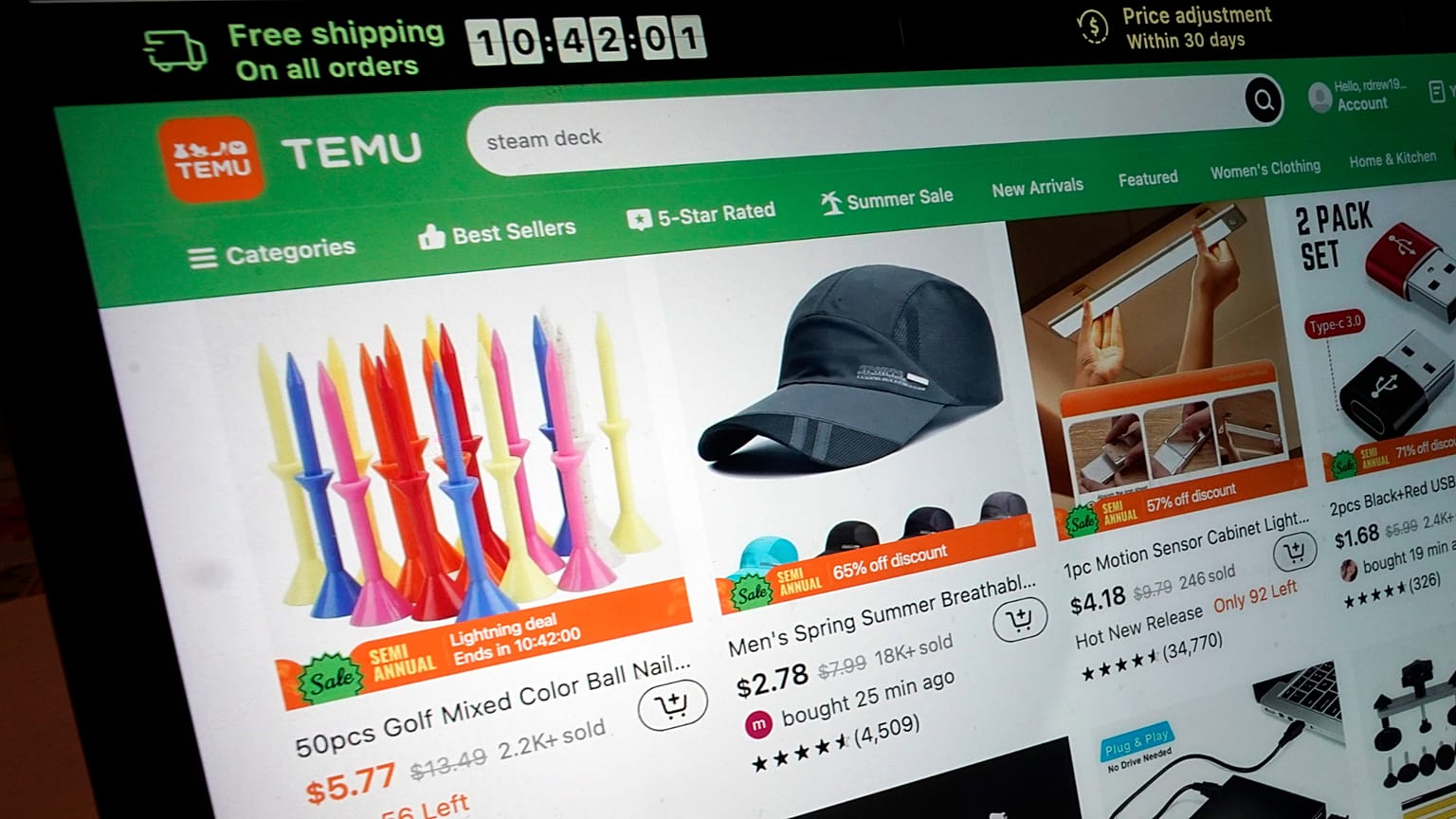
On 28 May 2026, the European Commission announced a preliminary fine of €200 million (~USD 232 million) against Chinese online marketplace Temu for failing to do enough to protect EU consumers from illegal products. This is the first major Digital Services Act (DSA) enforcement action against a Chinese marketplace, signalling that the EU’s flagship platform-governance regime now reaches deep into cross-border e-commerce. For CLAT 2027 aspirants, it sits at the intersection of consumer-protection law, intermediary-liability theory, and the emerging “platform sovereignty” debate that will shape India’s Digital India Act as well.
What the DSA Actually Does
The Digital Services Act (Regulation 2022/2065) entered into force in November 2022 and became fully applicable on 17 February 2024. It creates a tiered duty-of-care regime: heavier obligations apply to Very Large Online Platforms (VLOPs) with 45 million+ average monthly EU users — a threshold Temu crosses comfortably with 92 million EU users. Specific duties include risk assessment (Art. 35), risk mitigation (Art. 35), a ban on “dark patterns” (Art. 25), advertising transparency (Art. 39), and recommender-system transparency (Art. 38). Penalties are capped at 6% of global annual turnover (Art. 74). Earlier DSA actions have targeted Meta, X and TikTok.
Statutory & Comparative Framework
- EU Digital Services Act, Regulation 2022/2065 — VLOP / VLOSE designation
- Article 35 DSA — annual systemic-risk assessment + mitigation
- Article 25 DSA — prohibition on “dark patterns”
- Article 74 DSA — 6% global-turnover penalty cap
- EU Digital Markets Act, Regulation 2022/1925 — “gatekeeper” rules (companion regulation)
- India parallel: Consumer Protection (E-Commerce) Rules, 2020 (under Consumer Protection Act, 2019)
- India parallel: Digital India Act, 2026 (draft) — to replace the IT Act, 2000
- WTO e-commerce moratorium — no customs duties on electronic transmissions (since 1998)
- Information Technology Act, 2000, §79 — India’s intermediary safe-harbour
Why This Matters for CLAT 2027
Two angles dominate. First, comparative regulation: Indian aspirants must contrast the DSA’s risk-based, tiered model with India’s intermediary regime under Section 79 of the IT Act read with the 2021 (and now 2026) IT Rules — and with the draft Digital India Act. Second, consumer-protection: the E-Commerce Rules 2020 (notified under the Consumer Protection Act 2019) impose similar duties on Indian marketplaces (duty to display country of origin, ban on misleading advertisements, grievance redressal officer) — though without a 6%-of-turnover penalty. Watch for a Legal Reasoning passage on the difference between vertical privity (consumer vs seller) and tripartite liability (consumer-platform-seller) — a recurring CLAT theme.
Key Facts (Quick Revision)
| Element | Detail |
|---|---|
| Fine | €200 million (~USD 232 mn) |
| Authority | European Commission |
| Regulation | DSA — Regulation 2022/2065 |
| VLOP threshold | 45 million average monthly EU users |
| Temu EU users | ~92 million |
| Maximum penalty | 6% of global annual turnover |
| India equivalent | Consumer Protection (E-Commerce) Rules 2020 |
CLAT Mnemonic — D-S-A
Deceptive product listings (illegal products on sale) · Six-percent global-turnover cap · Article 35 annual audit duty.
Test Yourself: 10-Question Quiz
The quiz tests VLOP thresholds, Article 35 audit duties, the dark-pattern ban under Article 25, the DSA-DMA distinction, the India Consumer Protection Rules 2020, and the WTO e-commerce moratorium.
Practice Quiz — 10 CLAT-Style Questions
Click an option to reveal the answer and explanation.
Further Reading
- Compare DSA risk-assessment duties with India’s draft Digital India Act.
- Read the Consumer Protection (E-Commerce) Rules, 2020 — identify duties parallel to the DSA.
- Track the EU’s ongoing investigations against Meta, X and TikTok.