CURRENT AFFAIRS | 22 JUNE 2026
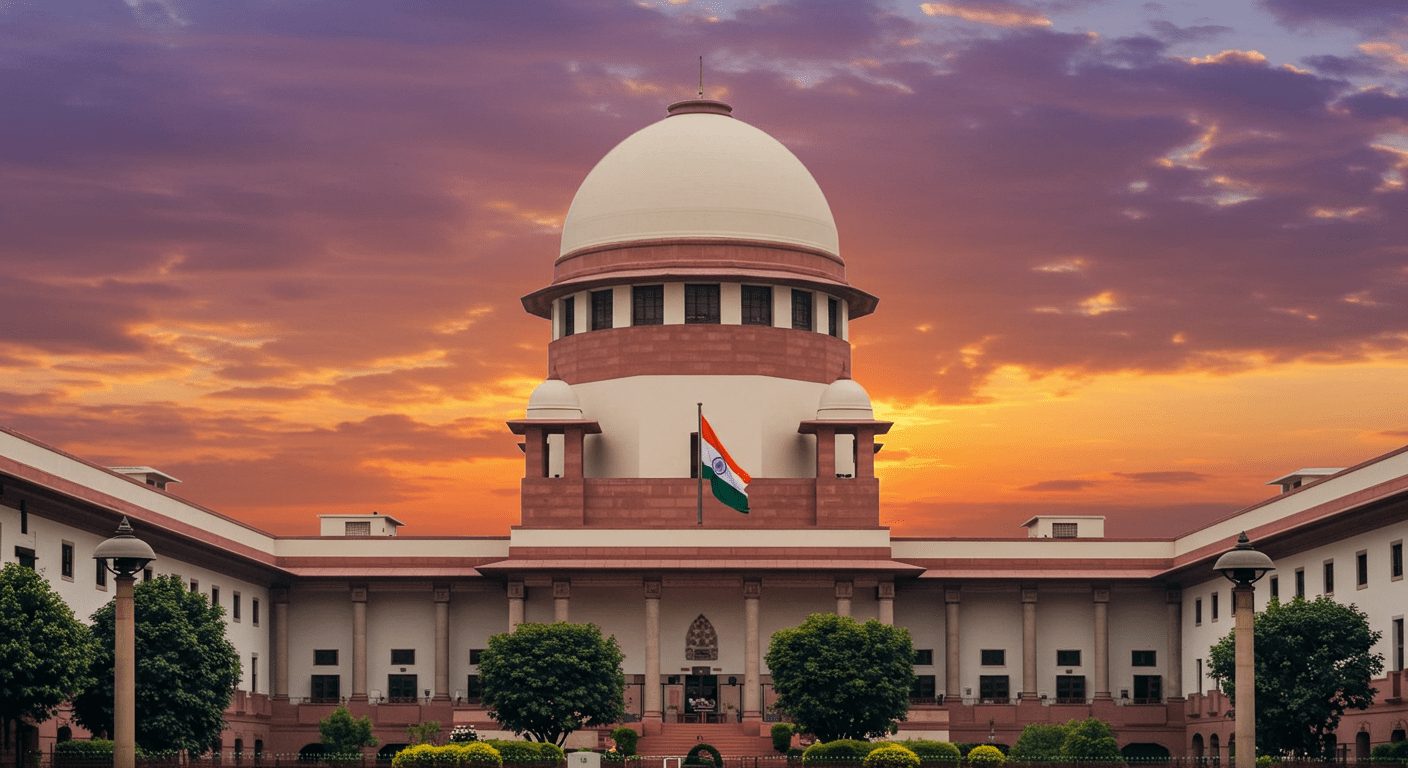
India is pushing “ease of justice” — a drive to make courts faster, paperless and accessible — anchored in the constitutional promise that justice must reach everyone, not just those who can afford it.
What Happened
The flagship is e-Courts Phase III, building end-to-end digital, paperless, AI-enabled courts integrated with the new criminal laws — e-courts, e-prosecution, e-prisons and e-forensics. Tele-Law, delivering pre-litigation legal advice through Common Service Centres, has crossed 11.2 million beneficiaries. Nyaya Bandhu (a pro-bono lawyer app under the DISHA scheme) connects citizens to volunteer advocates.
AI tools are central: SUVAS (Supreme Court Vidhik Anuvaad Software) and Nyaya Shruti translate Supreme Court judgments into regional languages, while SUPACE assists judges. The National Judicial Data Grid (NJDG) offers single-click access to over 340 million case records. Court halls rose from 15,818 (2014) to 22,712; sanctioned High Court judge strength reached 1,122, and the Supreme Court’s strength was raised from 31 to 34 in 2019.
⚖️ Constitutional & Legal Framework
The bedrock is Article 39A, a Directive Principle mandating free legal aid and equal justice. Article 21 guarantees the right to a speedy and fair trial, and Article 14 ensures equality before law. In Hussainara Khatoon v. State of Bihar (1979), the Supreme Court held that a speedy trial and free legal aid are part of Article 21. In M.H. Hoskot v. State of Maharashtra (1978), the Court read the right to legal aid into a fair procedure. The Legal Services Authorities Act, 1987 created NALSA. These reforms operate alongside the new criminal codes — the Bharatiya Nyaya Sanhita (BNS), Bharatiya Nagarik Suraksha Sanhita (BNSS) and Bharatiya Sakshya Adhiniyam (BSA), 2023.
🎯 Why This Matters for CLAT
Access to justice is a perennial CLAT favourite. Article 39A, the Hussainara Khatoon speedy-trial doctrine, NALSA and the new criminal laws (BNS/BNSS/BSA) recur in Legal Reasoning and GK. Expect questions linking technology (NJDG, SUVAS) to constitutional rights.
📌 Key Facts
| Flagship | e-Courts Phase III — paperless, AI-enabled courts |
| Tele-Law reach | Over 11.2 million beneficiaries via CSCs |
| NJDG | Single-click access to 340 million+ case records |
| AI tools | SUVAS & Nyaya Shruti (translation); SUPACE (judges) |
| Court halls | 15,818 (2014) → 22,712 |
| Key statute | Legal Services Authorities Act, 1987 (NALSA) |
🧠 Memory Hook
“Free aid is a FACT: 39A, 14, 21 — Hussainara Counted Trials” — Article 39A (legal aid), 14 (equality), 21 (speedy trial), with Hussainara Khatoon making speedy trial a fundamental right.
📝 Test yourself — take the 10-question quiz below:
Practice Quiz — 10 CLAT-Style Questions
Click an option to reveal the answer and explanation.