CURRENT AFFAIRS | 8 JULY 2026
India has lost one of its quietest heroes. Girish Bharadwaj, the Padma Shri awardee affectionately known across the country as the “Bridge Man of India”, passed away on Tuesday, 7 July 2026, in Karnataka at the age of 76. He died following a cardiac condition, having been admitted to a private hospital in Sullia, in the Dakshina Kannada district. His passing marks the end of a remarkable life devoted not to grand monuments, but to hundreds of humble footbridges that changed the lives of India’s most isolated villagers.
An Engineer Who Chose the Remotest Rivers
Born in 1950, Girish Bharadwaj was a mechanical-engineering graduate who completed his degree in 1973. He set up a workshop in Sullia, a small town in the heavy-rainfall belt of Dakshina Kannada. It was there that he witnessed a problem that would define the rest of his life: villagers cut off from road transport during the monsoon, forced to cross swollen rivers by swimming or by unreliable boats. For these communities, a river was not a scenic feature — it was a wall that separated them from schools, hospitals and markets.
Rather than treating this as someone else’s problem, Bharadwaj applied his engineering training to solve it. In 1989, he built his first hanging footbridge over the Payaswini River at Aramburu in Sullia — a modest, budget-friendly structure. It was simple, but it worked, and it connected people who had been isolated for generations.
The Concept: Appropriate Technology
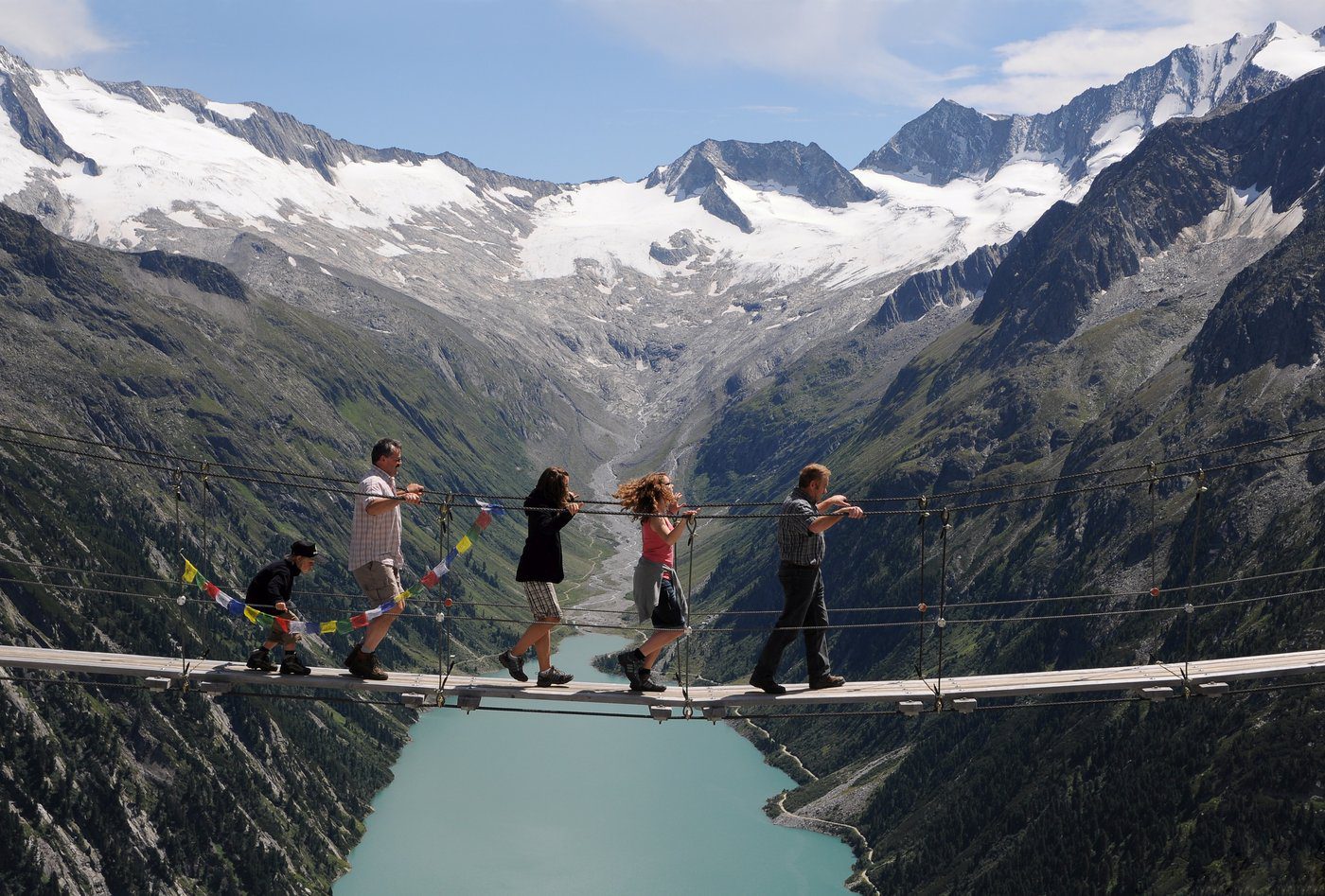
Bharadwaj’s bridges are a textbook example of “appropriate technology” — technology that is simple, affordable, locally repairable and suited to the real needs of a community, rather than expensive and over-engineered. A suspension (hanging) footbridge uses cables to hold up a walking deck, allowing a long span across a river without costly pillars in the water. Because his designs were low-cost and used available materials, panchayats and communities could actually afford them. This is the same philosophy that champions rural connectivity through frugal, practical solutions rather than grand infrastructure alone.
More Than 300 Bridges Across Four States
Over the following decades, Girish Bharadwaj built more than 300 such suspension footbridges. His work spread far beyond his home district, reaching across Karnataka, Kerala, Andhra Pradesh and Odisha. Each bridge quietly transformed daily life — a child could now walk to school without risking a river crossing, a patient could reach a clinic, a farmer could carry produce to a market. It was this staggering, patient body of work that earned him the enduring title, the “Bridge Man of India”.
Key Facts at a Glance
| Name | Girish Bharadwaj (1950-2026) |
| Known as | “Bridge Man of India” |
| Passed away | 7 July 2026, aged 76, in Sullia, Karnataka |
| First bridge | 1989, over Payaswini River at Aramburu, Sullia |
| Total bridges | 300+ across Karnataka, Kerala, Andhra Pradesh, Odisha |
| Honour | Padma Shri, 2017 |
Why His Bridges Mattered So Much
To understand the scale of Bharadwaj’s contribution, one must picture the terrain he worked in. Dakshina Kannada and the wider Western Ghats belt receive some of the heaviest rainfall in India. During the monsoon, small streams swell into fast, dangerous rivers within hours. For a village on the wrong side of such a river, the rains meant months of near-total isolation — children missing school, the sick unable to reach a doctor, and farmers stranded from the markets where they sold their produce. Building a conventional road bridge in such remote, low-population areas was often financially unviable for the state, so these communities were simply left to fend for themselves.
Bharadwaj’s suspension footbridges solved this at a fraction of the cost. Because they required no massive pillars in the riverbed and used relatively light materials, they could be built quickly and maintained locally. A single bridge could serve several hamlets at once, and unlike a boat, it worked in every season and needed no operator. In this sense, each structure was not merely a convenience but a lifeline — a permanent, dependable link that quietly expanded the freedom and opportunity of thousands of citizens who had been geographically excluded.
The Padma Shri and the Padma Awards System
In 2017, the Government of India honoured Girish Bharadwaj with the Padma Shri, the country’s fourth-highest civilian award. For CLAT aspirants, his story is the perfect entry point to understand the entire Padma Awards system — a favourite area for the Current Affairs section.
The Padma Awards were instituted in 1954. They are among the highest civilian honours of the Republic of India and recognise distinguished and exceptional achievements across all fields of activity — art, social work, public affairs, science, engineering, trade, medicine, literature, sport, civil service and more. The awards are announced every year on the eve of Republic Day (26 January) and are conferred by the President of India at ceremonial functions held usually in March or April at Rashtrapati Bhavan.
The Hierarchy of Civilian Honours
It is essential to remember the correct order of India’s civilian awards, from highest to lowest:
- Bharat Ratna — the highest civilian award of the country.
- Padma Vibhushan — for exceptional and distinguished service.
- Padma Bhushan — for distinguished service of a high order.
- Padma Shri — for distinguished service (the fourth-highest, awarded to Bharadwaj).
A common exam trap is to confuse the order of the three Padma awards. The mnemonic to lock in is: Vibhushan > Bhushan > Shri. Note also that the Bharat Ratna sits above all three and is in a class of its own.
The CLAT Angle
This story combines the “Awards and Honours” and “Art & Culture / Persons in News” slots that CLAT loves. Expect direct questions on: the correct hierarchy (Bharat Ratna > Padma Vibhushan > Padma Bhushan > Padma Shri); the year the Padma Awards were instituted (1954); that they are announced on Republic Day and conferred by the President of India. Bharadwaj’s own work links to the broader themes of appropriate technology and rural connectivity — useful for passage-based Current Affairs questions on inclusive development.
Why the Padma Awards Recognise People Like Him
The Padma Awards were deliberately designed to look beyond the famous and the powerful. While the highest honours often go to celebrated figures in science, art and public life, the awards also exist to spotlight ordinary citizens who have rendered extraordinary service in fields that rarely make headlines. Bharadwaj had no political office and built no monument bearing his name; his recognition came purely from the transformative impact of his work on the ground. This is precisely the kind of story the Padma system was meant to celebrate — grassroots achievement, quiet perseverance and service to the most underserved.
For students, it is worth noting the process behind the awards. Nominations can be made by the public and by institutions, and they are examined by a Padma Awards Committee constituted afresh each year by the Prime Minister, before the final list is approved and announced on the eve of Republic Day. The awards do not carry a cash prize; their value lies entirely in the national recognition they confer. In recent years the government has emphasised honouring unsung heroes from rural and remote India — teachers, farmers, craftspeople, health workers and builders like Bharadwaj — which makes his 2017 Padma Shri a fitting example of this evolving spirit.
A Legacy Built in Steel and Service
Girish Bharadwaj never sought fame. His monuments were not towers in city skylines but simple cable bridges swaying gently over rivers in forgotten villages. He proved that an engineer’s greatest tool is not the size of a project but the depth of its purpose. Every child who now walks safely to school across one of his bridges carries forward his legacy.
The “Bridge Man of India” spent his life closing the gaps — the physical gaps between riverbanks, and the deeper gaps of opportunity that separate rural India from the rest of the country. In doing so, he became a living illustration of what a Padma Shri is meant to honour: distinguished, selfless service to the nation. India will remember him not for the awards he received, but for the countless invisible journeys he made possible.
Test Yourself — Daily Quiz
Practice Quiz — 10 CLAT-Style Questions
Click an option to reveal the answer and explanation.