CURRENT AFFAIRS | JUNE 4, 2026
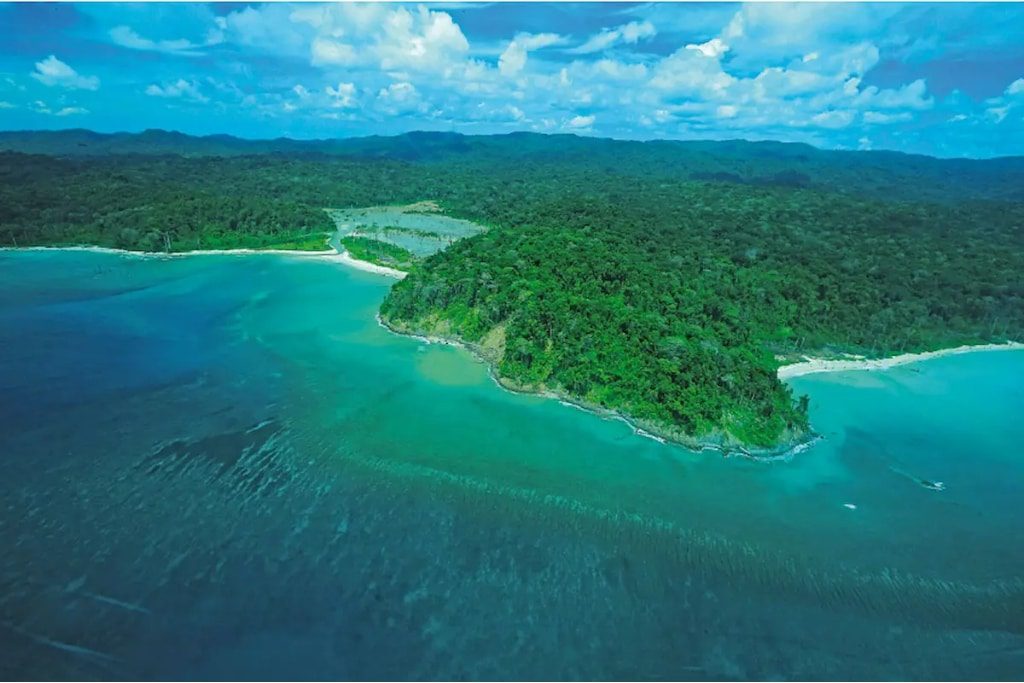
The ₹72,000-crore Great Nicobar Project — a transshipment port at Galathea Bay, a greenfield airport, a township and a 450-MW gas-and-solar power plant — has returned to the headlines on two fronts. Congress MP Jairam Ramesh has reiterated his demand for a detailed seasonal-cycle environmental impact assessment, while former A&N Lt Governor D K Joshi argues in Indian Express that India must “pursue national security with ecological responsibility”. The legal and constitutional question is sharper than the political: where does sovereignty end and stewardship begin?
Constitutional & Environmental Law Framework
Three constitutional anchors converge. Article 48A (Directive Principle) mandates the State to protect and improve the environment. Article 51A(g) (Fundamental Duty) obliges every citizen to protect natural environment, including forests, lakes, rivers and wildlife. Article 21 — the right to life — has been judicially read to include the right to a clean environment (Subhash Kumar v State of Bihar, 1991).
The statutory grid is dense: the Environment (Protection) Act 1986, the parent legislation; the EIA Notification 2006, which classifies projects and mandates impact assessment; the Forest (Conservation) Act 1980, whose Section 2 requires Central approval for any forest diversion; and the Forest Rights Act 2006, which secures the rights of forest-dwelling communities — in this case the Shompen, a Particularly Vulnerable Tribal Group. The expansive definition of “forest” laid down in T.N. Godavarman Thirumulpad v UoI (1995-96) brings every patch of forest-character land under FCA’s umbrella.
Why This Matters For CLAT 2027
- Public-trust doctrine — MC Mehta v Kamal Nath (1997) — relevant when commercial development touches ecologically sensitive coastline.
- The case engages the National Green Tribunal Act 2010, the NGT’s clearance order, and polluter-pays / precautionary principles.
- Indo-Pacific geopolitics: Great Nicobar sits 90 km from Indonesia’s Banda Aceh and dominates the Six Degree Channel — a Malacca chokepoint. The Diego Garcia analogy (joint US-UK military base in the Chagos) is regularly invoked.
- The Shompen tribe question links Schedule V/VI protections, the FRA 2006, and the broader debate on tribal-displacement governance.
Key Facts At A Glance
| Item | Detail |
|---|---|
| Project cost | ~₹72,000 crore |
| Components | Galathea Bay port, greenfield airport, township, 450-MW power plant |
| Island area / forest diversion | Island ~910 sq km; diversion ~130.75 sq km (~82% of project area) |
| Strategic location | Six Degree Channel; 90 km from Banda Aceh |
| Indigenous group | Shompen (PVTG) |
| Constitutional anchors | Arts. 21, 48A, 51A(g) |
| Statutes | EPA 1986 · FCA 1980 · FRA 2006 · NGT Act 2010 · EIA Notification 2006 |
Memory Trick — NICOBAR
Near Banda Aceh (90 km) · Indian Ocean choke · Chokepoint of Malacca · Original Shompen tribe · Bay of Galathea port · Airport + township + power · Ramesh demands EIA.
Neglecting Great Nicobar would be to leave geography unused and vulnerable to being shaped by others — Joshi’s argument. But to develop it without an honest, three-season-cycle EIA, without prior, informed consent of the Shompen, and without statutory rigour, is to invite a Supreme Court setback this project cannot afford. National security and ecological responsibility are not adversaries; they are the same legal duty in two registers.
Practice Quiz — 10 CLAT-Style Questions
Click an option to reveal the answer and explanation.