Modi-Pezeshkian Call, the Strait of Hormuz, and India’s Strategic Calculus
When Prime Minister Narendra Modi spoke with Iranian President Masoud Pezeshkian and stressed that a safe and open Strait of Hormuz is vital for global trade, the statement carried far more weight than a routine diplomatic communique. For a country that sources a significant share of its crude oil through that narrow waterway, keeping the Strait open is not merely a diplomatic preference — it is an energy-security imperative with direct constitutional and international-law dimensions.
What Happened
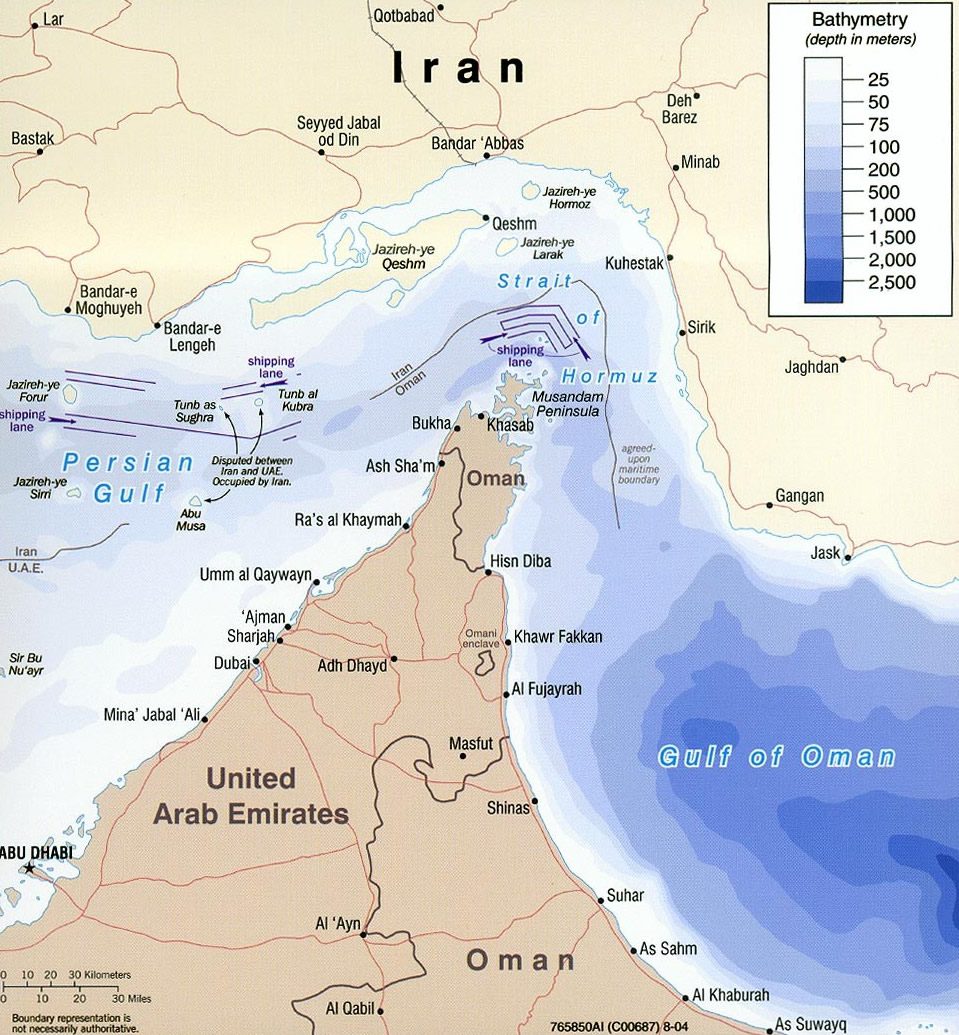
Following an understanding reached between Iran and the United States that eased immediate tensions in the Persian Gulf region, Prime Minister Modi held a telephone conversation with Iranian President Pezeshkian. India’s readout of the call emphasised that unimpeded passage through the Strait of Hormuz — the narrow channel between Iran and Oman connecting the Persian Gulf to the Arabian Sea — is essential for global energy flows and for India’s own economic stability. India also underscored its engagement with BRICS (Brazil, Russia, India, China, South Africa, and the newer member states that joined in the 2024 expansion) as a platform for dialogue in a multipolar world.
The Strait of Hormuz is one of the world’s most strategically significant maritime chokepoints. A substantial share of global seaborne oil trade passes through it, making any disruption there a potential trigger for oil price spikes that would affect economies worldwide — and India, as one of the largest crude oil importers, is acutely exposed to such volatility.
The CLAT Angle
This episode brings together several legal and policy frameworks that CLAT examiners regularly test.
UNCLOS — United Nations Convention on the Law of the Sea (1982): This is the foundational international treaty governing the rights and obligations of states in maritime spaces. Two doctrines are directly relevant here. First, Freedom of Navigation in the high seas means that all states — whether coastal or landlocked — have the right to sail their vessels through international waters without interference. Second, Transit Passage under Article 38 of UNCLOS applies specifically to international straits used for international navigation: all ships and aircraft enjoy the right of continuous and expeditious transit through such straits, and the bordering state cannot suspend this right (unlike innocent passage in territorial waters, which can be suspended for security reasons). The Strait of Hormuz falls in this category, meaning Iran cannot legally close it to international shipping without violating UNCLOS — a treaty to which both India and Iran are parties.
India’s Strategic Autonomy Doctrine: India has consistently pursued a foreign policy of strategic autonomy — maintaining independent positions on global disputes rather than aligning rigidly with any bloc. This is why India can simultaneously maintain strong ties with Iran (including through the Chabahar port development project) and with the United States and Israel, without being bound by any single alliance’s constraints. The Modi-Pezeshkian call is a textbook example of this doctrine in operation: India signals its interest in regional stability without endorsing any party’s broader geopolitical positions.
BRICS and the Multipolar Order: BRICS, originally an acronym coined to describe fast-growing emerging economies, has evolved into a diplomatic platform that explicitly challenges the dominance of Western-led multilateral institutions. With the 2024 expansion bringing in countries such as the UAE, Saudi Arabia, Ethiopia, and Egypt, BRICS now includes major energy producers and transit states. India’s participation in BRICS is consistent with its strategic autonomy doctrine — it allows India to engage in South-South dialogue while retaining flexibility on specific disputes.
Key Concepts Explained
- Strait of Hormuz: A narrow sea passage between Iran and Oman, approximately 33–39 kilometres wide at its narrowest point, through which a large share of the world’s seaborne oil trade flows.
- Transit Passage (UNCLOS Art. 38): The right of all ships and aircraft to pass continuously and expeditiously through international straits, which the bordering state cannot suspend.
- Innocent Passage: The right of foreign ships to pass through a coastal state’s territorial sea, provided passage is not prejudicial to the state’s peace, good order, or security — this right can be suspended, unlike transit passage.
- Energy Security: A country’s ability to ensure reliable, affordable access to energy resources. For India, it is a core national interest given the country’s dependence on imported hydrocarbons.
- Strategic Autonomy: India’s foreign policy principle of avoiding binding military or political alliances that would constrain its freedom to act in its own national interest across different relationships.
- BRICS: A grouping of major emerging economies (Brazil, Russia, India, China, South Africa, and post-2024 members) that serves as a platform for economic cooperation and multipolar diplomatic dialogue.
Why It Matters for the Exam
CLAT’s Current Affairs section tests both factual recall and the ability to reason about legal frameworks applied to real situations. The Hormuz episode is rich with both. Examiners may present a passage describing a hypothetical coastal state blocking a strait and ask which UNCLOS provision is violated — the answer is transit passage under Article 38. They may ask what distinguishes transit passage from innocent passage — the key difference is that transit passage cannot be suspended and applies only to international straits used for international navigation.
India’s energy-security dependence on the Gulf is also a recurring theme in comprehension passages on economics and international relations. Knowing that India is among the world’s largest crude oil importers, and that the Gulf region supplies a large share of those imports, equips you to answer inferential questions about why India engages diplomatically with both Iran and Arab states simultaneously.
The BRICS angle connects to questions about multilateral institutions: what is BRICS’s legal status (it has no founding treaty — it is an informal grouping), how does it differ from the UN or WTO (those have binding legal frameworks), and what its expansion means for the balance of global economic governance.
Finally, India’s strategic autonomy doctrine is frequently tested in the context of India’s votes at the UN Security Council and General Assembly — understanding the doctrine helps you predict and explain India’s positions on contentious international questions.
Takeaway
The Modi-Pezeshkian call is a compact case study in how international law (UNCLOS transit passage), energy security, strategic autonomy, and multipolar diplomacy (BRICS) interact — master these four threads and you can handle almost any CLAT question this episode generates.
Test Yourself — Quick Quiz
Practice Quiz — 10 CLAT-Style Questions
Click an option to reveal the answer and explanation.