CURRENT AFFAIRS | 1 JUNE 2026
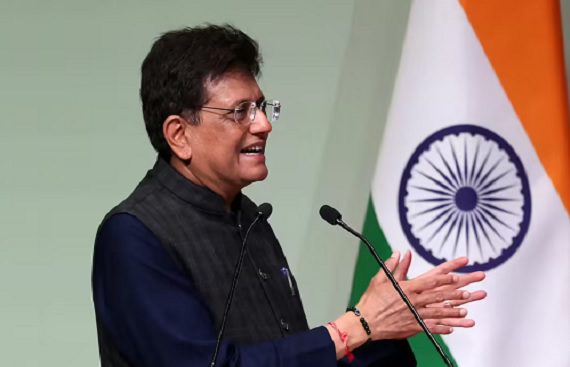
The India-Oman Comprehensive Economic Partnership Agreement (CEPA) entered into force on Monday, 1 June 2026, becoming India’s 15th bilateral free-trade pact. As Commerce Minister Piyush Goyal noted in an Indian Express op-ed, Oman has agreed to grant zero-duty access on 98% of its tariff lines covering 99.38% of India’s exports to the Sultanate. India’s merchandise exports to Oman stood at $3.64 billion in 2024 and are expected to grow sharply once the 5% baseline tariff is removed.
The deal is expected to create jobs in textile clusters like Tirupur, leather hubs of Kanpur and Agra, gems-and-jewellery centres of Surat and Jaipur, and apparel belts of Ludhiana, Panipat, Coimbatore, Karur, Bhadohi, Moradabad and Ahmedabad. Marine-product exports — currently $7.75 million — are projected to touch $150 million within three years. For CLAT 2027 aspirants, CEPA touches WTO law (GATT Article XXIV exception to MFN), the Indian Constitution’s treaty-making framework (Article 253 + Union List Entry 14), and India’s recent FTA architecture.
Constitutional & Legal Framework
- Article 253 — Parliament’s power to legislate for giving effect to international agreements, irrespective of List boundaries.
- Union List Entry 14 — Treaty-making is an exclusive Union subject.
- Concurrent List Entry 41 — Trade with foreign countries; trade and commerce with foreign countries; import and export across customs frontiers.
- GATT Article I (MFN principle) — General most-favoured-nation treatment for all WTO members.
- GATT Article XXIV — Permits regional trade agreements (FTAs/CUs) as exceptions to MFN, subject to coverage tests.
- WTO Enabling Clause (1979) — Permits preferential treatment between developing-country members.
CLAT Legal Aptitude & Economics Angle
Expect CLAT 2027 to test CEPA in a Legal Reasoning passage on treaty-implementation doctrine: while the Union exclusively negotiates treaties, domestic enforceability requires Parliamentary legislation under Article 253 unless the treaty fits within existing law. CEPA tariff reductions take effect through the Customs Tariff Act, 1975‘s preferential-rate notifications — a textbook executive-action implementation.
In the Current Affairs / GK section, candidates should memorise India’s last five bilateral pacts: UAE CEPA (2022), Australia ECTA (2022), EFTA TEPA (2024), UK FTA (2025), Oman CEPA (2026). Also note pharma-sector mutual recognition — Indian pharma with USFDA/EMA/UK MHRA/TGA approval receives automatic Omani marketing authorisation within 90 days.
Key Facts at a Glance
| Effective from | 1 June 2026 (Monday) |
| India’s bilateral FTA # | 15th |
| Oman tariff coverage | 98% of tariff lines; 99.38% of India’s exports |
| India’s exports 2024 | $3.64 billion |
| Indian community in Oman | ~7 lakh |
| Joint ventures | ~6,000 India-Oman JVs |
| Marine-products target | From $7.75 mn to $150 mn in 3 years |
Mnemonic & India’s FTA Timeline
Mnemonic — “OMAN-99%”: Oman CEPA + 99.38% of exports covered + 15th bilateral FTA.
- 2022 — UAE CEPA, Australia ECTA
- 2024 — EFTA TEPA (with Iceland, Liechtenstein, Norway, Switzerland)
- 2025 — UK Free Trade Agreement
- 2026 — Oman CEPA (now in force)
- Pending — India-EU FTA, India-Peru, India-New Zealand.
Practice Quiz — 10 CLAT-Style Questions
Click an option to reveal the answer and explanation.