CURRENT AFFAIRS | 15 JULY 2026
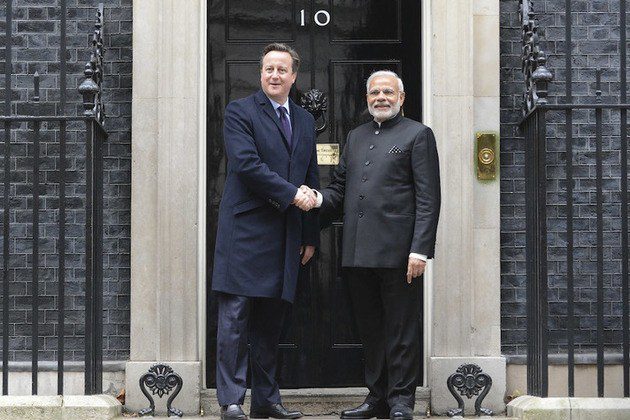
The India-UK Free Trade Agreement — formally the Comprehensive Economic and Trade Agreement (CETA) — comes into force on 15 July 2026, becoming India’s most comprehensive trade deal with a G-7 economy and its first free trade agreement with a major European economy since Brexit.
Signed in 2025 after years of negotiation, CETA entails wide sectoral coverage and deep cuts in both tariff and non-tariff barriers. On entry into force, the UK grants duty-free access to about 99% of India’s exports, benefiting labour-intensive sectors such as textiles, leather, footwear, marine products, engineering goods and gems and jewellery. India, in turn, reduces tariffs on roughly 90% of tariff lines, with sensitive items like Scotch whisky and automobiles liberalised gradually over a phase-in period rather than immediately.
Beyond goods, the agreement carries a Double Contribution Convention, which exempts Indian professionals temporarily working in the UK (and vice-versa) from paying social-security contributions in the host country for up to three years, lowering the cost of short-term postings. CETA also includes commitments on services, mobility of professionals, government procurement and rules-of-origin discipline.
In trade-law terms, a Free Trade Agreement is permitted as an exception to the World Trade Organization’s Most-Favoured-Nation (MFN) rule. Ordinarily MFN, under GATT Article I, requires a country to extend the same tariff treatment to all WTO members. GATT Article XXIV carves out an exception for FTAs and customs unions, allowing members to give each other preferential (lower) tariffs without breaching MFN, provided the arrangement covers substantially all trade. Rules of origin are built in to prevent ‘trade deflection’ — goods from a third country being rerouted through the FTA partner to grab the lower tariff.
It is important to distinguish forms of economic integration. In a Free Trade Agreement, members remove tariffs among themselves but each keeps its own external tariff against outsiders. In a Customs Union, members additionally adopt a common external tariff. A Common Market goes further, allowing free movement of factors of production such as labour and capital. India’s treaty-making and implementation flow from Article 253 read with Entry 14 of the Union List, under which Parliament can legislate to give effect to international treaties and agreements.
🏛️ Constitutional / Legal Framework
- GATT Article XXIV: Permits FTAs and customs unions as an exception to the WTO Most-Favoured-Nation (MFN) rule under GATT Article I.
- Rules of origin: Built-in criteria to prevent ‘trade deflection’ — third-country goods rerouted through the FTA partner to claim preferential tariffs.
- Article 253, Constitution of India: Empowers Parliament to make laws to implement international treaties and agreements.
- Union List, Entry 14: ‘Entering into treaties and agreements with foreign countries and implementing of treaties’ is a Union subject.
- Double Contribution Convention: Social-security exemption for professionals on short-term postings (up to three years) in the host country.
⚖️ Why This Matters for CLAT
CETA is a magnet for the WTO/international-trade portion of GK and for legal-reasoning passages on treaty law. The examiner will test whether you know an FTA is an exception to MFN under GATT Article XXIV, and whether you can distinguish an FTA (own external tariffs) from a Customs Union (common external tariff) and a Common Market (free movement of factors). Expect a domestic-law angle too: treaty implementation under Article 253 and Union List Entry 14. Keep the 99%/90% duty split and the Double Contribution Convention as ready facts.
📌 Key Facts
| Agreement | India-UK CETA (Free Trade Agreement) |
| Signed / In force | Signed 2025 / In force 15 July 2026 |
| UK access to Indian exports | ~99% of exports duty-free |
| India tariff cuts | ~90% of tariff lines (whisky, cars phased) |
| Mobility feature | Double Contribution Convention (3-yr social-security exemption) |
| WTO basis | GATT Article XXIV (exception to MFN) |
| Domestic basis | Article 253 + Union List Entry 14 |
| Significance | First FTA with a major European economy post-Brexit |
CETA is therefore both an economic milestone and a textbook illustration of trade-law doctrine — a preferential deal that stays WTO-consistent by riding the Article XXIV exception to Most-Favoured-Nation treatment.
🧠 Memory Aid
“FTA rides Article 24 to skip MFN; 99 out, 90 in.” GATT Article XXIV lets an FTA give preferential tariffs despite MFN; UK opens ~99% for India, India cuts ~90% of lines, with whisky and cars phased.
Practice Quiz — 10 CLAT-Style Questions
Click an option to reveal the answer and explanation.