

CURRENT AFFAIRS | 11 JULY 2026
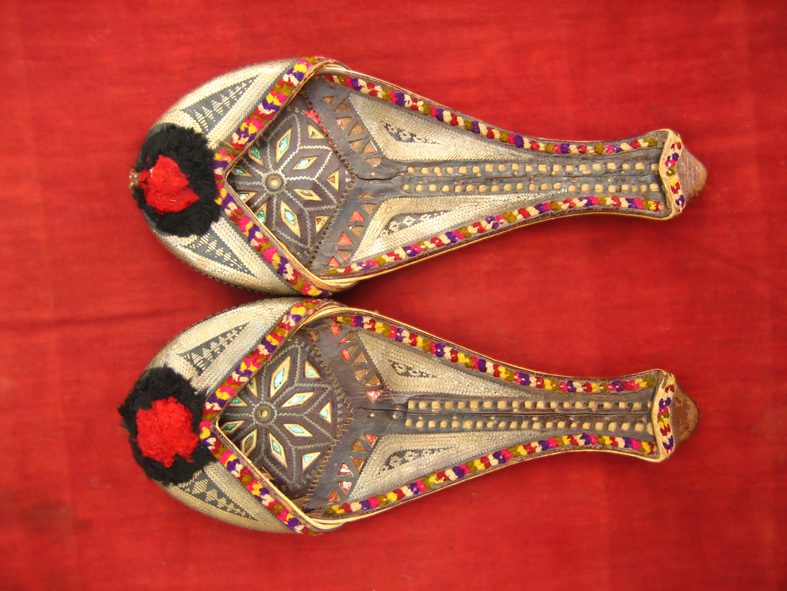
Jodhpur’s nearly 200-year-old Mojari — the handcrafted leather footwear also known as the Jooti — has been granted a Geographical Indication (GI) tag, giving the storied craft official recognition and a global-branding boost.
The GI Registry granted the tag to the Jodhpur Handicraft Exporters Association and the Gram Vikas Seva Sansthan, the community bodies representing the craft. Once patronised by royalty, the Mojari is today a living industry: around 400 manufacturers and over 35,000 artisans are associated with it, and the craft is practised in more than 5,000 households across Jodhpur. The tag protects that heritage against imitation and opens doors to premium and export markets.
A Geographical Indication is a form of intellectual property that identifies a product as originating from a specific place, where a given quality or reputation is essentially attributable to that origin. Importantly, a GI is a collective community right — it belongs to the producers of a region as a group, not to any single individual or firm. This distinguishes it from a trademark, which an individual business can own.
The Jodhpur Mojari now joins a distinguished roster of Indian GI products such as Darjeeling tea, the Banarasi saree and Kanchipuram silk. For the artisans, the tag is more than a label: it is legal armour for their identity, a marketing edge in a crowded handicrafts market, and recognition that skill passed down over generations carries real economic and cultural value.
🏛️ Constitutional / Legal Framework
- Geographical Indications of Goods (Registration and Protection) Act 1999: the governing statute, in force since 2003.
- GI Registry, Chennai: the authority that examines and grants GI tags.
- Nature of right: a collective community right tied to geographical origin — not an individual right.
- Comparators: Darjeeling tea, Banarasi saree, Kanchipuram silk are also GI-tagged.
⚖️ Why This Matters for CLAT
GI tags are a perennial favourite in CLAT legal-reasoning and GK because they sit at the intersection of intellectual property law and culture. Expect principle-application questions testing the statute (GI Act 1999), the Chennai registry, and — most importantly — the distinction between a GI (a collective right) and a trademark (an individual right). A common trap is to treat a GI as owned by one exporter; remember it protects the whole producer community of the region.
📌 Key Facts
| Product | Jodhpur Mojari (Jooti), leather footwear |
| Age of craft | Nearly 200 years |
| Granted to | Jodhpur Handicraft Exporters Assn. & Gram Vikas Seva Sansthan |
| Legal basis | GI Act 1999 (in force 2003) |
| Registry | GI Registry, Chennai |
| Artisans | Over 35,000 (~400 manufacturers) |
| Type of right | Collective community right |
The Mojari’s GI tag is a reminder that India’s soft power often walks on handcrafted soles — and that the law can protect the artisans who make them.
🧠 Memory Hook
“GI = Ground’s Identity: 1999 Act, Chennai Registry, Collective not personal.” Jodhpur Mojari joins Darjeeling tea and Banarasi saree as a community-owned origin mark.
Practice Quiz — 10 CLAT-Style Questions
Click an option to reveal the answer and explanation.