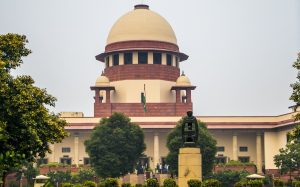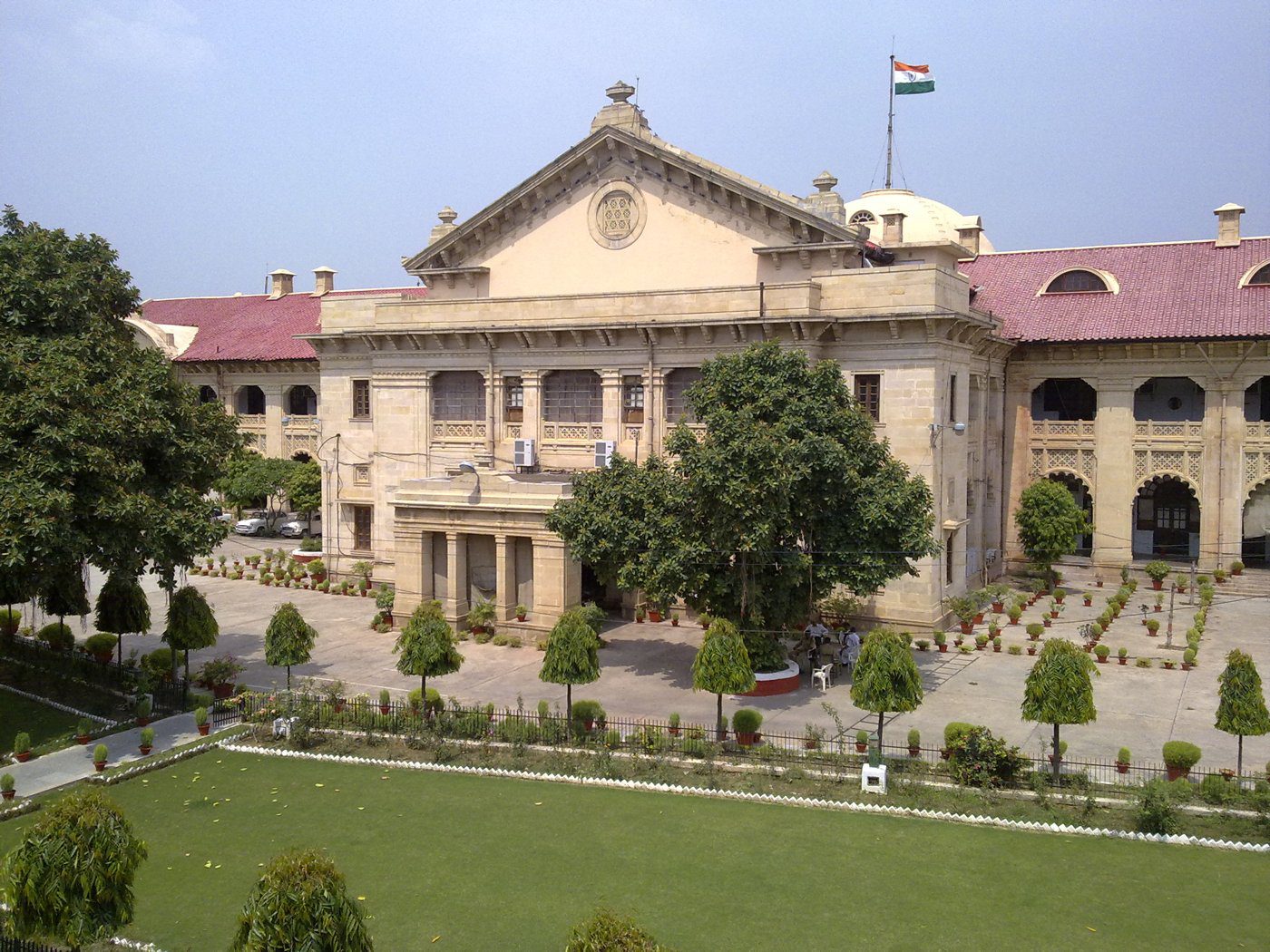
When the Lok Sabha Speaker tabled a parliamentary committee report into a sitting High Court judge who had already resigned, he reopened one of constitutional law’s most delicate questions: can a judge escape accountability simply by walking away first?
What Happened
Lok Sabha Speaker Om Birla tabled in the House the report of the parliamentary committee that had probed Justice Yashwant Varma, a judge of the Allahabad High Court. The committee had been constituted as part of the statutory machinery for investigating alleged misbehaviour by a superior court judge.
The unusual feature of the episode is one of timing. Justice Varma had already resigned in April, after the removal process against him had formally begun. His departure prompted a legal debate that goes to the heart of how India holds its judges to account: once a judge has left office, does the entire apparatus of inquiry and removal simply collapse, or does it survive to deliver its verdict on the record?
How a Judge Actually Leaves Office
The Constitution provides two very different routes by which a High Court judge may cease to hold office, and the difference between them is central to this story.
- Resignation under Article 217: a judge may resign by writing under his hand addressed to the President. This is a personal, voluntary act.
- Removal under Article 124(4) read with Article 218: an involuntary process driven by Parliament, on grounds of “proved misbehaviour or incapacity”.
A resignation is legally straightforward. A 1978 Supreme Court ruling held that a judge’s resignation is a unilateral act: it takes effect on the date the judge himself chooses, and no formal acceptance by the President is required to make it operative. In other words, the moment the judge nominates in his letter, he is out of office, whether or not anyone in the executive signs off on it.
Removal, by contrast, is designed to be extraordinarily difficult. It is the constitutional guarantee that a judge cannot be dismissed at the pleasure of the government of the day, a cornerstone of judicial independence.
The Removal Machinery
Although the popular press calls it “impeachment”, the Constitution never uses that word for judges. The correct term is removal, and the process is exacting.
- A motion must be signed by a threshold number of members of either House and admitted by the presiding officer.
- The Judges (Inquiry) Act, 1968 then supplies the procedural framework for the “investigation and proof of misbehaviour or incapacity”. A statutory inquiry committee, typically of three members drawn from the senior judiciary and legal fraternity, examines the charges.
- Only if the committee finds the judge guilty can the motion proceed. Each House must then pass it by a special majority: a majority of the total membership of the House and at least two-thirds of members present and voting.
- Finally, the President passes an order of removal on the strength of the addresses of both Houses.
Article 124(4) and (5) lay down this scheme for Supreme Court judges; Article 218 extends the same machinery to judges of the High Courts. The design deliberately spreads the power across the legislature, an independent inquiry body, and the President, so that no single organ can unseat a judge alone.
Why Resignation Complicates Everything
The removal process is aimed at a person holding office. Its natural endpoint, an order removing the judge, becomes meaningless the moment the judge has already ceased to hold that office. This is why a resignation mid-inquiry raises the question of whether the proceedings have become moot, that is, whether there is any live purpose left for the committee and Parliament to pursue.
Indian constitutional practice has faced this dilemma before, and each time a judge has departed before the process concluded.
- Justice V. Ramaswami: the subject of the first removal motion in independent India’s history, in 1993. The motion ultimately failed in the Lok Sabha when the required numbers were not mustered.
- Justice Soumitra Sen of the Calcutta High Court: he resigned in 2011 before the motion against him could complete its passage through the Rajya Sabha.
- Justice P. D. Dinakaran: he too resigned in 2011, while the inquiry against him was still under way.
In each case the resignation pre-empted a final verdict, leaving the accountability question unresolved on the formal record.
The Case for Tabling the Report Anyway
Constitutional scholars, including Professor Shubhankar Dam and legal commentator Alok Prasanna Kumar, have argued that placing the committee’s report before Parliament serves important purposes even after a resignation. Their reasoning runs along several lines.
- Accountability survives office. Tabling the findings keeps the record of alleged misbehaviour public and formal, rather than allowing a quiet exit to bury it.
- Post-retirement consequences. A recorded finding could bear on a former judge’s entitlement to pension and other retirement benefits, which are not automatically insulated from a documented finding of misconduct.
- Path to further action. The findings may lay the groundwork for criminal proceedings, which are a separate legal track from the constitutional removal process and are not extinguished by resignation.
The counter-view is that once a judge is out of office, the constitutional removal mechanism has no one left to remove, and Parliament’s role in that specific process is spent. The debate therefore sits at the intersection of what the Constitution formally permits and what accountability, as a broader value, demands.
The Deeper Constitutional Tension
Underlying the entire episode is the perennial balance between two goods that the Constitution simultaneously protects: judicial independence and judicial accountability.
Independence requires that judges be shielded from easy removal, so that they can decide cases without fear of political reprisal. That is why the bar for removal is set so high. Accountability requires that genuine misconduct not go unexamined, so that public confidence in the judiciary is preserved. The in-house procedure of the judiciary, an internal mechanism by which the higher judiciary examines complaints against its own members, sits alongside the parliamentary route and often operates first. Separation of powers frames the whole arrangement: it is Parliament, not the executive, that holds the ultimate removal power, precisely so that the government cannot discipline judges who rule against it.
The CLAT Angle
This story is a compact revision capsule for several high-yield areas of the CLAT legal-reasoning and general-knowledge syllabus.
- Article 124(4) and (5): grounds and process for removal of Supreme Court judges, “proved misbehaviour or incapacity”, and the special-majority requirement.
- Article 218: the provision that applies the Article 124 removal machinery to High Court judges, a favourite “linking” question.
- Article 217: appointment, tenure, and, crucially here, resignation of a High Court judge by writing to the President.
- The Judges (Inquiry) Act, 1968: the statute supplying the inquiry-committee framework; note the distinction between the constitutional grounds and the statutory procedure.
- Doctrinal concepts: separation of powers, judicial independence versus accountability, the in-house procedure, and the idea of a proceeding becoming moot.
Aspirants should remember two precision points that examiners love. First, the Constitution speaks of “removal”, not “impeachment”, the latter being a colloquial import. Second, no removal motion has ever succeeded in India; resignation has repeatedly intervened, as the Ramaswami, Sen, and Dinakaran precedents show. Understanding why a resignation can render the process moot, yet still leave room for pension consequences and criminal action, is exactly the kind of layered reasoning CLAT’s inference-based passages reward.
Test Yourself — Daily Quiz
Practice Quiz — 10 CLAT-Style Questions
Click an option to reveal the answer and explanation.