CURRENT AFFAIRS | 8 JULY 2026
Water may flow across state boundaries, but the money and the rights that go with it rarely settle so easily. On 7 July 2026, four beneficiary states of the Narmada river — Gujarat, Madhya Pradesh, Maharashtra and Rajasthan — signed an agreement to settle the long-pending dues arising from the Narmada Water Disputes Tribunal (NWDT) Award projects. Union Home Minister Amit Shah, who called it a “historic agreement” and an example of cooperative federalism, and Union Jal Shakti Minister C R Patil presided over the signing. For CLAT aspirants, the event is a live classroom on how India resolves inter-state river-water disputes and how “cooperative federalism” actually works on the ground.
What Was Signed, and Why It Matters
The four Chief Ministers — Mohan Yadav (Madhya Pradesh), Bhupendra Patel (Gujarat), Devendra Fadnavis (Maharashtra) and Bhajan Lal Sharma (Rajasthan) — put their signatures to a pact settling the outstanding financial dues linked to the NWDT Award projects. These dues are not trivial book-keeping. They cover compensation for land submerged by the reservoir, the interest burden on borrowings raised to build the project, the enormous cost of Resettlement and Rehabilitation (R&R) of displaced families, and the cost-sharing of the Navagam (Sardar Sarovar) dam and its river-bed powerhouses.
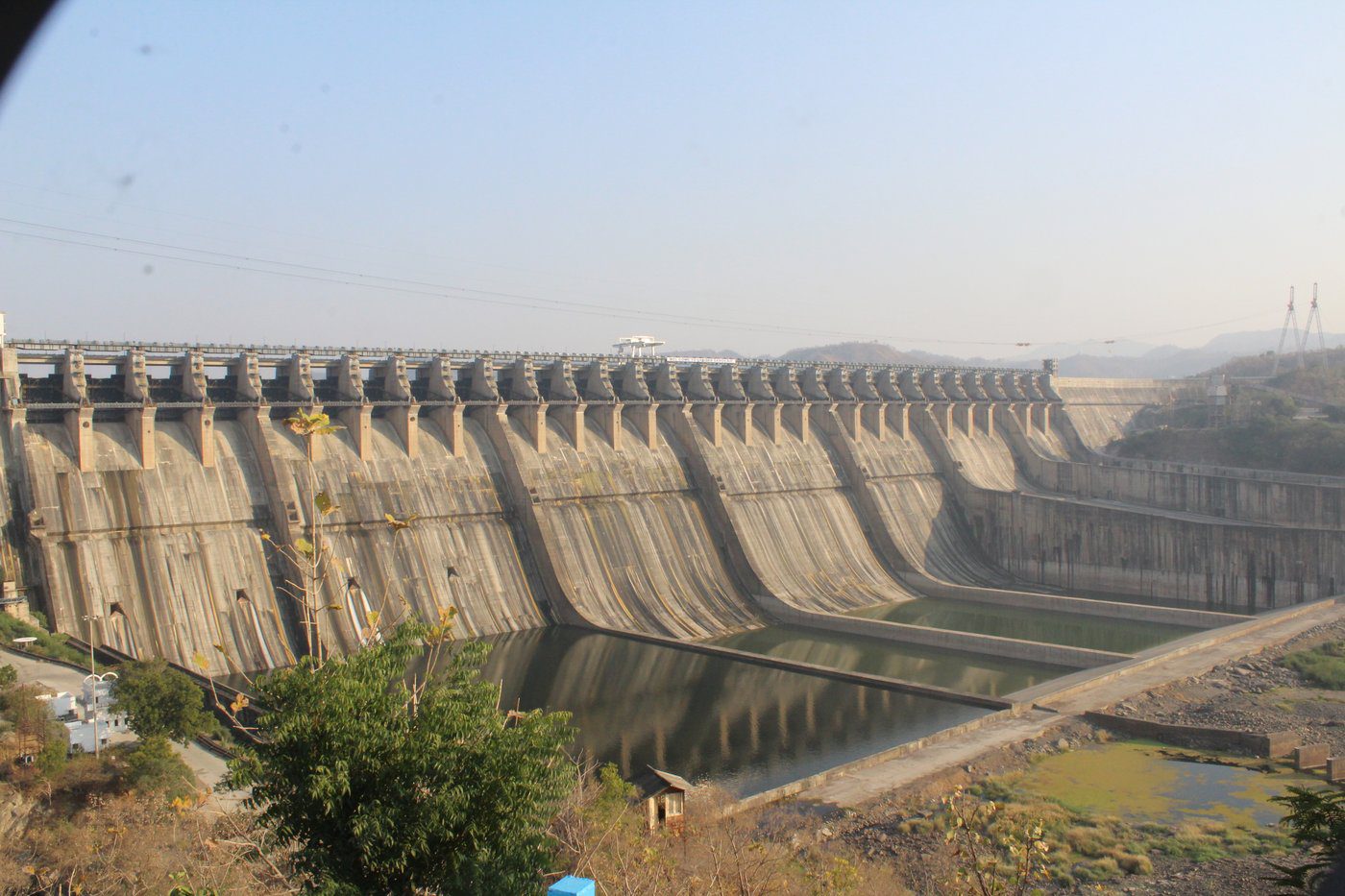
The Sardar Sarovar Project on the Narmada is one of India’s largest multi-purpose river valley projects, delivering irrigation, drinking water and hydro-power to the four states. Because the benefits and burdens are shared, so too must be the costs — and disagreement over exactly who pays how much had lingered for decades. The 7 July agreement finally puts a number and a framework to those obligations.
Constitutional & Legal Framework
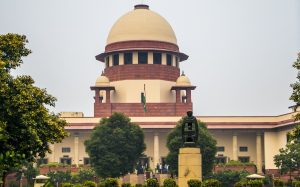
Inter-state river water is a delicate constitutional subject. Entry 17 of the State List gives states power over water — water supplies, irrigation, canals, drainage, and water storage. But this is expressly made “subject to the provisions of Entry 56 of the Union List,” which empowers Parliament to regulate and develop inter-state rivers and river valleys in the public interest. The key adjudication provision is Article 262: it authorises Parliament to provide by law for the adjudication of disputes relating to inter-state river waters, and — remarkably — allows Parliament to bar even the Supreme Court and other courts from exercising jurisdiction over such disputes. Using this power, Parliament enacted the Inter-State River Water Disputes Act, 1956 and the River Boards Act, 1956.
The Narmada Tribunal: A Timeline
The Narmada Water Disputes Tribunal was constituted in 1969 under the Inter-State River Water Disputes Act, 1956, to resolve the sharing of Narmada waters among the riparian states. After a decade of hearings, it delivered its Award in 1979, specifying the quantum of Narmada waters to be shared among Gujarat, Madhya Pradesh, Maharashtra and Rajasthan, along with directions on cost-sharing and rehabilitation. The 2026 agreement flows directly from that 1979 Award — it operationalises the financial obligations that the Tribunal had allocated but which the states had not fully squared with one another.
Key Facts at a Glance
| Item | Detail |
|---|---|
| Date of agreement | 7 July 2026 |
| States involved | Gujarat, Madhya Pradesh, Maharashtra, Rajasthan |
| Chief Ministers | Bhupendra Patel (GJ), Mohan Yadav (MP), Devendra Fadnavis (MH), Bhajan Lal Sharma (RJ) |
| Union Ministers present | Amit Shah (Home), C R Patil (Jal Shakti) |
| Tribunal constituted | 1969 |
| Award given | 1979 |
| Dues covered | Submerged-land compensation, interest, R&R, dam & powerhouse cost-sharing |
| Key project | Navagam / Sardar Sarovar dam |
Article 262 and the Machinery of Dispute Resolution
Article 262 is unusual because it deliberately keeps inter-state water disputes out of ordinary courts. The framers reasoned that these disputes involve complex questions of engineering, hydrology and equitable apportionment better suited to a specialised tribunal than to a bench of judges. Under the Inter-State River Water Disputes Act, 1956, when a state government requests it and the Centre is satisfied that a dispute cannot be settled by negotiation, the Centre constitutes a tribunal whose award has the force of a decree of the Supreme Court.
The River Boards Act, 1956, meanwhile, empowered the Centre to set up advisory River Boards for the regulation and development of inter-state rivers — though in practice this Act has been sparingly used. Together with Article 262, these laws form the statutory skeleton within which the Narmada Tribunal operated and within which the 2026 settlement sits.
The CLAT Angle
Inter-state water disputes are a perennial favourite for CLAT’s Legal Reasoning and Current Affairs. Lock in the pairing: Article 262 (adjudication + power to bar Supreme Court jurisdiction) with the Inter-State River Water Disputes Act, 1956. Be ready to distinguish Entry 17 (State List) from Entry 56 (Union List) — the classic “state power subject to Union power” structure. Know the difference between a water tribunal (Article 262 / 1956 Act) and the Inter-State Council under Article 263, which is an advisory body for coordination, not adjudication. And expect “cooperative federalism” as a framing keyword — negotiated settlements like this one are its poster child.
Cooperative Federalism in Action
Amit Shah’s description of the pact as “cooperative federalism” is not just political rhetoric — it captures a genuine constitutional idea. Cooperative federalism refers to the Union and the states working together as partners rather than rivals to solve shared problems. Water disputes are notoriously adversarial; states litigate for decades over shares that affect farmers, cities and power supply. When four states instead sit across a table and negotiate a financial settlement — with the Centre acting as facilitator rather than adjudicator — it demonstrates the collaborative model the Constitution’s designers hoped for.
The relevant institutional expression of this spirit is Article 263, which empowers the President to establish an Inter-State Council to inquire into and advise on disputes and to coordinate policy among states. While the Narmada dues were settled by direct agreement rather than through the Council, the underlying philosophy is the same: dialogue over confrontation.
The Bigger Picture
India’s river-water disputes — Cauvery, Krishna, Ravi-Beas, and others — routinely test the federal structure because rivers ignore state lines while political accountability stops at them. The Narmada settlement is significant precisely because it shows a pathway out of the usual gridlock: a decades-old tribunal award, finally given financial effect through negotiation. It rewards students to see how a 1969 tribunal, a 1979 award, and a 2026 agreement connect across half a century, illustrating that constitutional machinery is a long game.
For the aspirant, the lesson is structural. Remember that water is primarily a state subject, that Parliament can step in for inter-state rivers, that Article 262 creates a special adjudicatory route, and that genuine resolution often comes not from courts but from cooperative bargaining under the watchful facilitation of the Union. That is the quiet architecture of Indian federalism.
Why Financial Dues, Not Just Water Shares, Cause Disputes
A common misconception is that river-water disputes are only about how many cubic metres each state gets. In reality, the money is often the harder problem. A large dam like Sardar Sarovar submerges vast tracts of land — much of it in the upstream state — while the irrigation and drinking-water benefits accrue largely downstream. This asymmetry means the state that loses land and villages is not always the state that gains water. Compensation for submerged land, the interest on loans raised to build the structure, and the staggering cost of resettling and rehabilitating displaced families must therefore be apportioned fairly among all beneficiaries. When states disagree over these figures, the dispute can outlast the water-sharing question by decades — which is precisely what happened here, and precisely what the 7 July pact resolves.
The R&R component deserves special mention. The Narmada valley projects triggered one of India’s most prominent displacement and rehabilitation debates, and the equitable sharing of R&R costs among the four states was a genuine sticking point. By settling these dues, the states also give clarity to the long-standing obligation to make displaced communities whole — a reminder that behind the constitutional articles and tribunal awards lie real human consequences that CLAT passages increasingly foreground.
Finally, note the role of the Centre. The Union did not impose a solution; it facilitated one. That distinction — between coercive central intervention and cooperative facilitation — is exactly what makes this a “cooperative federalism” story rather than a “Union overreach” one, and it is the kind of nuance examiners reward.
Memory Hook
Chant “262 for the tribunal, 263 for the Council.” Adjudication (with power to oust the Supreme Court) lives in 262; advisory coordination lives in 263. For the lists, remember “17 State, 56 Union — state water, but Union rivers win.” And for the Narmada dates: “69–79–26” — Tribunal 1969, Award 1979, Settlement 2026.
Test Yourself — Daily Quiz
Practice Quiz — 10 CLAT-Style Questions
Click an option to reveal the answer and explanation.