CURRENT AFFAIRS | 24 JUNE 2026
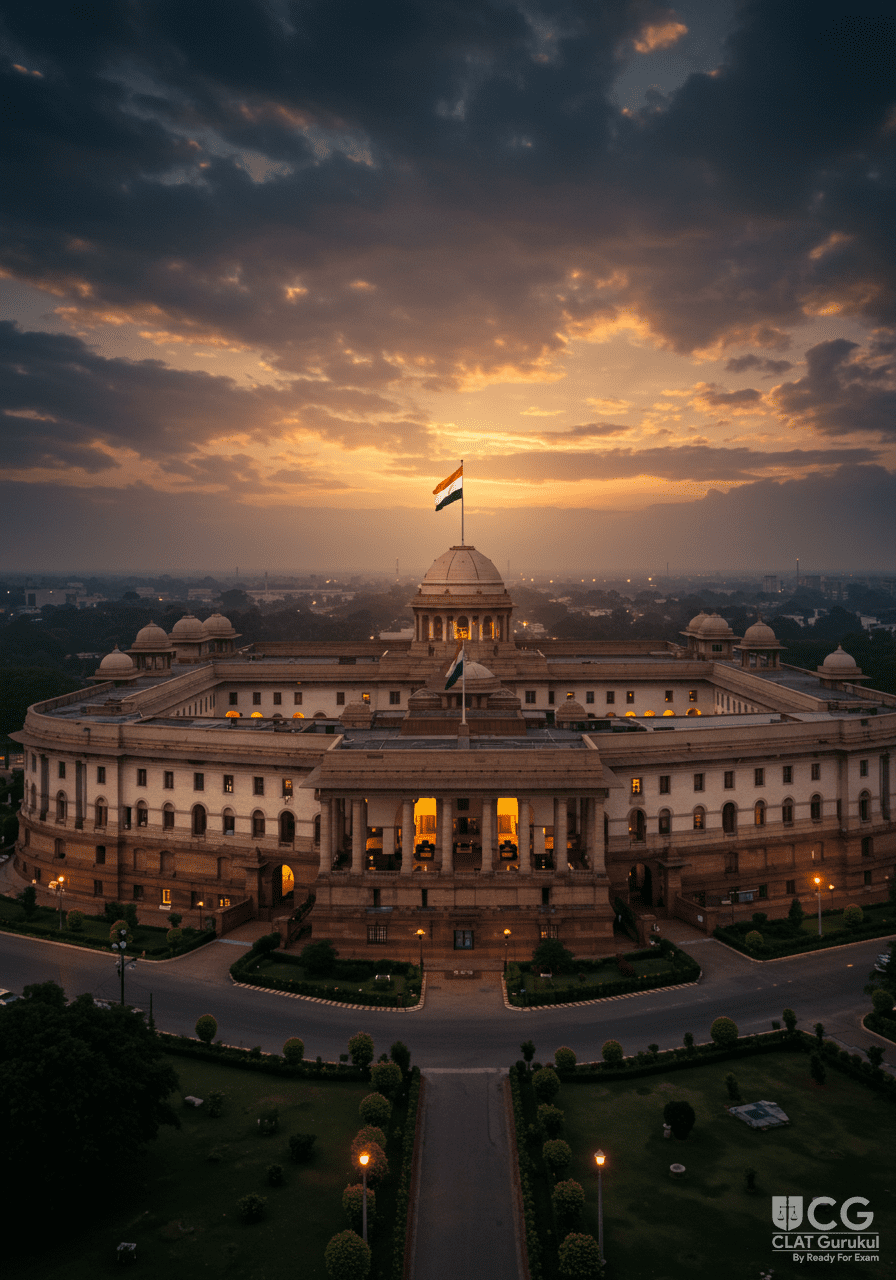
President Droupadi Murmu conferred the Padma Awards 2026 at a ceremony at Rashtrapati Bhavan. These are India’s second-highest civilian honours, ranking just below the Bharat Ratna. This year’s recipients spanned public life, sport, science, music and cinema — and the awards themselves carry a quietly important constitutional backstory under Article 18 that makes them a favourite of examiners.
This year’s honours
Jharkhand Mukti Morcha patriarch and tribal leader Shibu Soren received the Padma Bhushan posthumously, accepted by his family. Tennis legend Dr Vijay Amritraj and singer Asha Yagnik also received the Padma Bhushan. Among the Padma Shri recipients were cricketer Rohit Sharma and IIT Madras Director Professor Veezhinathan Kamakoti, while actor Satish Shah was awarded the Padma Shri posthumously.
The spread of recipients reflects the design of the awards: they are meant to honour distinguished work across art, social work, public affairs, science, sport, civil service and more. By conferring them across such varied fields, the state signals that excellence and service are valued wherever they appear, not just in conventional public office.
This breadth is also why the annual list is such fertile ground for current-affairs questions. A single year’s awards can touch sport, cinema, music, science and public life at once, so a well-prepared aspirant tracks not just the names but the fields they represent and the grade of honour each received.
The hierarchy of civilian honours
The Padma Awards were instituted in 1954 and come in three grades — Padma Vibhushan, Padma Bhushan and Padma Shri, in descending order of precedence. Padma Vibhushan recognises exceptional and distinguished service, Padma Bhushan distinguished service of a high order, and Padma Shri distinguished service. Above all three stands the Bharat Ratna, India’s highest civilian award.
The recommendations are processed through the Padma Awards Committee, which is reconstituted each year and submits its recommendations to the Prime Minister and the President. Crucially, the awards are not meant to be conferred posthumously as a rule, though exceptions are made — as several of this year’s posthumous honours show.
A common point of confusion is the relationship between the Padma Awards and gallantry awards such as the Param Vir Chakra or the Ashoka Chakra. The Padma family recognises distinguished civilian service across fields, whereas gallantry awards honour acts of courage, often in military or emergency contexts. Keeping the two streams separate is a small but frequently tested distinction.
Article 18 and the ‘no titles’ debate
Here lies the CLAT hook. Article 18 of the Constitution abolishes titles, a provision designed to break with the colonial and feudal practice of conferring hereditary or status titles. So are the Padma Awards unconstitutional? The question reached the Supreme Court directly.
In Balaji Raghavan v Union of India (1996), the Court held that the Padma Awards are NOT ‘titles’ barred by Article 18 — but with a crucial caveat: they cannot be used as prefixes or suffixes to a recipient’s name. The honour is recognition of merit and service, not a hereditary or status title, and treating it as one would itself violate the spirit of Article 18.
The four clauses of Article 18
Article 18 is compact but layered. It abolishes titles, bars the State from conferring any title except military or academic distinctions, prohibits citizens from accepting titles from foreign states, and restricts non-citizens holding office of profit under the State from accepting foreign titles without the President’s consent. Understanding these strands explains why a national honour for service can coexist with a constitutional ban on titles.
The Padma Awards therefore occupy a carefully defined space: state recognition of merit that stops short of becoming a title. For CLAT, the most reliable line of questioning blends the static law — Article 18 and Balaji Raghavan — with the current list of recipients. Holding both together, the constitutional principle and the year’s names, is what turns this from a memory exercise into a secure source of marks.
Constitutional / Legal Framework
Article 18 of the Constitution (abolition of titles); the Bharat Ratna as the highest civilian award; the Padma Awards (instituted 1954); and Balaji Raghavan v Union of India (1996), in which the Supreme Court upheld the Padma Awards as not amounting to prohibited ‘titles’.
CLAT Angle
Civilian honours and their constitutional status under Article 18 are recurring CLAT static-plus-current GK.
Exam tip: In Balaji Raghavan (1996) the Supreme Court held Padma Awards are NOT ‘titles’ barred by Article 18 — they cannot be used as suffixes or prefixes to names.
Key Facts
| Conferred by President Droupadi Murmu at Rashtrapati Bhavan |
| Shibu Soren: Padma Bhushan (posthumous) |
| Dr Vijay Amritraj and Asha Yagnik: Padma Bhushan |
| Rohit Sharma and Prof Veezhinathan Kamakoti: Padma Shri; Satish Shah: Padma Shri (posthumous) |
| Padma Awards instituted in 1954; second only to the Bharat Ratna |
Memory Hook
Ratna > Vibhushan > Bhushan > Shri; Article 18 bars titles, not awards.
The Padma Awards bundle static GK with a sharp constitutional point — exactly the blend CLAT favours. The 2026 list gives you the current-affairs anchor: President Droupadi Murmu conferring the honours at Rashtrapati Bhavan, Shibu Soren and others among the Padma Bhushan recipients, and Rohit Sharma and Satish Shah on the Padma Shri roll. The constitutional layer gives you the analytical hook.
Remember the order — Bharat Ratna above Vibhushan above Bhushan above Shri — and the holding in Balaji Raghavan that Article 18 bars titles, not merit awards, with the caveat that the awards cannot be used as prefixes or suffixes. Hold the names and the principle together, and these recurring questions become easy, reliable marks.
Practice Quiz — 10 CLAT-Style Questions
Click an option to reveal the answer and explanation.