
CURRENT AFFAIRS | 15 JULY 2026
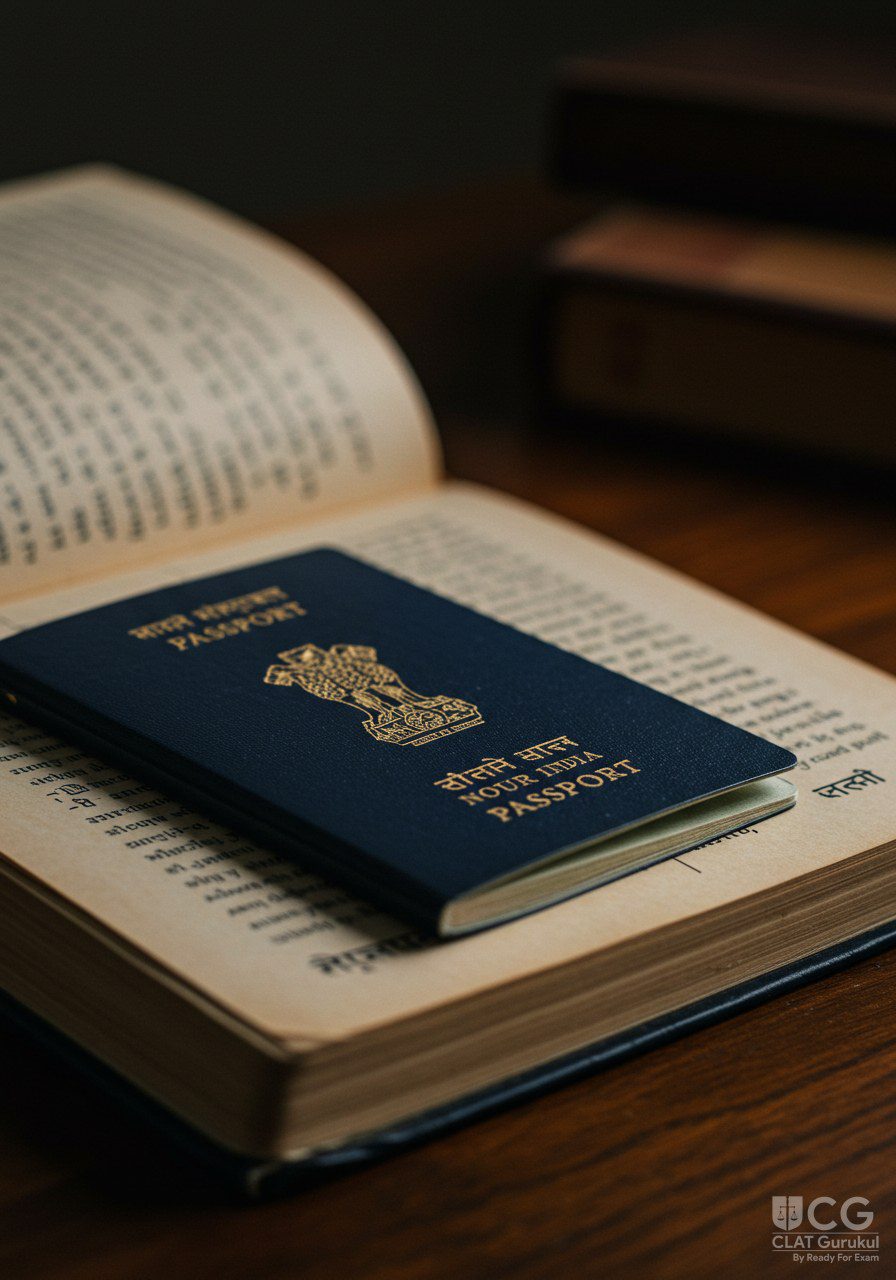
The Ministry of External Affairs has clarified that an Indian passport is a travel document issued under the Passports Act, 1967 to regulate the departure of Indian citizens from the country — it is NOT proof of citizenship and does not by itself establish that its holder is an Indian citizen.
The clarification came from MEA spokesperson Randhir Jaiswal amid a political row over the Special Intensive Revision (SIR) of electoral rolls, during which the Opposition (led by the Congress) alleged that the government was laying the ground to deny citizenship to genuine Indians by not treating the passport as valid proof. The MEA underlined a basic legal distinction: a passport merely certifies that the State permits the holder to travel abroad and return; it is a document of identity and international travel, not a certificate of nationality.
The point has real bite because only about 8% of Indians actually hold a passport. If a passport were the touchstone of citizenship, over 90% of citizens would be unable to prove their status, which is legally absurd. Citizenship in India is instead governed by a distinct constitutional and statutory scheme, administered by the Ministry of Home Affairs, while the passport is issued by the MEA.
Citizenship is dealt with in Part II (Articles 5–11) of the Constitution, which fixed who were citizens at commencement, and by the Citizenship Act, 1955, which lays down acquisition by birth, descent, registration, naturalisation and incorporation of territory, as well as termination. A passport, by contrast, presupposes citizenship — it is issued to a person because they are already a citizen, and cannot be the founding proof of that very status.
The Supreme Court has long shaped passport law through the fundamental-rights lens. In Satwant Singh Sawhney v D. Ramarathnam (1967), the Court held that the right to travel abroad is part of the ‘personal liberty’ protected by Article 21, and that the executive could not arbitrarily deny a passport without legal authority. Parliament responded by enacting the Passports Act, 1967. Later, in Maneka Gandhi v Union of India (1978), the Court ruled that impounding a passport must satisfy Article 21’s ‘procedure established by law’, read as fair, just and reasonable, and must respect natural justice.
🏛️ Constitutional / Legal Framework
- Passports Act, 1967: Governs issue and regulation of passports and travel documents; empowers the State to regulate the departure of citizens from India.
- Citizenship Act, 1955: Governs acquisition and termination of Indian citizenship (birth, descent, registration, naturalisation, incorporation of territory) — administered by the Home Ministry.
- Articles 5–11 (Part II): Constitutional provisions on citizenship at commencement and Parliament’s power to regulate citizenship by law (Article 11).
- Satwant Singh Sawhney v D. Ramarathnam (1967): Right to travel abroad is part of ‘personal liberty’ under Article 21; led to enactment of the Passports Act, 1967.
- Maneka Gandhi v Union of India (1978): Impounding of a passport must satisfy fair, just and reasonable procedure under Article 21 and natural justice.
⚖️ Why This Matters for CLAT
This is a clean Static-GK plus Legal-Reasoning fusion: it tests whether you can separate a travel document from a proof of nationality, and map each to the correct statute and ministry. Expect a passage asking you to reason that a passport is issued because one is a citizen (so it cannot be the source of citizenship), or an assertion-reason item linking Satwant Singh and Maneka Gandhi to Article 21. The anchor to remember: passport = departure/travel under the Passports Act 1967 (MEA); citizenship = Citizenship Act 1955 and Part II (MHA).
📌 Key Facts
| Clarified by | MEA spokesperson Randhir Jaiswal |
| Governing statute (passport) | Passports Act, 1967 |
| Purpose of passport | Regulate departure/travel of citizens abroad |
| Citizenship statute | Citizenship Act, 1955 (Home Ministry) |
| Constitutional basis | Part II, Articles 5–11 |
| Trigger | Special Intensive Revision (SIR) of electoral rolls row |
| Passport-holding Indians | About 8% of the population |
| Key cases | Satwant Singh Sawhney (1967); Maneka Gandhi (1978) |
The bottom line is doctrinally simple: a passport proves that the State lets you travel, not that you belong — citizenship stands on the Constitution and the Citizenship Act, 1955, and a travel document cannot substitute for either.
🧠 Memory Aid
“PASS-Port: Permits Abroad-travel, Statute-1967, Says-nothing-on-citizenship.” Recall that the Passports Act 1967 regulates departure, while Part II and the Citizenship Act 1955 alone decide nationality.
Practice Quiz — 10 CLAT-Style Questions
Click an option to reveal the answer and explanation.