CURRENT AFFAIRS | 27 JUNE 2026
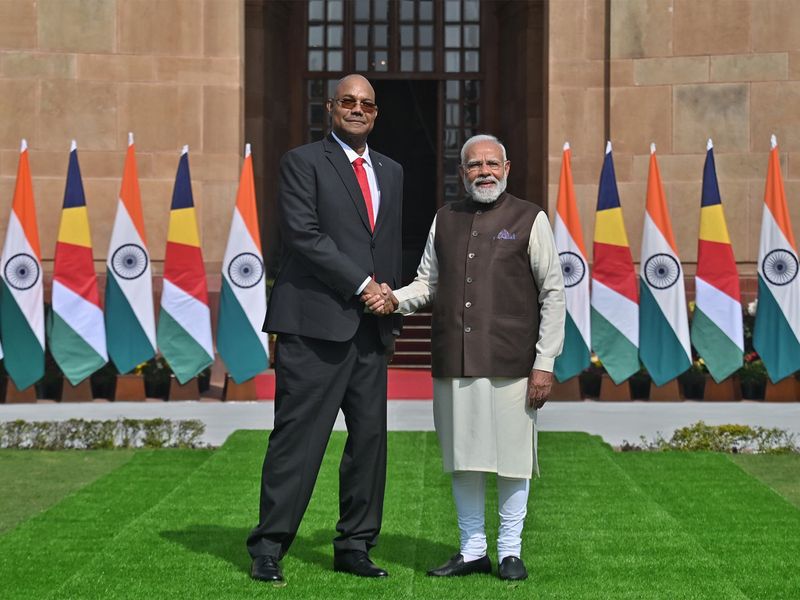
From 27 June 2026, Prime Minister Narendra Modi begins a three-day state visit to Seychelles, the small but strategically vital archipelago in the Western Indian Ocean. He arrives as Guest of Honour at the country’s 50th Independence Day golden-jubilee celebrations and will address the National Assembly of Seychelles. For a CLAT aspirant, a “small island” visit might look like soft trivia — but it is a compact case study in India’s Indian Ocean strategy, Global South diplomacy, and diaspora engagement, all of which recur in the GK and comprehension sections.
What Actually Happened
PM Modi will meet President Patrick Herminie, and an Indian Armed Forces contingent plus two Indian Navy ships are participating in the jubilee. India announced a Special Economic Package of $175 million for Seychelles. The visit deliberately revives a long historical thread: INS Nilgiri took part in Seychelles’ very first Independence-Day celebrations in 1976, and the Pravasi Bharatiya Samman was conferred on Justice D. Karunakaran in 2006 in recognition of the diaspora’s contribution.
The strategic frame is the most exam-relevant element. The visit advances Vision MAHASAGAR — Mutual and Holistic Advancement for Security and Growth Across Regions — which is the successor and expansion of the earlier SAGAR doctrine (Security and Growth for All in the Region, articulated in 2015). SAGAR was India’s first explicit Indian Ocean vision; MAHASAGAR widens the lens to the broader Global South. Seychelles, sitting astride key sea-lanes, is a critical maritime partner in the Western Indian Ocean — relevant to anti-piracy, surveillance, and the wider contest for influence in the region.
Two doctrines anchor this visit. SAGAR (2015) = Security and Growth for All in the Region — India’s foundational Indian Ocean policy emphasising maritime security, regional cooperation and capacity-building among littoral states. Vision MAHASAGAR = its successor, broadening to “Across Regions” and the Global South. Both sit within India’s larger neighbourhood and maritime-security architecture. Seychelles’ value lies in its location in the Western Indian Ocean, near critical shipping routes. Note also the diaspora dimension: persons of Indian origin form about 5% of the population (~120,000).
GK questions love acronym expansions and successor relationships: be able to state that MAHASAGAR succeeds SAGAR, and unpack both fully. Comprehension passages on foreign policy may test the difference between bilateral diplomacy, maritime security and diaspora outreach. Expect cross-links to “Neighbourhood First,” the Global South positioning, and India’s role as a “net security provider” in the Indian Ocean. Static-GK tie-ins: the Pravasi Bharatiya Samman and the chronology of India-Seychelles naval engagement.
| Visit | PM Modi to Seychelles, 27–29 Jun 2026 |
| Occasion | 50th National Day; Guest of Honour |
| Host President | Patrick Herminie |
| Doctrine | Vision MAHASAGAR (successor to SAGAR, 2015) |
| Economic package | $175 million |
| PIO share | ~5% of population (~120,000) |
“Small SAGAR grew into a MAHA-SAGAR.” SAGAR (2015) = Security and Growth for All in the Region → MAHASAGAR = Mutual and Holistic Advancement for Security and Growth Across Regions. For the package: “175 for the 50th” ($175 million for the 50th National Day).
Why This Matters for CLAT
India’s foreign policy in the Indian Ocean is a recurring theme because it sits at the crossroads of security, economics and identity. Seychelles is the perfect microcosm: tiny in size, outsized in strategic value, and bound to India by both geography and a shared diaspora. The smart way to prepare such stories is to build a mental “doctrine ladder” — Look East/Act East, Neighbourhood First, SAGAR, and now MAHASAGAR — and slot each new bilateral visit onto it. When a comprehension passage describes India deepening ties with an island nation, deploying naval ships, and announcing aid, you should instantly recognise the MAHASAGAR/Global South frame and the “net security provider” role. That pattern-recognition converts a dense IR passage into quick, confident answers.
Reinforce the doctrine ladder with the 10 questions below.
Practice Quiz — 10 CLAT-Style Questions
Click an option to reveal the answer and explanation.