
CURRENT AFFAIRS | JULY 13, 2026
What began as a routine housekeeping exercise — cleaning up India’s electoral rolls — has turned into one of the sharpest constitutional-law flashpoints of the year. In its ongoing Special Intensive Revision (SIR), the Election Commission of India has quietly extended the burden of proof from the voter to the voter’s parents, and in the process deleted a staggering 5.58 crore names from the rolls. For a country that has no single document proving citizenship, the question the SIR forces open is deceptively simple and deeply unsettling: how does an ordinary Indian prove that she belongs?
What exactly has changed?
Through its online portal ECINET, the Election Commission of India (ECI) now requires applicants during the SIR of electoral rolls to declare the details of their parents’ status in the last SIR — right down to the polling-booth part number and serial number — if the applicant’s own name was not in the previous SIR. This declaration is made through a “declaration form” attached to Form 6, the statutory form used for new voter enrolment under the Representation of the People Act, 1950 and the Registration of Electors Rules, 1960.
In practical terms, a young first-time voter — or anyone whose name slipped off the rolls — must now trace a parent’s entry in an earlier roll to establish eligibility. The logic is that residency and lineage together stand in for the citizenship document India does not issue. But the effect, critics argue, is to shift the presumption: instead of the State proving a person is not entitled to vote, the individual must affirmatively prove that she is.
The scale of the revision
The SIR is now complete in 10 states and Union Territories and underway in 19 more. Bihar has been exempted for now, while Assam decided not to hold the SIR until its own National Register of Citizens (NRC) exercise concludes. Across the ongoing revision, a total of 5.58 crore names were deleted from the rolls — a number large enough to dwarf the entire electorate of many states.
Article 326 guarantees adult suffrage — every citizen aged 18+, ordinarily resident and not otherwise disqualified, may vote. Article 324 vests the superintendence, direction and control of elections in the ECI. The Representation of the People Act, 1950 governs the preparation of electoral rolls, while the RP Act, 1951 governs the conduct of elections; the Registration of Electors Rules, 1960 prescribe Form 6. Crucially, the Aadhaar Act, 2016 (Section 9) states that Aadhaar is not proof of citizenship — and the same is true of ration cards, voter IDs and passports. In Lal Babu Hussein v. Electoral Registration Officer (1995), the Supreme Court held that a name cannot be struck off the rolls without a proper inquiry and hearing, an application of natural justice.
Citizenship versus residence — the core confusion
The deepest problem the SIR exposes is a conceptual one: Indian law carefully separates residence from citizenship, but the revision blurs the two. The right to vote under Article 326 flows from citizenship plus ordinary residence in a constituency — not from property, tax records or a passport. Yet none of the everyday documents an Indian carries actually establishes citizenship. The Citizenship Act, 1955 is the source of citizenship status, but there is no universally issued “citizenship card.” A passport is issued to citizens but is not, in law, conclusive proof of citizenship; Aadhaar is explicitly excluded; a ration card proves entitlement to subsidised food, not nationality.
This gap is what makes the parents-declaration so consequential. Asking someone to prove a parent’s roll entry assumes that documentary trails exist reaching back decades. For millions, they simply do not.
This is a rare current-affairs story that sits squarely inside CLAT’s Legal Reasoning wheelhouse. Expect passages testing Article 326 (adult suffrage), the distinction between the RP Act 1950 (rolls) and RP Act 1951 (conduct of elections), the role of the ECI under Article 324, and the principle that Aadhaar and other IDs are not citizenship proof. The natural-justice angle — no deletion without inquiry, from Lal Babu Hussein — is a classic “apply the principle to the facts” setup. Watch also for the residence-versus-citizenship trap in application questions.
“A machine for exclusion”
An Ideas-page critique by RS Sharma, the former Director-General of UIDAI, called the exercise “a machine for exclusion.” His illustration is striking: a 60-year-old farm labourer who has voted in every election of his adult life, but who holds no birth certificate, is now effectively asked to prove that he is not a foreigner. The demographic data sharpen the worry — 41% of births of children under five were unregistered in 2005-06, meaning a large slice of the current adult population never had a birth certificate to begin with.
The criticism is not that cleaning the rolls is illegitimate. Duplicate entries, dead voters and shifted residents genuinely need removal. The objection is about the direction of the burden and the documents demanded. When the State asks an individual to produce proof that the legal system itself does not issue, the exercise can quietly convert an administrative revision into a disenfranchisement mechanism — hitting hardest exactly those citizens who are poorest, least literate and least documented.
The privacy and due-process overlay
Two further constitutional threads run through the debate. First, K.S. Puttaswamy v. Union of India (2017) recognised privacy as a fundamental right under Article 21 — relevant when vast quantities of personal and familial data are collected through ECINET. Second, the requirement of a fair procedure before an adverse civil consequence — losing the vote is precisely such a consequence — flows from Article 21 read with natural justice. The rule of audi alteram partem (hear the other side), reinforced by Lal Babu Hussein, means deletions ought to follow notice and a genuine opportunity to respond, not a silent strike-off.
The NRC shadow and the equality question
It is impossible to read the SIR in isolation from the broader anxiety about documenting citizenship. Assam’s decision to defer its revision until the National Register of Citizens (NRC) exercise concludes makes the linkage explicit: for many, a rolls-revision that demands proof one is “not a foreigner” feels like an NRC by another route. The distinction in law is real — the electoral roll is about the right to vote, not the fact of citizenship — but the documents demanded blur that line in practice, which is precisely why the exercise is so contested.
The equality dimension under Article 14 sharpens the critique. A revision that asks for birth certificates or decades-old parental roll entries does not fall evenly across society. A salaried, urban, documented citizen sails through; a landless agricultural worker, a migrant, or a woman who moved at marriage and left her natal records behind faces a wall. When a facially neutral rule produces a sharply unequal burden, it invites scrutiny as indirect discrimination — the kind of reasoning CLAT passages increasingly build around. The result is that a paperwork exercise becomes a test of who, in a vast and unevenly documented democracy, is presumed to belong and who must prove it.
Where the debate goes next
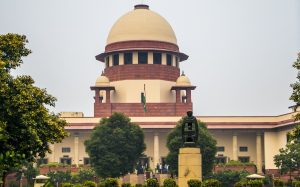
The SIR is likely to be tested in the courts, with petitioners arguing that the parents-declaration and mass deletions violate Articles 326, 21 and 14 (equality — because the documentary burden falls unequally on the poor). The ECI will counter that maintaining pure rolls is a statutory duty and that safeguards, including inquiry before deletion, remain in place. For the aspirant, the value of the story is that it braids together nearly every strand of election law and citizenship law into a single live controversy — the kind of factual matrix CLAT setters love.
| Exercise | Special Intensive Revision (SIR) of electoral rolls |
| Conducted by | Election Commission of India (Art 324), via ECINET portal |
| New requirement | Declaration of parents’ last-SIR details on Form 6 |
| Names deleted | 5.58 crore |
| Status | Complete in 10 states/UTs; underway in 19; Bihar exempt; Assam deferred pending NRC |
| Key law | RP Act 1950; Registration of Electors Rules 1960; Art 326 |
“SIR-326-Form6-Not-Citizen-Proof.” Read it as a sentence: the SIR revision, governed by adult suffrage under Article 326, uses Form 6 (and its new parents-declaration) — but remember that Aadhaar, passport, ration card and voter ID are all Not proof of Citizenship. Chain them and you recall the body (ECI, Art 324), the right (Art 326), the instrument (Form 6/RP Act 1950), and the trap (residence ≠ citizenship; no single citizenship document) in one line.
Practice Quiz — 10 CLAT-Style Questions
Click an option to reveal the answer and explanation.