CURRENT AFFAIRS | 17 JUNE 2026
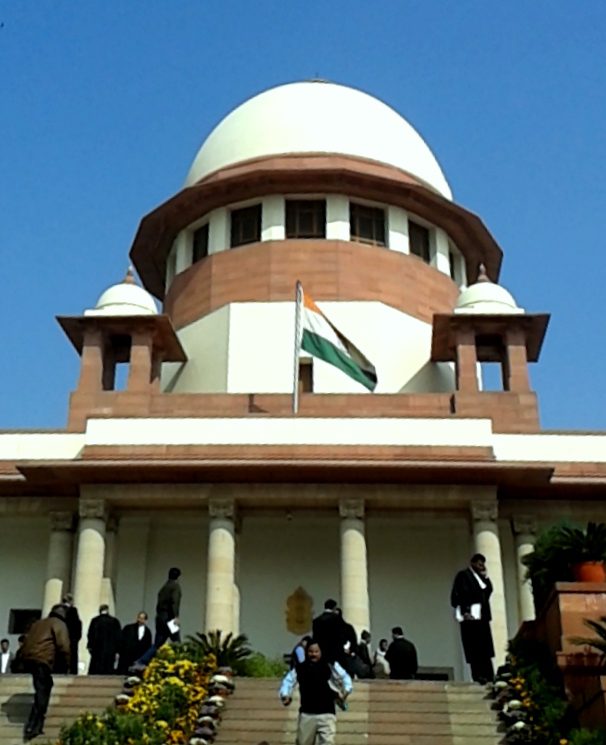
The Supreme Court has sought the Union government’s response on a public-interest litigation challenging the use of Aadhaar as proof of citizenship. A bench of Chief Justice of India Surya Kant and Justice V Mohana issued notice to the Centre, the states, the Election Commission of India (ECI) and the Unique Identification Authority of India (UIDAI), on a PIL filed by advocate Ashwini Kumar Upadhyay. The petitioner’s core argument is sharp and exam-friendly: Aadhaar is “not proof of citizenship or domicile,” and yet “infiltrators and illegal immigrants” are allegedly using it as a gateway to obtain other identity documents and to enter electoral rolls.
The petition leans on an internal contradiction in the government’s own paperwork. UIDAI’s notification of August 22, 2023 expressly clarifies that Aadhaar “is proof of identity, not of citizenship, address or date of birth.” Yet under Form-6 of the Registration of Electors Rules, 1960, Aadhaar can be submitted as proof of date of birth and residence for voter registration — a position the PIL calls “arbitrary” for failing to build in robust verification. Framing illegal “infiltration” as “a weapon of the electoral process,” the petition specifically references West Bengal, Assam and the North-East, linking the issue to the larger National Register of Citizens (NRC) debate. For a CLAT aspirant, the value here is the clean separation the law draws between identity and citizenship — two concepts that are routinely conflated in popular discourse but kept rigorously distinct in statute.
The statutory anchor is Section 9 of the Aadhaar Act, 2016, which states in plain terms that an Aadhaar number “shall not, by itself, confer any right of, or be proof of, citizenship or domicile.” The constitutional backdrop runs deeper. Citizenship is governed by Articles 5 to 11 in Part II of the Constitution. The privacy and Aadhaar jurisprudence flows from K.S. Puttaswamy v. Union of India — the 2017 nine-judge bench declaring privacy a fundamental right under Article 21, and the 2018 Constitution-bench judgment upholding the Aadhaar Act while reading down Section 57 and examining the Article 110 money-bill route. Electoral rolls, meanwhile, are administered under the Representation of the People Act, 1950. The PIL was filed under Article 32, the very provision Dr B.R. Ambedkar called the “heart and soul” of the Constitution.
Section 9, Aadhaar Act 2016 bars Aadhaar from being proof of citizenship or domicile. Articles 5–11 govern citizenship. K.S. Puttaswamy (2017) recognised the right to privacy under Article 21; the 2018 judgment upheld Aadhaar but read down Section 57 and addressed the Article 110 money-bill issue. Electoral rolls fall under the Representation of the People Act, 1950, with Form-6 of the Registration of Electors Rules, 1960. The PIL invokes Article 32.
The identity-versus-citizenship distinction is a tailor-made Legal Reasoning principle. Expect a passage giving you Section 9’s text and asking you to apply it to a hypothetical where someone claims voting rights or domicile via Aadhaar. The PIL also revives the Puttaswamy line of cases — privacy, the money-bill controversy, and proportionality — which are among the most heavily tested topics in current-affairs-linked Legal Reasoning.
| Petitioner | Advocate Ashwini Kumar Upadhyay |
| Bench | CJI Surya Kant & Justice V Mohana |
| Notice to | Centre, states, ECI, UIDAI |
| Statutory bar | Section 9, Aadhaar Act 2016 |
| UIDAI clarification | August 22, 2023 notification |
| Contested rule | Form-6, Registration of Electors Rules, 1960 |
“ID, NOT CITIZEN” — Aadhaar proves IDentity, NOT CITIZENship (Section 9, Aadhaar Act). Remember “5 to 11 for the citizen” (Articles 5–11) and “Putta = Privacy” (Puttaswamy, Article 21).
Why This Matters for CLAT: This dispute trains you to read a statute against its real-world application — the exact skill Legal Reasoning passages demand. When a rule (Form-6) appears to clash with both a parent statute (Section 9) and an executive clarification (the UIDAI memo), the examiner wants you to spot the hierarchy and the contradiction. Layer in the constitutional citizenship provisions and the Puttaswamy privacy framework, and you have a current-affairs story that touches Polity, Legal Reasoning and GK simultaneously — high-yield revision for CLAT 2027.
Practice Quiz — 10 CLAT-Style Questions
Click an option to reveal the answer and explanation.