CURRENT AFFAIRS | 17 JUNE 2026
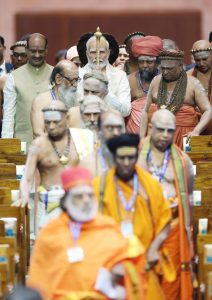
Prime Minister Narendra Modi attended the 2026 G7 Summit at Evian-les-Bains in France — his seventh consecutive G7 invitation since 2019. A point every CLAT aspirant should etch in memory: India is a regular invitee to the G7, not a member. The Group of Seven comprises the United States, the United Kingdom, France, Germany, Italy, Japan and Canada, with the European Union as a non-enumerated participant. India’s recurring presence reflects its growing strategic weight, but the “member versus invitee” distinction is one of the most reliable traps in international-relations GK, and examiners exploit it almost every year.
Speaking at the Outreach Session, themed “Forging New Partnerships and Rebuilding International Solidarity,” PM Narendra Modi delivered a line tailored for headlines: “the world suffers from a shortage of trust… the future of our partnerships depends on rebuilding this trust.” A bilateral meeting with US President Donald Trump was scheduled on the sidelines. But the summit’s most consequential diplomatic moment for India came from an unexpected quarter — Canada. Canadian Prime Minister Mark Carney invited PM Narendra Modi to visit Canada by year-end, and the two leaders committed to rebuilding ties after roughly two years of hostility that followed the 2023 killing of Hardeep Singh Nijjar. That episode had frozen relations and led to the withdrawal of senior diplomats.
The India-Canada reset is layered. The leaders vowed to advance a Comprehensive Economic Partnership Agreement (CEPA), launch negotiations on a General Security of Information Agreement (GSOIA), and restore High Commissioners to each other’s capitals. India also signalled support for Canada becoming a Dialogue Partner of the Indian Ocean Rim Association (IORA), extending the relationship into the maritime-security domain. For CLAT, the conceptual takeaways are strategic autonomy and multi-alignment — India engaging the G7, the United States and Canada simultaneously without locking into any bloc. The treaty-making dimension matters too: India’s power to negotiate and implement agreements like CEPA flows from the Union’s executive power under Article 73, the legislative lists under Article 246, and Article 253, which empowers Parliament to legislate for implementing international agreements.
India’s treaty-making capacity rests on Article 73 (Union executive power co-extensive with Parliament’s legislative power), Article 246 read with the Union List (entries on foreign affairs and treaties), and Article 253, which lets Parliament make laws to implement any international agreement. There is no requirement of parliamentary ratification for the executive to enter a treaty — a frequently tested nuance distinguishing the Indian position from the US Senate-advice model.
Two perennial traps converge here: “India is NOT a G7 member” and “G7 versus G20” (India hosted the G20 in 2023; it only attends the G7). Add the India-Canada reset, CEPA, GSOIA and IORA as fresh GK nuggets, and the treaty-power Articles (73, 246, 253) for Polity-IR crossover questions. Examiners love pairing a current event with the constitutional mechanism behind it.
| Venue | Evian-les-Bains, France |
| India’s status | Regular invitee (NOT a member) |
| Modi’s invites | 7th consecutive since 2019 |
| Canada PM | Mark Carney (invited Modi) |
| Agreements pursued | CEPA, GSOIA, IORA partner status |
| G7 members | US, UK, France, Germany, Italy, Japan, Canada (+ EU) |
G7 members = “UK France Germany Italy Japan Canada US” → “U-FIG-JCU”. For India: “Invitee, not insider.” Treaty Articles = “73-246-253” → think “Seven-Three, Two-Four-Six, Two-Five-Three” climbing the treaty ladder.
Why This Matters for CLAT: Bilateral resets are gold for current-affairs passages because they bundle history, geopolitics and law. The India-Canada thaw lets you trace a clean arc — the Nijjar rupture, the diplomatic freeze, and the Carney-Modi reconciliation around CEPA and IORA. Pair that narrative with the constitutional treaty-making provisions and the “invitee not member” trap, and you can answer both factual GK questions and reasoning questions that ask how India can sign such agreements. This is exactly the multi-dimensional thinking CLAT 2027 rewards.
Practice Quiz — 10 CLAT-Style Questions
Click an option to reveal the answer and explanation.