CURRENT AFFAIRS | 17 JUNE 2026
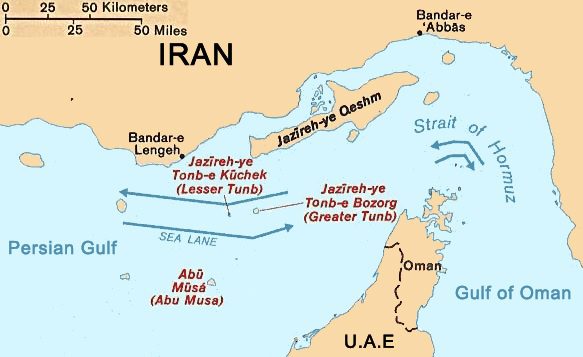
The United States and Iran have reached an interim deal to end the West Asia war, with US President Donald Trump declaring it would soon be made public and would “rule out a nuclear weapon for Tehran.” The interim accord is to be signed Friday at the Burgenstock resort in Switzerland, mediated by Pakistan, Qatar and Oman. The framework is sweeping: it allows Iran to immediately sell oil and fuel, reopen the Strait of Hormuz — which Tehran had blocked — and unfreeze assets, while opening a 60-day window to negotiate Iran’s stockpile of highly enriched uranium. The US, in turn, is to lift its naval blockade within 30 days. A $300-billion private investment “fund” for Iran is also outlined. Iranian Foreign Minister Abbas Araghchi and President Masoud Pezeshkian lead Tehran’s side; analysts caution that hidden naval mines could still disrupt Gulf shipping, with the US and France readying mine-hunting drones.
For India, this is a story to follow closely even though it is not a party to the deal. Roughly 60% of India’s crude oil and around 90% of its LPG imports transit the Strait of Hormuz, so any reopening directly eases India’s energy-security and inflation calculus. The strategic stakes explain why this is the day’s prime story — a single agreement reshapes oil markets, nuclear diplomacy and maritime law all at once.
The legal and institutional vocabulary here is dense with CLAT hooks. The bedrock of global nuclear governance is the Nuclear Non-Proliferation Treaty (NPT) of 1968, monitored through the safeguards and inspections regime of the International Atomic Energy Agency (IAEA). The immediate predecessor to this deal is the Joint Comprehensive Plan of Action (JCPOA) of 2015 — the original Iran nuclear deal from which the US withdrew in 2018, triggering years of escalating tension. The reopening of the Strait of Hormuz implicates the United Nations Convention on the Law of the Sea (UNCLOS), 1982, specifically the right of “transit passage” through international straits, a doctrine that balances coastal-state sovereignty against the freedom of navigation. Uranium enrichment, highly enriched uranium thresholds and the verification timeline together test a student’s grasp of how non-proliferation law actually operates in practice rather than just on paper.
The Nuclear Non-Proliferation Treaty (NPT, 1968) is the cornerstone treaty; the IAEA administers safeguards and inspections. The JCPOA (2015) was the Iran-specific deal the US exited in 2018. The Strait of Hormuz reopening engages UNCLOS 1982 and its “transit passage” regime through international straits. India is a stakeholder — heavily dependent on Hormuz for energy — but not a party to the interim accord.
This is a multi-front GK and Legal Reasoning goldmine: NPT versus JCPOA (don’t confuse the two), IAEA’s role, UNCLOS transit passage, and the Strait of Hormuz as a chokepoint. Expect questions on India’s energy dependence on Hormuz, the difference between an interim framework and a binding treaty, and the institutions that police nuclear compliance. Map each acronym to its function — that is how the paper tests it.
| Parties | United States & Iran |
| Signing venue | Burgenstock resort, Switzerland |
| Mediators | Pakistan, Qatar, Oman |
| Key terms | Hormuz reopens; 60-day HEU window; blockade lifted in 30 days |
| Investment fund | $300 billion private fund |
| India’s stake | ~60% crude, ~90% LPG via Hormuz |
“NPT polices, IAEA inspects, JCPOA was the Iran deal.” For the waterway: “Hormuz = Highway of Oil; UNCLOS gives Transit.” Remember “60 for uranium, 30 for the navy” — the 60-day HEU window and 30-day blockade lift.
Why This Matters for CLAT: West Asia diplomacy is a recurring CLAT theme because it weaves together international law, energy economics and India’s national interest. This interim deal lets you practise distinguishing legal instruments (NPT, JCPOA, UNCLOS) from institutions (IAEA), and a non-binding “framework” from a ratified treaty. The Strait of Hormuz angle anchors it to India’s economy — an easy bridge examiners use to test whether you can connect a foreign event to a domestic consequence. Keep this story on your revision list right up to exam day.
Practice Quiz — 10 CLAT-Style Questions
Click an option to reveal the answer and explanation.