CURRENT AFFAIRS | 16 JUNE 2026
Days after India and the US signed a bilateral Critical Minerals MoU, the US-India Business Council (USIBC) formed a Critical Minerals Security Task Force to deepen cooperation on mineral supply chains and reduce dependence on China.
The urgency is stark: China controls about 90% of global critical-mineral processing and roughly 60% of rare-earth mining, and has wielded a licensing regime and export curbs to choke rare-earth supplies during its trade war with the US. The task force targets five priority areas, from lithium and cathode materials to rare-earth processing and magnet manufacturing.
Lithium refining — where India currently has negligible capacity — is pivotal to building a domestic battery supply chain. India identifies 30 ‘critical minerals’ (lithium, cobalt, nickel, graphite, gallium, tungsten, rare earths) and last year launched the National Critical Mineral Mission.
These minerals underpin the clean-energy transition — EV batteries, solar and wind — as well as electronics, defence and aerospace, making supply-chain security a strategic imperative tied to India’s net-zero-by-2070 goal.
Policy / Strategic Framework
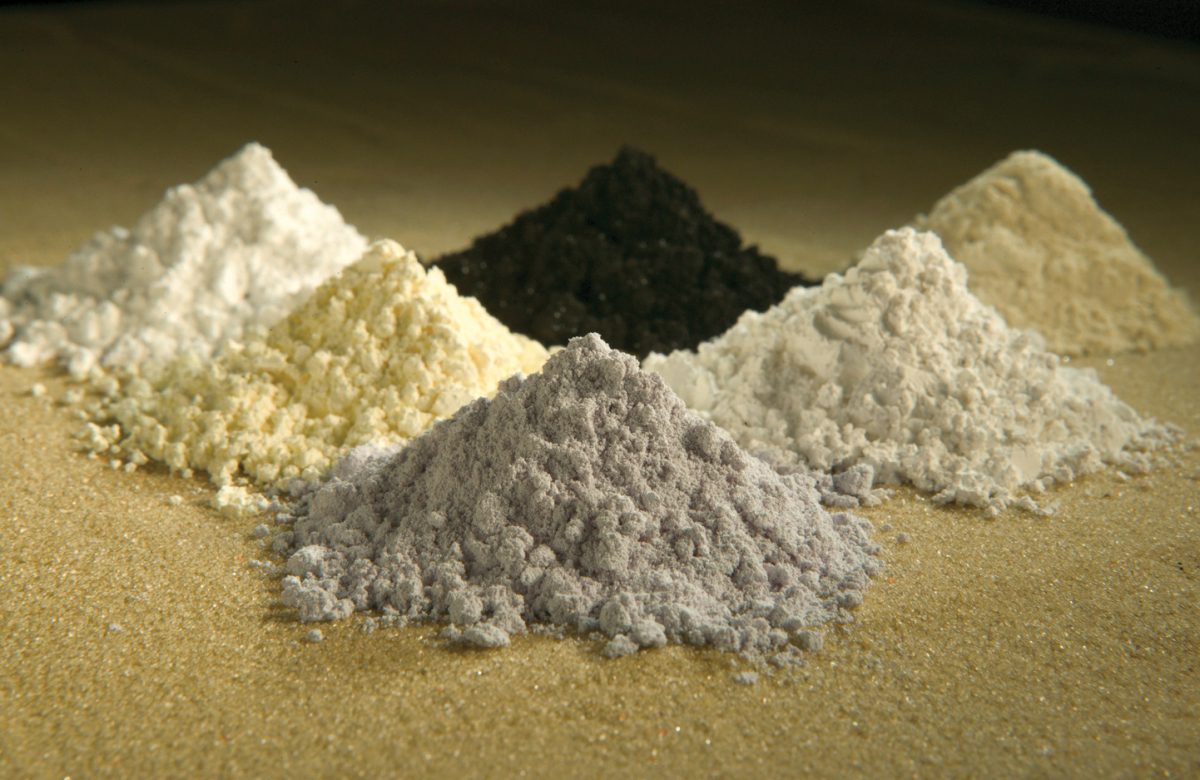
India’s mineral strategy runs through the National Critical Mineral Mission (2025) and KABIL (Khanij Bidesh India Ltd), a joint venture set up for overseas mineral acquisition. Mining law flows from the Mines and Minerals (Development and Regulation) Act, 1957, recently amended to ease exploration of critical and deep-seated minerals. Rare earth elements (REEs) are a group of 17 elements (e.g., neodymium for magnets). The Quad also runs a critical-minerals initiative, reflecting strategic alignment to de-risk supply chains from China.
CLAT Angle
Expect environment-plus-economy questions on critical minerals, rare earths (17 elements), and China’s ~90% processing dominance. Examiners pair the National Critical Mineral Mission, KABIL, and the Reasi (J&K) lithium find with the net-zero-by-2070 target. The India-US MoU and USIBC task force are fresh current-affairs hooks.
Key Facts
| Task force by | US-India Business Council (USIBC) |
| China’s processing share | ~90% of global |
| India’s critical minerals | 30 identified |
| Rare earths | 17 elements (e.g., neodymium) |
| India’s mission | National Critical Mineral Mission (2025) |
| Net-zero target | 2070 |
Mnemonic / Memory Hook
“China 90, India 30, Rare 17.” China processes ~90%; India lists 30 critical minerals; rare earths number 17. Add “KABIL hunts abroad, Reasi has lithium” — KABIL for overseas acquisition, the Reasi (J&K) lithium find at home.
Why this matters for CLAT 2027: Critical minerals sit at the crossroads of environment, economy and strategy — clean-energy transition, China dependence and India-US cooperation — making them prime CLAT GK and passage material. Master the 30 critical minerals, the 17 rare earths, KABIL and the National Critical Mineral Mission to ace CLAT 2027 questions on supply-chain security and net-zero.
Practice Quiz — 10 CLAT-Style Questions
Click an option to reveal the answer and explanation.