CURRENT AFFAIRS | 16 JUNE 2026
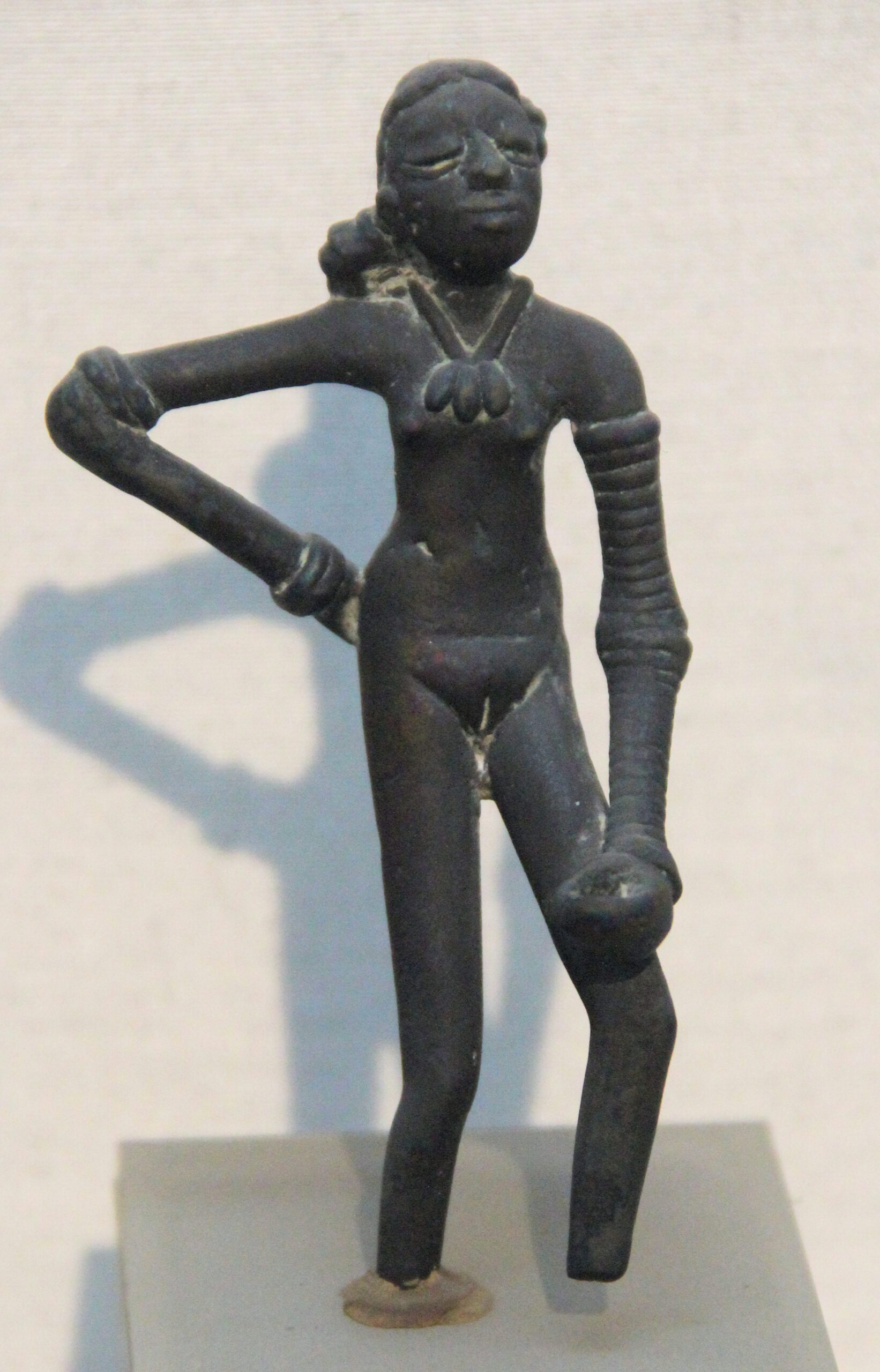
The NCERT (National Council of Educational Research and Training) has decided to restore the original image of the iconic ‘Dancing Girl’ of Mohenjo-daro — a roughly 4,500-year-old bronze figurine of the Harappan/Indus Valley Civilisation — to the opening page of a chapter on the Indus Valley Civilisation in the Class 9 Social Science textbook.
The move followed an Indian Express report that the image had been covered up (its torso shaded) in the new Arts Education textbook for Class 9. The Council had earlier objected to placing the figurine on the chapter’s opening page because it is nude, defending the shading on grounds of ‘imagination’.
Historian Michel Danino, who headed the textbook development committee for NCERT’s new Class 6 Social Science books, was associated with the curriculum work. The episode renewed debate over depicting authentic archaeological artefacts in school textbooks.
The Dancing Girl is a ~10.5 cm bronze statuette made by the lost-wax (cire perdue) casting technique, found at Mohenjo-daro in 1926 by Ernest Mackay and displayed at the National Museum, New Delhi. It remains one of India’s most celebrated pieces of ancient art.
Institutional / Curriculum Framework
The NCERT, established in 1961, is the apex body advising and assisting the Centre and States on school education and curriculum; it designs textbooks under the National Education Policy (NEP) 2020 and the National Curriculum Framework. Education is a Concurrent List subject (moved there by the 42nd Constitutional Amendment, 1976). Heritage protection draws on Article 49 (a DPSP to protect monuments and objects of artistic/historic interest) and Article 51A(f) (a Fundamental Duty to value and preserve our composite culture). The Dancing Girl belongs to the Mature Harappan phase (~2600-1900 BCE).
CLAT Angle
Expect art-and-culture questions on the Dancing Girl, lost-wax casting, and the Indus Valley Civilisation. Examiners love static anchors: Mohenjo-daro (1926), the National Museum, New Delhi, and Harappan sites (Dholavira, Lothal, Rakhigarhi). ‘NCERT est. 1961’ and ‘education is on the Concurrent List’ are recurring fill-in-the-blanks.
Key Facts
| Artefact | Dancing Girl, Mohenjo-daro |
| Material/size | Bronze, ~10.5 cm |
| Technique | Lost-wax (cire perdue) casting |
| Found | 1926, by Ernest Mackay |
| Displayed at | National Museum, New Delhi |
| Civilisation | Harappan (~2600-1900 BCE mature) |
Mnemonic / Memory Hook
“DANCING in LOST WAX since 1926 at the National Museum.” Dancing Girl, cast by LOST-WAX (cire perdue), found in 1926, housed at the National Museum, New Delhi. Pair with “NCERT born 1961, Class 9 textbook” for the current-affairs hook.
Why this matters for CLAT 2027: Ancient history, the Indus Valley Civilisation and NCERT curriculum debates are recurring CLAT GK and reading-comprehension themes, and the Dancing Girl is an iconic, high-recall artefact. Master its lost-wax technique, 1926 discovery, the National Museum, and the 1961 founding of NCERT to ace CLAT 2027 questions on art, culture and ancient India.
Practice Quiz — 10 CLAT-Style Questions
Click an option to reveal the answer and explanation.