CURRENT AFFAIRS | JUNE 3, 2026
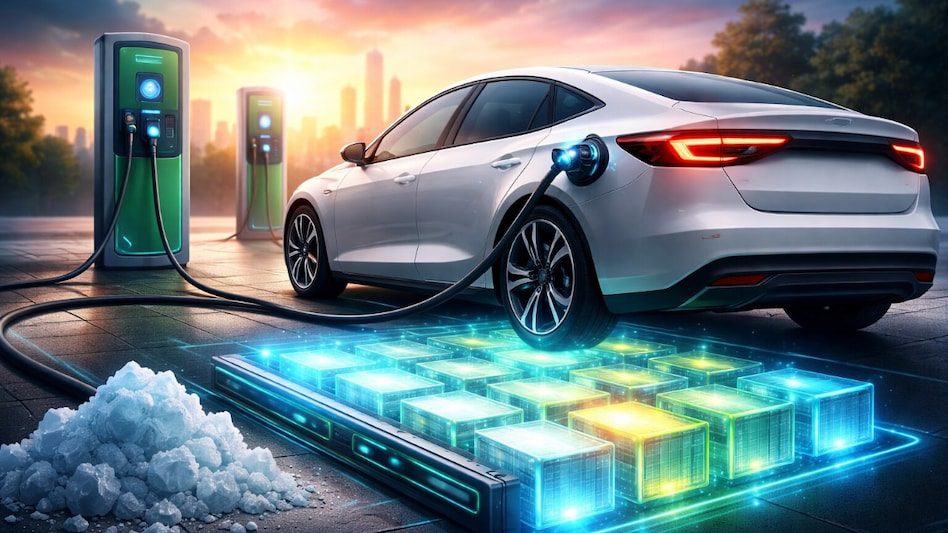
The Delhi government is set to revise its EV Policy 2.0, proposing a 50% road tax waiver for strong hybrid vehicles priced up to Rs 30 lakh ex-showroom. The move marks a significant policy pivot — for the first time, hybrids will enjoy state tax sops alongside pure EVs. The current EV Policy expires on June 30, 2026, and Policy 2.0 is slated to run till March 31, 2030.
Constitutional & Statutory Framework
- Article 246 + Seventh Schedule List II Entry 57: Empowers States to levy taxes on motor vehicles.
- Article 48A (DPSP): State to protect and improve the environment.
- Article 51A(g): Fundamental Duty to protect the natural environment.
- Article 21: Right to clean environment as part of right to life (Subhash Kumar v State of Bihar, 1991).
- Motor Vehicles Act, 1988 & Central Motor Vehicles Rules: PUC, registration, transfer of vehicles.
- FAME India Scheme: Central incentive under Ministry of Heavy Industries.
Key Facts at a Glance
| Policy Window | EV Policy 2.0 valid till March 31, 2030 |
| Current EV exemption | 100% road tax for EVs up to Rs 30L (cars) / Rs 20L (2W & 3W) |
| Proposed Hybrid waiver | 50% road tax for strong hybrids up to Rs 30L |
| Initial cap | 2 years (extendable by 1 year) |
| Two-wheeler share | 67% of Delhi’s vehicle stock |
| NOC re-registration | Restricted for 5 years from registration date |
CLAT Angle — Legal Reasoning Hooks
- Federal taxation doctrine: Motor vehicle tax is exclusively a State subject (List II Entry 57), insulating Delhi’s waiver from Union interference.
- Polluter Pays Principle: Recognised in Vellore Citizens Welfare Forum v UoI (1996) — differential taxation operationalises the principle.
- Reasonable classification under Article 14: Distinguishing strong hybrids from mild hybrids/ICE vehicles must satisfy intelligible differentia.
- Precautionary Principle: Supports preemptive emission-cutting tax design before pollution materialises.
Mnemonic — ‘HYBRID’
Harvest emission cuts · Yield 50% tax waiver · Below Rs 30L cap · Registration NOC frozen 5 years · Incentivise 2-wheelers (67%) · Deadline March 2030
Why It Matters for CLAT 2027
This is a textbook intersection of federal taxation, environmental jurisprudence and economic policy. Expect Legal Reasoning passages built around Entry 57 List II, Article 14 reasonable classification, and Polluter Pays — and GK MCQs on FAME India and the Motor Vehicles Act.
Test Your Knowledge
Practice Quiz — 10 CLAT-Style Questions
Click an option to reveal the answer and explanation.