
CURRENT AFFAIRS | JUNE 3, 2026
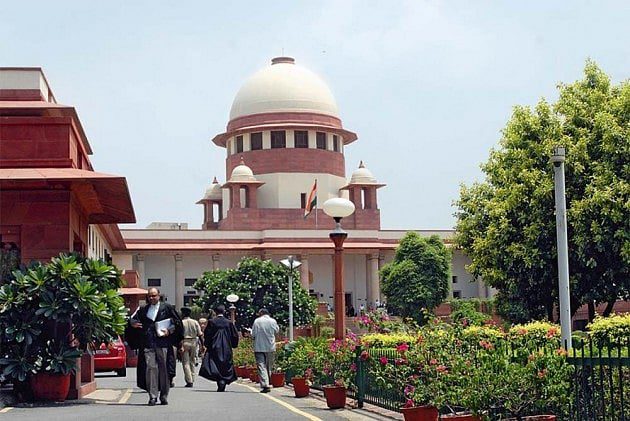
On June 2, 2026, Chief Justice Surya Kant administered the oath of office to five new judges, taking the working strength of the Supreme Court of India to 37 against a freshly sanctioned strength of 38. The expansion follows the Supreme Court (Number of Judges) Amendment Act, 2026, which raised the cap from 34 to 38. For CLAT 2027 aspirants, this is a textbook update touching Article 124, the Collegium System and the Memorandum of Procedure.
Constitutional Framework
- Article 124(1): Establishes the Supreme Court and empowers Parliament to fix the number of judges.
- Article 124(2): Appointment by the President after consultation with the CJI; retirement age 65 years.
- Article 124A: NJAC (inserted by 99th Amendment, 2014) — struck down in Fourth Judges Case (2015).
- Memorandum of Procedure (MoP): Governs appointment process — Executive-Collegium interface.
- Collegium: Evolved in the Second Judges Case (1993) and refined by the Third Judges Case (1998).
Key Facts — Strength of the Supreme Court
Who Are the New Judges?
The five judges sworn in include former Chief Justices of four High Courts and one Senior Advocate:
- Justice Sheel Nagu — former CJ, Punjab & Haryana HC
- Justice Chandrashekhar — former CJ, Bombay HC
- Justice Suresh Sachdeva — former CJ, Madhya Pradesh HC
- Justice Arun Palli — former CJ, High Court of J&K and Ladakh
- V.S. Mohana — Senior Advocate
Historical Trajectory of Sanctioned Strength
Parliament has repeatedly used its power under Article 124(1) to revise the strength: 8 (1950) → 13 (1960) → 17 (1977) → 25 (1986) → 30 (2008) → 33 (2019) → 38 (2026). Each expansion has tracked rising case pendency, presently above 80,000 matters.
Why This Matters for CLAT 2027
- Composition of SC — direct factual question potential (Polity).
- Collegium vs NJAC — recurrent in CLAT Legal Reasoning passages.
- Memorandum of Procedure — tested in 2024 paper variants.
- Article 124(2) — appointment, transfer, removal processes.
- Number of Judges Amendment Acts — quick mnemonic for GK.
Mnemonic — Remember SC Strength Milestones
“8 → 13 → 17 → 25 → 30 → 33 → 38”
Read it as: “Eight teen-numbers, then quarter, thirty up by three, then five more” — covers 1950, 1960, 1977, 1986, 2008, 2019, 2026 amendments.
Practice Quiz — 10 CLAT-Style Questions
Click an option to reveal the answer and explanation.
Source: PIB, Supreme Court of India, Indian Express (June 3, 2026).