CURRENT AFFAIRS | JUNE 3, 2026
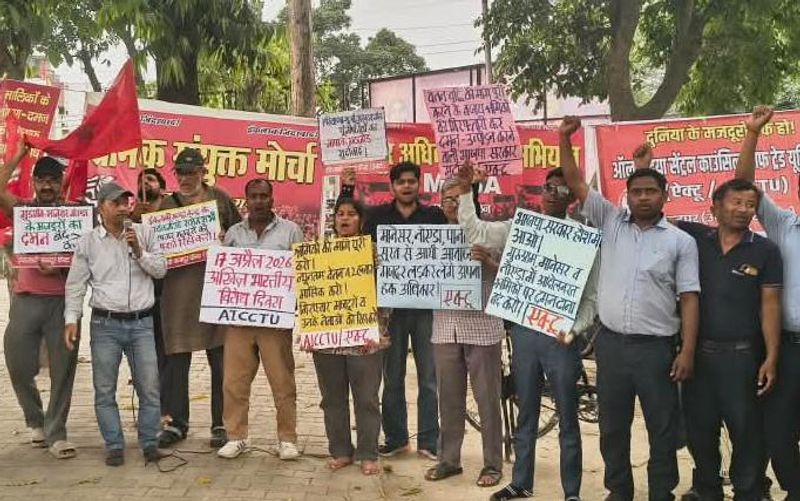
In a striking observation on May 30, 2026, Additional Sessions Judge Gagan Geet Kaur of the Gurgaon court granted bail to three garment workers of Richa Global Exports, Manesar, declaring that “demanding a salary hike to meet rising daily expenses is not an offence in itself.” The order revives debate on Article 19(1)(c), the Industrial Disputes Act, 1947 and the constitutional protection of pre-trial liberty.
Constitutional Framework
- Article 19(1)(c): Right to form associations and unions — the textual basis for trade-union rights.
- Article 19(4): Permits reasonable restrictions on sovereignty, integrity, public order or morality.
- Article 21: Personal liberty; speedy trial part of it (Hussainara Khatoon, 1979).
- Section 437 CrPC: Bail in non-bailable offences by a Magistrate.
- Section 439 CrPC: Special powers of bail vested in Sessions Court / High Court.
- BNS §109: Attempt to murder (replaces IPC §307).
Key Facts — Manesar Bail Order
The Core Reasoning
The court drew a clear line between (a) making a wage demand, which is a constitutionally protected activity, and (b) collateral acts of violence by unidentified actors, which require proof of common intention. Absent direct evidence of participation in the violence, prolonged detention of demonstrators militates against Article 21.
Why “Bail is the Rule, Jail is the Exception”
The order is a direct descendant of State of Rajasthan v. Balchand (1977), where Justice Krishna Iyer formulated the maxim. Coupled with Hussainara Khatoon‘s recognition of a fundamental right to speedy trial, prolonged pre-trial incarceration of accused workers becomes constitutionally suspect.
Why This Matters for CLAT 2027
- Article 19(1)(c) + reasonable restrictions under Art. 19(4).
- Bail jurisprudence — Sections 437, 438, 439 CrPC mapping.
- Mens rea doctrine — lawful demand cannot carry criminal intent.
- Industrial Disputes Act, 1947 — definition of strike, lock-out, lay-off.
- BNS replacements for IPC offences — §103/§109/§191 etc.
Mnemonic — Bail Section Map
“4-3-6 / 4-3-7 / 4-3-8 / 4-3-9”
436 = bailable offences (bail as right) · 437 = non-bailable by Magistrate · 438 = anticipatory bail · 439 = special powers of Sessions/HC. Read the last digit as the “rung up the ladder”.
Practice Quiz — 10 CLAT-Style Questions
Click an option to reveal the answer and explanation.
Source: Indian Express (June 3, 2026); Gurgaon Sessions Court order.