CURRENT AFFAIRS | 30 JUNE 2026
In late June 2026, India achieved a significant milestone in its quest for strategic self-reliance when DRDO successfully completed the second developmental flight-test of the Long-Range Land-Attack Cruise Missile (LRLACM) from Dr APJ Abdul Kalam Island off the coast of Odisha. The test met all mission objectives, bringing India a step closer to inducting a domestically developed, long-range precision-strike weapon into its armed forces. For CLAT aspirants, this development sits at the intersection of constitutional law, defence policy, and the government’s flagship Atmanirbhar Bharat initiative — each a recurring theme in GK sections across CLAT papers.
The missile was tracked and monitored throughout its flight by the Integrated Test Range (ITR) at Chandipur, Odisha, using advanced range instruments including radars, electro-optical systems, and telemetry stations. The Acceptance of Necessity (AoN) for the LRLACM has already been granted by the Defence Acquisition Council (DAC) for both the Indian Air Force (IAF) and the Indian Army, signalling that procurement intent has cleared the first formal gate in India’s defence acquisition process. This brings the programme into sharp focus as it transitions from development to user trials.
The Defence Research and Development Organisation (DRDO) functions under the Ministry of Defence, whose functioning is governed by constitutional provisions on Union executive power (Article 53) and legislative competence over defence matters (Union List, Entry 1, Seventh Schedule). All major defence procurement follows the Defence Acquisition Procedure (DAP 2020), which places the Acceptance of Necessity (AoN) as the very first formal step — it is granted by the Defence Acquisition Council (DAC), chaired by the Raksha Mantri (Defence Minister).
India’s indigenisation drive is also anchored in policy — the government has defined categories of defence procurement that prioritise “Make in India” (Indigenously Designed, Developed and Manufactured / IDDM category). DRDO-led missile development directly advances these policy objectives. Constitutionally, defence is a Union subject and Parliament exercises oversight through budget appropriations and committee scrutiny. The DRDO itself was established in 1958 and is headquartered in New Delhi, overseeing 50+ laboratories across the country.
A cruise missile is a guided, self-propelled precision weapon that flies at relatively low altitudes using aerodynamic lift, navigating to its target over long distances. It is distinct from a ballistic missile, which follows a high-arching parabolic trajectory and re-enters the atmosphere under gravity. The LRLACM’s approximate range of 1,000 km gives India a significant long-range, land-attack capability from ground or air platforms, without relying on imported systems. This is strategically important given that India currently operates the BrahMos supersonic cruise missile (jointly developed with Russia) but has long sought a fully indigenous long-range solution. The LRLACM programme has been in development at DRDO’s Aeronautical Development Establishment (ADE), Bengaluru, with integration inputs from multiple DRDO labs.
CLAT GK questions on defence technology typically test four things: (1) the agency responsible (DRDO, ISRO, HAL, BEL etc.), (2) the launch site or test facility, (3) the classification of the system (cruise vs ballistic; short/medium/long range), and (4) the policy or treaty context (Atmanirbhar Bharat, MTCR, Wassenaar Arrangement).
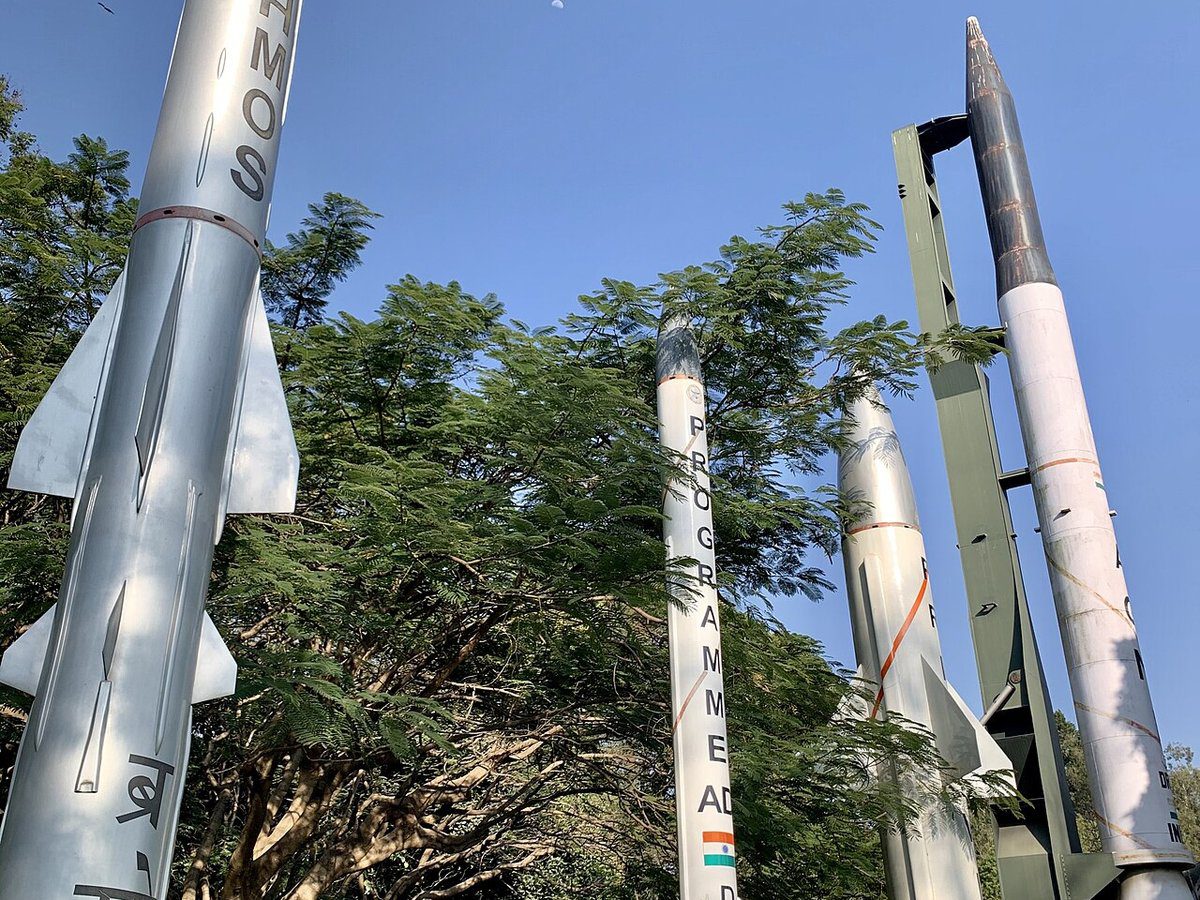
For LRLACM specifically, remember: DRDO = Ministry of Defence; Dr APJ Abdul Kalam Island (Wheeler Island) = primary Indian missile test range; ITR Chandipur = tracking and telemetry facility; AoN = first formal procurement gate under DAP 2020. The Integrated Guided Missile Development Programme (IGMDP) — which gave India Agni, Prithvi, Akash, Trishul and Nag — is DRDO’s historic precursor to today’s self-reliant missile ecosystem. LRLACM represents the next generation of that legacy.
India’s missile programme has also come up in the context of international export control regimes. India is a member of the Missile Technology Control Regime (MTCR) since 2016, which governs the transfer of missiles and related technologies capable of delivering weapons of mass destruction. Membership in MTCR enables India to procure advanced technologies from member states and also to export systems like BrahMos to partner countries. The LRLACM’s successful development adds to India’s negotiating leverage in multilateral forums and strengthens its deterrence posture — both of which surface regularly in CLAT Legal Reasoning and GK passages dealing with international law.
| Parameter | Detail |
|---|---|
| Full Name | Long-Range Land-Attack Cruise Missile (LRLACM) |
| Developer | DRDO (under Ministry of Defence, Govt. of India) |
| Test Site | Dr APJ Abdul Kalam Island, Odisha (formerly Wheeler Island) |
| Tracking Facility | Integrated Test Range (ITR), Chandipur, Odisha |
| Approximate Range | ~1,000 km |
| Flight Test Number | Second developmental flight-test (late June 2026) |
| Procurement Stage | AoN granted for IAF and Indian Army by DAC |
| Primary Lab | Aeronautical Development Establishment (ADE), Bengaluru |
| Missile Type | Cruise missile (low-altitude, aerodynamic flight path) |
| Policy Context | Atmanirbhar Bharat; IDDM category under DAP 2020 |
| International Regime | India is MTCR member since 2016 |
| IGMDP Legacy | Agni, Prithvi, Akash, Trishul, Nag (historic DRDO missiles) |
It is also worth noting that Dr APJ Abdul Kalam Island — the island from which this test was conducted — was renamed from Wheeler Island in 2015 in honour of the former President and scientist Dr A.P.J. Abdul Kalam, who passed away that year. The island has hosted hundreds of missile tests and is integral to India’s strategic weapons programme. Students preparing for CLAT often confuse the island’s current and former names; the current official name is Dr APJ Abdul Kalam Island, located in the Bay of Bengal off the Odisha coast. Additionally, the term “developmental flight test” means the missile is still in the R&D phase — user trials, which follow, involve the actual armed forces testing the weapon operationally before formal induction.
“DRDO LRLACM: ACID test from Abdul Kalam Island”
Use ACID to remember the key pillars:
- A — Abdul Kalam Island (test site, Odisha)
- C — Chandipur ITR (tracking facility)
- I — IDDM / indigenisation (Atmanirbhar policy category)
- D — DAC AoN (Defence Acquisition Council, first procurement gate)
And to remember cruise vs ballistic: “Cruise is smooth (low-altitude glide); Ballistic bounces high (arcs like a ball)”. One more: DRDO was established in 1958 — the same year India had its first Five-Year Plan well underway. IGMDP = 5 missiles: Agni, Prithvi, Akash, Trishul, Nag — remember with “A PATN” (All Passed, Tested Now).
Test Yourself — Quick Quiz
Practice Quiz — 10 CLAT-Style Questions
Click an option to reveal the answer and explanation.