CURRENT AFFAIRS | 13 JUNE 2026
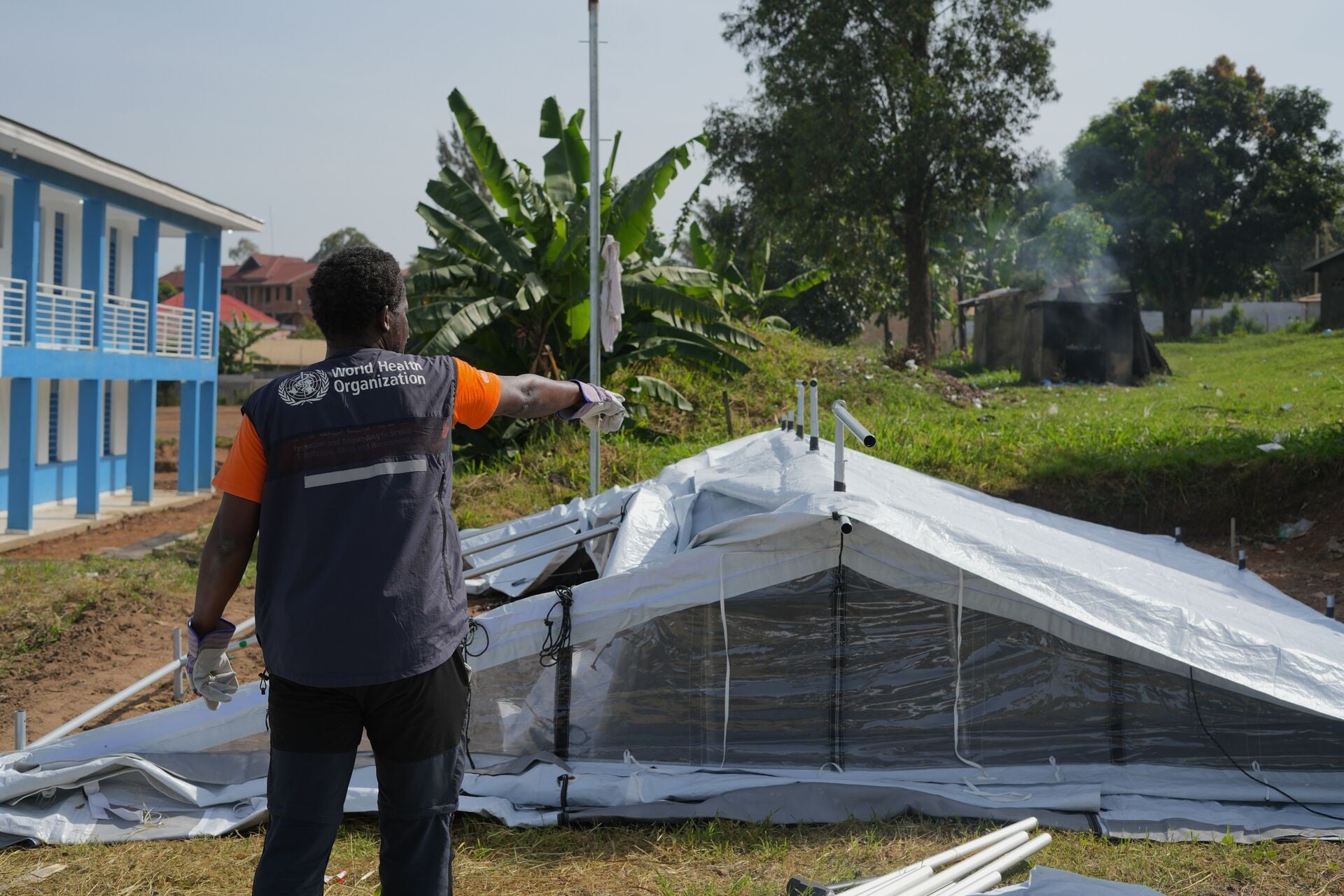
The UN Refugee Agency (UNHCR) has confirmed the first Ebola deaths inside a displacement camp in eastern Democratic Republic of Congo (DR Congo), warning that crowded camps create dangerous conditions for the virus to spread. The deaths occurred at the Kpangba camp, which shelters roughly 30,000 internally displaced people.
The World Health Organization (WHO) had already declared the outbreak a public health emergency on May 17, 2026. Two of the victims were internally displaced, a 60-year-old woman and her daughter died between late May and early June. The affected provinces, Ituri, South Kivu and North Kivu, have been devastated by decades of armed conflict.
Eastern DR Congo is home to more than 5 million displaced people, making outbreak control extraordinarily difficult. Ebola Virus Disease is a filovirus whose natural reservoir is believed to be fruit bats; it spreads through contact with bodily fluids and carries a high case-fatality rate.
Constitutional / Legal Framework
The WHO declares a Public Health Emergency of International Concern (PHEIC) under the International Health Regulations (IHR), 2005, a binding instrument that obliges member states to detect, report and respond to public-health risks. UNHCR operates under the 1951 Refugee Convention and its 1967 Protocol, with the core principle of non-refoulement. The crisis also engages the doctrine of the Responsibility to Protect (R2P) and international humanitarian law governing populations in conflict.
CLAT Angle
This story is a clean test of international-organisation GK: the WHO and the PHEIC/IHR 2005 mechanism, and the UNHCR mandate under the 1951 Refugee Convention. CLAT passages often pair a disease outbreak with the PHEIC concept and ask candidates to distinguish a PHEIC from a “pandemic”. The R2P and refugee-law angles add legal-reasoning depth.
Key Facts
| Country | Democratic Republic of Congo (east) |
| Agency confirming camp deaths | UNHCR (UN Refugee Agency) |
| WHO PHEIC declared | May 17, 2026 |
| Camp / provinces | Kpangba; Ituri, South & North Kivu |
| Displaced | 5 million+ in the region |
| Virus reservoir | Fruit bats (filovirus / Ebola Virus Disease) |
Mnemonic / Memory Hook
“WHO rings the PHEIC bell, UNHCR shelters the refugee.” WHO + PHEIC + IHR 2005 on the health side; UNHCR + 1951 Refugee Convention on the people side. For the country, remember “Congo’s three Ks”: Kpangba camp in the Kivus (and Ituri).
Why this matters for CLAT 2027: International organisations and global-health governance are reliably tested in CLAT GK. Nail the WHO-PHEIC-IHR 2005 chain and the UNHCR-1951 Convention link, and you can confidently solve any CLAT 2027 passage built on a global outbreak or refugee crisis.
Practice Quiz — 10 CLAT-Style Questions
Click an option to reveal the answer and explanation.