
CURRENT AFFAIRS | 13 JUNE 2026
The Centre for Science and Environment (CSE) and its magazine Down To Earth have released the annual State of India’s Environment (SOE) 2026 report, unveiled by environmentalist Sunita Narain alongside former Supreme Court judge Deepak Gupta and former bureaucrat Ashok Lavasa.
The report paints a sobering picture: India is warming rapidly, and per the Forest Survey of India, more than 36% of India’s forest cover is prone to frequent fires. It flags rising human-wildlife conflict, with dozens of people killed near tiger reserves, and notes that global forest cover has fallen to around 59%, well below the 75% considered safe.
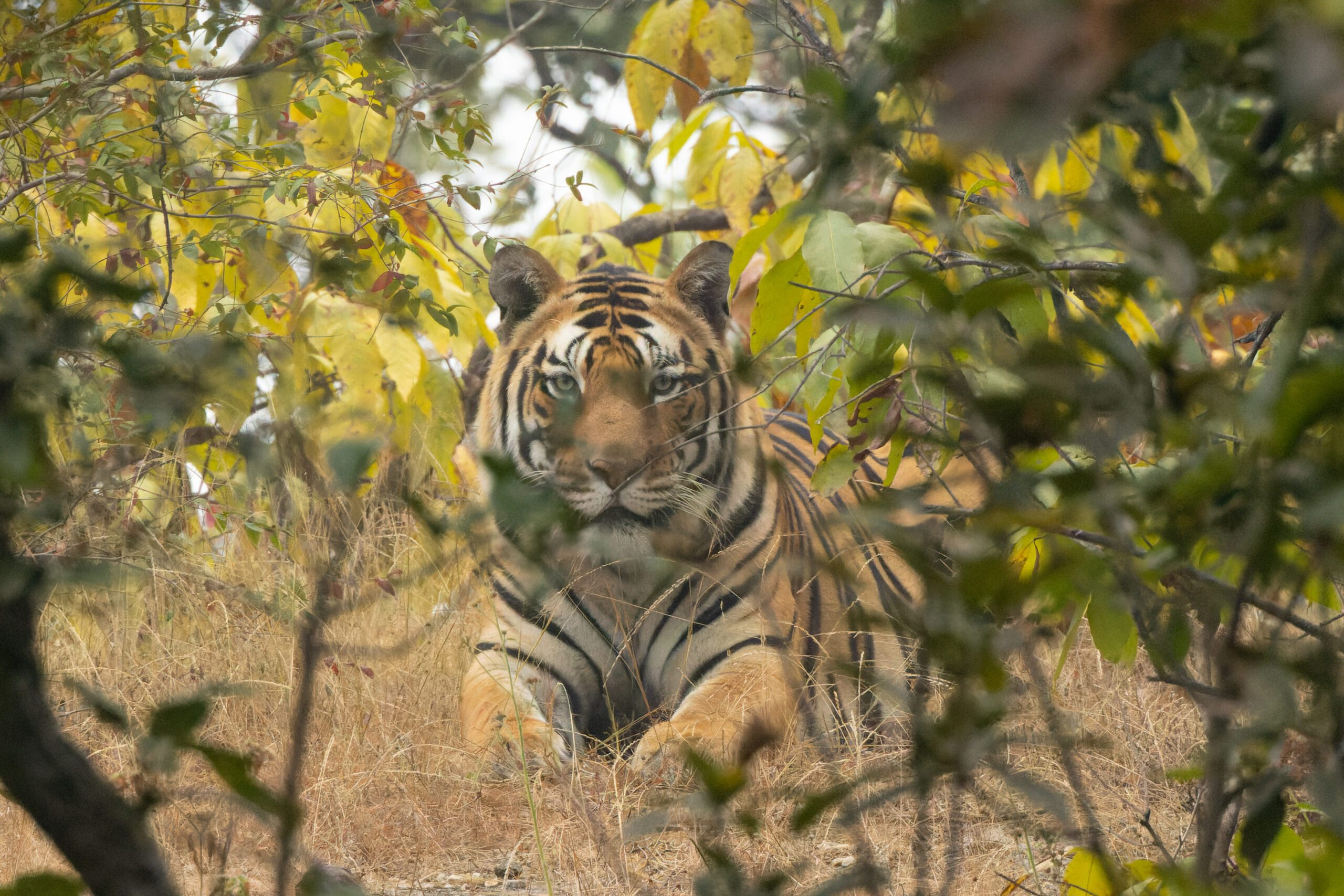
Yet the report also highlights India’s conservation scaffolding, 58 tiger reserves, 100 Ramsar wetland sites, and roughly three-quarters of the world’s wild tigers, even as climate stress and habitat loss intensify. The SOE 2026 is a call to strengthen, not dismantle, that ecological architecture.
Constitutional / Legal Framework
Environmental protection is anchored in Article 48A (a Directive Principle directing the State to protect the environment, forests and wildlife) and Article 51A(g) (the Fundamental Duty of every citizen to protect the natural environment). Wetlands are governed by the Ramsar Convention, 1971; tigers by Project Tiger (1973) and the statutory NTCA; and wildlife broadly by the Wildlife (Protection) Act, 1972. The judiciary has read the right to a healthy environment into Article 21.
CLAT Angle
Environment is a high-frequency CLAT theme. Expect the SOE report to anchor questions on the Ramsar Convention 1971, Project Tiger / NTCA, the Wildlife (Protection) Act 1972, and the Article 48A and 51A(g) pairing. Data points, 36% fire-prone forests, 58 tiger reserves, 100 Ramsar sites, are perfect for direct-recall MCQs.
Key Facts
| Released by | CSE + Down To Earth (Sunita Narain) |
| Forest fire risk | 36%+ of forest cover (FSI) |
| Tiger reserves | 58 |
| Ramsar sites | 100 |
| Global forest cover | ~59% vs 75% safe threshold |
| Key concern | Rapid warming, forest fires, human-wildlife conflict |
Mnemonic / Memory Hook
“58 tigers, 100 wetlands, 48A duty.” 58 = tiger reserves; 100 = Ramsar sites; 48A = the DPSP on environment (with its twin 51A(g) Fundamental Duty). For the laws, recall “Ramsar ’71, Tiger ’73, Wildlife ’72.”
Why this matters for CLAT 2027: Environment and ecology questions appear in almost every CLAT paper, and a flagship report like SOE 2026 is exactly the kind of hook examiners use. Memorise the conservation numbers and the 48A-51A(g)-Ramsar-Project Tiger cluster to secure these marks in CLAT 2027.
Practice Quiz — 10 CLAT-Style Questions
Click an option to reveal the answer and explanation.