CURRENT AFFAIRS | 30 JUNE 2026
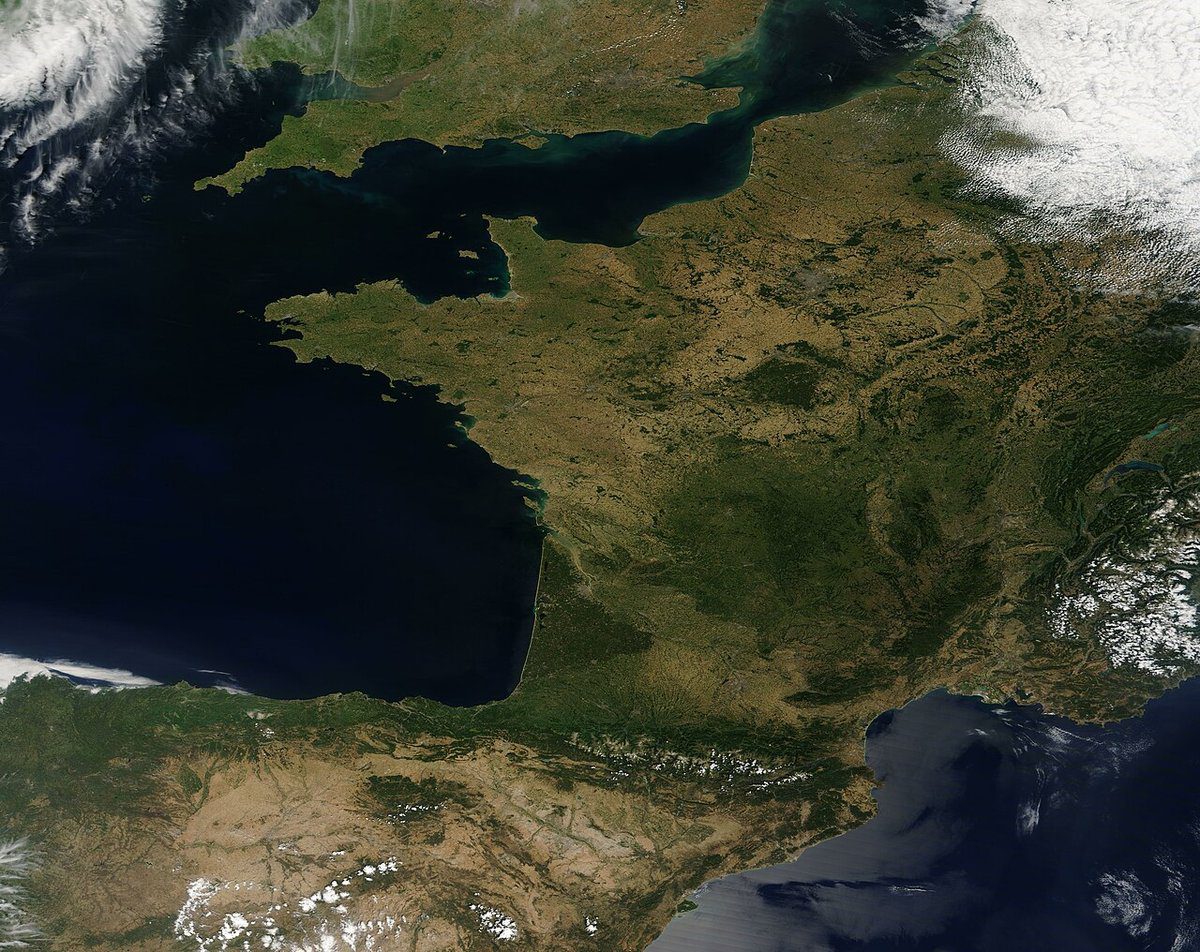
Europe is once again in the grip of a record-shattering heatwave that has pushed temperatures above 40°C across multiple countries, triggered red alerts, shut schools, disrupted transport networks, and placed enormous strain on health systems. France recorded its hottest national thermal indicator reading ever on 23 June 2026 — with Meteo France placing 54 of its 96 metropolitan departments under a red heat alert — while Spain’s Andalusia region touched 44°C. The United Kingdom also logged temperatures far above seasonal norms, continuing a trend of progressively more severe summer heat events.
For CLAT aspirants, this heatwave is far more than a weather bulletin. It sits squarely at the intersection of environmental law, international treaty obligations, and the constitutional right to a clean environment — themes that have appeared consistently in CLAT GK and Legal Reasoning sections over the past five years.
The global legal architecture on climate change begins with the United Nations Framework Convention on Climate Change (UNFCCC, 1992), the foundational treaty that established the principle of common-but-differentiated responsibilities (CBDR) — recognising that all nations share the duty to act on climate change, but that historically high-emitting developed nations bear greater responsibility. The Kyoto Protocol (1997) operationalised CBDR by setting binding emission-reduction targets for developed countries.
The landmark Paris Agreement (2015), adopted under UNFCCC, is the current operative instrument. Its Article 2 commits signatories to holding the rise in global average temperature to well below 2°C above pre-industrial levels and to pursuing efforts to limit warming to 1.5°C. The agreement uses Nationally Determined Contributions (NDCs) as the mechanism through which each country sets and updates its own climate targets — a shift from Kyoto’s top-down binding targets to a bottom-up pledge-and-review model.
The Intergovernmental Panel on Climate Change (IPCC) — the UN body that synthesises climate science — has repeatedly warned that events like the 2026 European heatwave will become more frequent and more intense with every additional fraction of a degree of warming. Its Sixth Assessment Report (AR6) confirmed that human-induced climate change is unequivocally the main driver of such extreme heat events.
In Indian constitutional jurisprudence, the Supreme Court’s 2024 ruling in M.K. Ranjitsinh v. Union of India is the most current and important development: the Court explicitly recognised a right against the adverse effects of climate change as flowing from Articles 21 (right to life) and 14 (right to equality) of the Constitution. This builds on the older M.C. Mehta v. Union of India line of cases that expanded Article 21 to include the right to a clean and healthy environment.
The science behind these heatwaves is now well-established. Global average temperatures are approximately 1.3°C above pre-industrial baselines, and the European continent is warming at roughly twice the global average. Attribution science — the field that calculates how much more likely a specific weather event is because of climate change — now allows researchers to say with high confidence that events like the June 2026 heatwave would have been virtually impossible without human-caused greenhouse gas emissions. France’s ~1,000 excess deaths during the peak week and widespread power outages across major European cities underscore why climate change is simultaneously an environmental, public health, and governance emergency.
CLAT GK sections have tested heatwave-linked climate content in multiple recent cycles. Here is what to know:
- CBDR principle — frequently tested in the context of global climate negotiations. Remember: developed nations have historical responsibility; developing nations have “differentiated” (lighter, voluntary) obligations under UNFCCC.
- Paris Agreement Art. 2 — the 1.5°C / 2°C targets are often the subject of MCQs. The agreement was adopted at COP21 in Paris in December 2015 and entered into force in November 2016.
- M.K. Ranjitsinh (2024) — India’s newest climate-rights precedent. The SC recognised climate rights under Arts 21 and 14. This is a high-probability CLAT 2025/2026 question.
- Mission LiFE — India’s 2022 global initiative (Lifestyle for Environment), launched by PM Modi at COP27, which frames individual lifestyle change as a climate solution. It complements India’s NDC commitments.
- Heat Action Plans (HAPs) — India has city- and district-level HAPs under the National Disaster Management Authority framework. Ahmedabad’s 2013 HAP was among the first in Asia and is cited internationally as a model.
- Legal Reasoning passages on environmental law often test the polluter pays principle, precautionary principle, and public trust doctrine — all of which are relevant to climate-related litigation.
The 2026 heatwave follows a devastating pattern: 2019 saw France’s all-time temperature record (45.9°C); 2022 was Europe’s deadliest modern summer, with over 61,000 estimated excess deaths; and 2023 saw global sea-surface temperatures and land temperatures break records across every month of the year. Each successive event narrows the gap between what climate models once projected for 2050 or 2080 and what is happening now. For India, the stakes are equally urgent: the Indo-Gangetic plains experienced over 50 days above 45°C in May 2024, and IPCC projections suggest South Asia will face “lethal” heat-humidity combinations by mid-century under high-emission scenarios.
| Item | Detail |
|---|---|
| France red alerts | 54 of 96 departments under red heat alert, 23 Jun 2026 |
| Spain peak | 44°C in Andalusia; red alerts in northern Cantabria too |
| France excess deaths | ~1,000 during peak heat week (per national public health agency) |
| Paris Agreement target | Well below 2°C; pursue 1.5°C — Article 2, adopted COP21, 2015 |
| UNFCCC adopted | 1992 (Earth Summit, Rio de Janeiro) |
| Kyoto Protocol | 1997; binding targets for Annex-I (developed) nations |
| IPCC | UN body synthesising climate science; AR6 released 2021–2023 |
| M.K. Ranjitsinh (2024) | SC recognised climate rights under Arts 21 & 14, Constitution of India |
| Mission LiFE | Launched by India at COP27 (2022); Lifestyle for Environment |
| Current global warming | ~1.3°C above pre-industrial; Europe warming ~2× global average |
Understanding the legal dimensions of the climate crisis is critical for CLAT Legal Reasoning as well. Courts worldwide — including the European Court of Human Rights (in Duarte Agostinho v. Portugal, 2024) and India’s Supreme Court — are increasingly treating climate inaction as a violation of fundamental rights. This convergence of environmental science, international treaty law, and domestic constitutional rights is exactly the kind of multi-dimensional issue that CLAT passages are designed to test.
“PICK UP — Paris Is Climate’s Key Umbrella Plan”
- P — Paris Agreement (2015, COP21) — 1.5°C / 2°C targets
- I — IPCC — science body; AR6 = latest assessment
- C — CBDR — common but differentiated responsibilities (UNFCCC, 1992)
- K — Kyoto Protocol (1997) — binding targets for developed nations
- U — UNFCCC — the mother framework, all climate treaties nest inside it
- P — Public Trust + Polluter Pays + Precautionary Principle — Indian constitutional triad in environment cases
And for the Indian case law: “MK drives 21 + 14” — M.K. Ranjitsinh 2024 = climate rights under Articles 21 (life) and 14 (equality).
Test Yourself — Quick Quiz
Practice Quiz — 10 CLAT-Style Questions
Click an option to reveal the answer and explanation.