CURRENT AFFAIRS | 30 JUNE 2026
India’s Geographical Indication (GI) registry has been expanding rapidly, and recent additions for products from Ladakh and Assam have placed these regions firmly in focus for CLAT 2026 preparation. Ladakh secured six new GI tags — including Ladakh Seabuckthorn, Raktsey Karpo Apricot, and Shingskos woodcraft — while Assam added several culturally significant products such as Karbi Anglong handloom, Assamese Bihu Pepa, Assam bamboo crafts, and Deori handloom to its growing GI portfolio. These grants recognise the unique artisanal, agricultural, and cultural heritage of these regions and carry significant legal and economic implications that CLAT aspirants must understand.
A Geographical Indication (GI) tag is a sign used on products that have a specific geographical origin and possess qualities or a reputation attributable to that origin. Unlike a trademark — which identifies the commercial source of a product and belongs to a single entity — a GI identifies a collective of producers sharing a common geographical heritage. India’s GI system is administered through the Geographical Indications Registry in Chennai, which functions under the office of the Controller General of Patents, Designs and Trade Marks (CGPDTM), itself under the Department for Promotion of Industry and Internal Trade (DPIIT), Ministry of Commerce and Industry.
The primary statute governing GI tags in India is the Geographical Indications of Goods (Registration and Protection) Act, 1999, which came into force on 15 September 2003. It was enacted to fulfil India’s obligations under the Agreement on Trade-Related Aspects of Intellectual Property Rights (TRIPS) — specifically Articles 22 and 23 of TRIPS, which are part of the World Trade Organization (WTO) framework.
Key legal features under the 1999 Act: GI registration is valid for 10 years and is renewable indefinitely in successive 10-year periods. Registered GIs are entered in the GI Register maintained by the GI Registry in Chennai. Only an “Association of Persons” or a producer or organisation representing producers can apply for GI registration. Once registered, a GI can be used only by authorised users of that tag, and unauthorised use constitutes infringement. The Act also provides for the concept of “authorised users” who are registered separately and have the right to use the GI tag commercially. Importantly, TRIPS Article 22 provides general protection for GIs of all goods; TRIPS Article 23 provides enhanced (additional) protection specifically for wines and spirits — a distinction that surfaces in competitive examinations.
The economic importance of GI tags for producers cannot be overstated. A GI tag enables producers in the designated region to command premium prices, prevents counterfeiting by producers outside the region, and creates a legal mechanism to protect traditional knowledge and craftsmanship from exploitation. For communities in Ladakh and Assam — many of whom depend on traditional crafts and unique agricultural products for livelihood — GI recognition can open export markets and attract tourism. Ladakh’s Seabuckthorn berries, for instance, are prized for their high nutritional value and are integral to the local food and medicine culture; similarly, the Bihu Pepa (a traditional buffalo-horn flute) is inseparable from Assam’s cultural identity and the Bihu festival celebrated as a state festival.
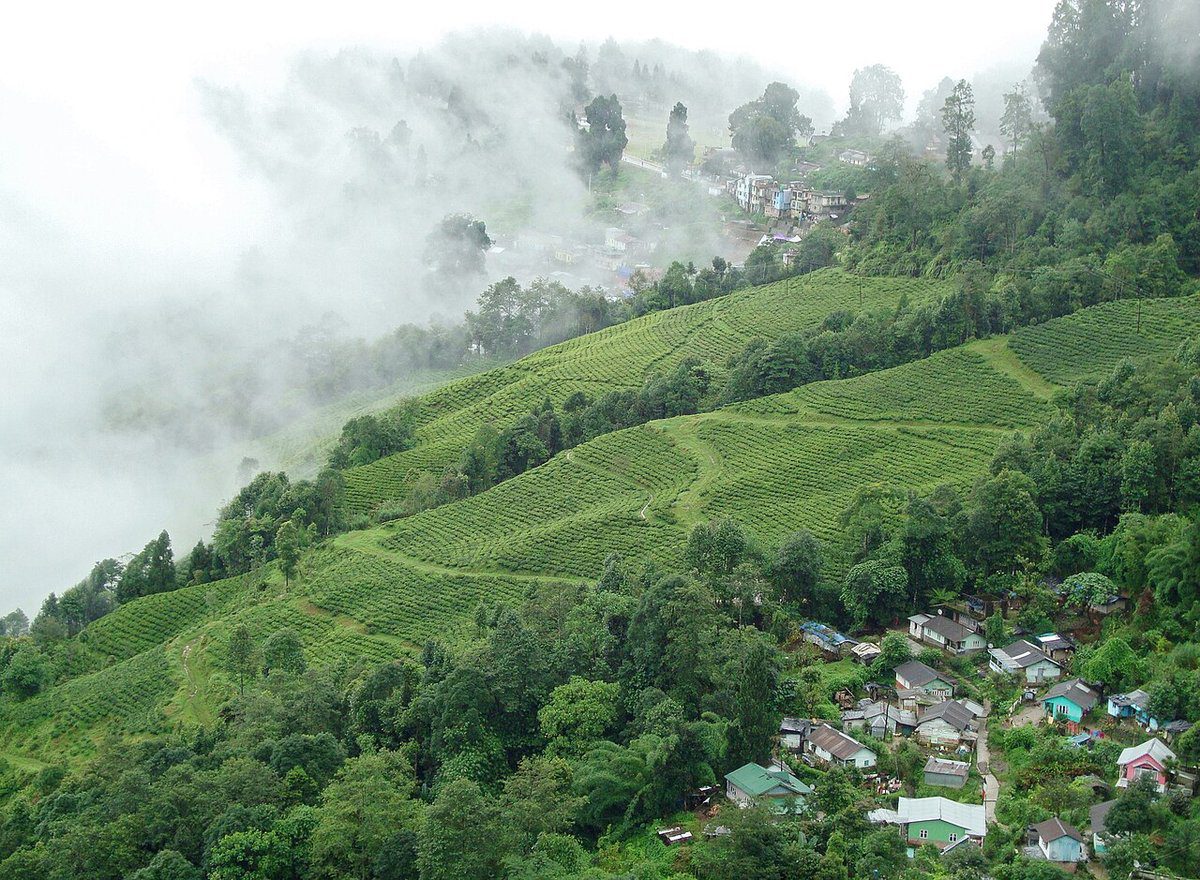
GI tags are a perennial CLAT GK topic appearing both as standalone questions and as Legal Reasoning passages on IPR. The four things CLAT frequently tests are: (1) the governing statute (GI Act, 1999); (2) the distinction between GI and trademark; (3) the TRIPS Articles (22 = general; 23 = enhanced for wines/spirits); and (4) India’s first GI tag (Darjeeling Tea, 2004).
For this year’s crop of GI tags, remember the state-wise grouping: Ladakh (Seabuckthorn, Raktsey Karpo Apricot, Shingskos woodcraft + 3 more); Assam (Karbi Anglong handloom, Bihu Pepa, bamboo crafts, Deori handloom). In Legal Reasoning passages, the classic scenario is: a producer from outside the region imitates a GI-tagged product — is that infringement? Under the 1999 Act: yes, if the imitation misleads consumers as to geographical origin, regardless of any quality comparison. Also note: GI registration does NOT confer exclusive ownership on any single entity — it protects a collective.
India’s first ever GI tag was granted to Darjeeling Tea in 2004, making it a landmark in Indian intellectual property history. Since then, India’s GI registry has grown to over 600 registered GIs, spanning handicrafts (Kancheepuram silk, Pashmina), agricultural products (Alphonso mango, Coorg Arabica coffee), foodstuffs (Tirupati Laddu), and manufactured goods (Kolhapuri chappal). The expansion to Ladakh and Assam products in 2026 adds to this richness. The GI vs Patent/Trademark distinction is also a CLAT favourite: a patent protects a novel invention for 20 years; a trademark identifies commercial origin and is renewable indefinitely; a copyright protects creative expression for the author’s life plus 60 years; and a GI protects geographical origin and is renewable in 10-year cycles with no absolute expiry as long as renewals continue.
| Parameter | Detail |
|---|---|
| Governing Act | Geographical Indications of Goods (Registration & Protection) Act, 1999 |
| Act in Force Since | 15 September 2003 |
| Administering Body | GI Registry, Chennai (under CGPDTM / DPIIT / Ministry of Commerce) |
| Registration Validity | 10 years, renewable indefinitely |
| International Framework | TRIPS Agreement (WTO) — Articles 22 (general) and 23 (enhanced: wines/spirits) |
| India’s First GI Tag | Darjeeling Tea (2004) |
| Ladakh New GI Products (2026) | Ladakh Seabuckthorn, Raktsey Karpo Apricot, Shingskos woodcraft + others (6 total) |
| Assam New GI Products (2026) | Karbi Anglong handloom, Assamese Bihu Pepa, Assam bamboo crafts, Deori handloom |
| GI vs Trademark | GI = collective/geographical; Trademark = individual commercial source |
| India’s Total GI Tags | 600+ registered GIs (as of 2026) |
| Key Beneficiaries | Registered producers and authorised users in the geographical region |
| Patent Duration (for comparison) | 20 years; Copyright = life + 60 years; Trademark = 10 years (renewable) |
It is worth highlighting that GI tags create a nuanced legal regime distinct from other forms of IPR. Under the 1999 Act, once a GI is registered, it is a right in rem — available to all eligible producers in that geographical area, not just the applicant organisation. The applicant (typically a producers’ association or state government body) acts as a custodian of the GI, while individual producers must separately register as “Authorised Users” to use the tag commercially. This dual registration structure is a favourite CLAT legal reasoning point: the right to apply for GI registration is separate from the right to use the registered GI in trade. India has also been active in defending its GIs internationally — the prolonged battle over the term “Basmati” with Pakistan before WTO and trade bodies, and earlier conflicts over turmeric and neem patents filed abroad, shaped India’s aggressive pursuit of GI and traditional knowledge protections under the TRIPS framework.
“GI tag = Geography Is Important” — the tag attaches to a place, not a person.
Remember the four IPR durations with “Patent 20, GI 10, Trademark 10, Copyright Life+60” — or: P20 G10 T10 C(L+60).
For TRIPS Articles: “22 = All; 23 = Wine only (extra)” — Art. 22 covers all goods generally; Art. 23 gives extra protection to wines and spirits specifically.
For Ladakh GI tags, think “Sea + Snow”: Seabuckthorn (berry from harsh high-altitude terrain) + Snow-white Raktsey Karpo Apricot (raktsey karpo means “white apple” in Ladakhi). For Assam, think “Bihu Beats”: Bihu Pepa (horn flute central to Bihu dance), Karbi Anglong (hill district handloom), Bamboo crafts, Deori handloom. India’s first GI = Darjeeling Tea, 2004 — “D for Darjeeling, D for Debut”.
Test Yourself — Quick Quiz
Practice Quiz — 10 CLAT-Style Questions
Click an option to reveal the answer and explanation.