CURRENT AFFAIRS | 30 JUNE 2026
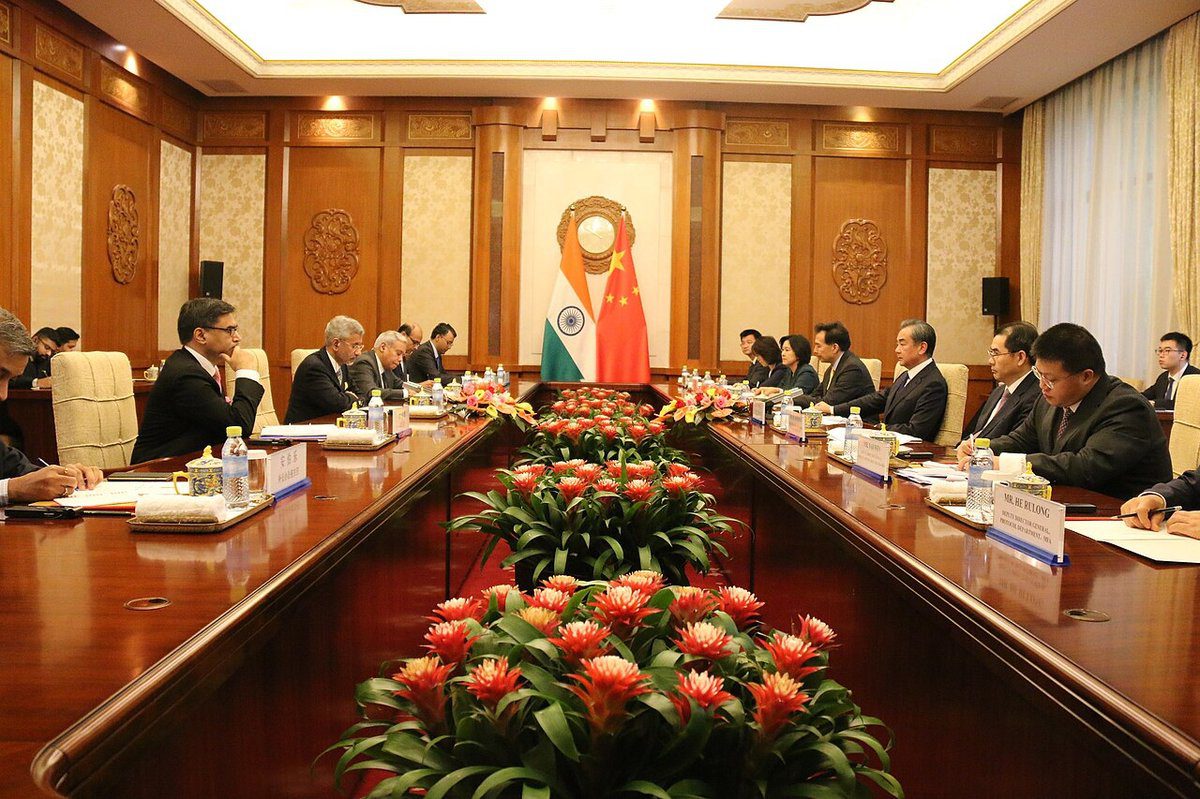
India and China have signalled a renewed push to revive the Strategic Economic Dialogue (SED) — a high-level bilateral mechanism dormant since 2019 — alongside the first-ever formal India-China bilateral consultations on Shanghai Cooperation Organisation (SCO) matters held in 2026. These moves come against the backdrop of hard-won disengagement at Depsang and Demchok in eastern Ladakh in October 2024, yet deep structural distrust continues to shadow every diplomatic overture.
The SED was conceived as a platform for macro-economic cooperation between erstwhile India’s Planning Commission and China’s National Development and Reform Commission (NDRC), established during Chinese Premier Wen Jiabao’s visit to India in December 2010. Six rounds were held between 2011 and 2019 before the deterioration in bilateral ties — culminating in the Galwan Valley clash of June 2020 — effectively suspended it. Reviving the dialogue now reflects a carefully calibrated message: India is willing to engage economically once security-ground realities are addressed, but “normal” relations remain contingent on sustained border management.
Panchsheel (Five Principles of Peaceful Co-existence, 1954): Embedded in the Agreement between the Republic of India and the People’s Republic of China on Trade and Intercourse between Tibet Region of China and India (29 April 1954), the five principles are: (i) mutual respect for territorial integrity and sovereignty; (ii) mutual non-aggression; (iii) mutual non-interference in internal affairs; (iv) equality and mutual benefit; and (v) peaceful co-existence. These are legally foundational to every India-China bilateral document, including the SED framework.
Line of Actual Control (LAC): The LAC is not an internationally demarcated boundary; it is the de facto line separating Indian- and Chinese-controlled territories following the 1962 Sino-Indian War. The 1993 Agreement on Maintenance of Peace and Tranquility and the 1996 Agreement on Confidence-Building Measures are the primary legal instruments governing troop behaviour along the LAC.
Special Representatives Mechanism: The NSA-level Special Representatives (SRs) mechanism, established in 2003 under the Declaration on Principles for Relations and Comprehensive Cooperation, is the apex diplomatic channel for boundary negotiations. As of June 2026, the SRs mechanism has been reactivated as part of the post-disengagement reset.
SCO Charter: The Shanghai Cooperation Organisation was founded in 2001 (Shanghai Convention on Combating Terrorism, Separatism and Extremism). India became a full member in 2017, giving it a permanent seat alongside China — and thus a multilateral arena in which India-China bilateral consultations have formal procedural legitimacy.
The dual-track approach — bilateral SED revival on the economic side, and SCO consultations on the multilateral side — reveals India’s diplomatic calculus precisely. New Delhi is keen to reduce its trade deficit with China (which stood at over $85 billion in 2023-24) and attract Chinese investment in sectors such as electronics and manufacturing. Simultaneously, the SCO provides a venue where India can engage China without conferring the optics of full normalization. Beijing, for its part, is eager to leverage India’s large consumer market and BRICS chairmanship before the 2026 BRICS Summit in India.
CLAT GK heavily tests international relations, treaty law, and India’s foreign policy doctrine. This topic offers multiple question-worthy angles:
- Panchsheel authorship: Jawaharlal Nehru and Zhou Enlai signed the 1954 Tibet trade agreement embedding Panchsheel; Hindi-Chini Bhai-Bhai was its popular expression.
- SED institutional history: Set up in 2010; six rounds completed (2011–2019); suspended after Galwan; revival is the seventh engagement.
- SCO membership: India joined SCO in 2017 at the Astana Summit (along with Pakistan). The current SCO Secretary General is Nurlan Yermekbaev (Kazakhstan), who assumed office in January 2025.
- LAC vs LoC: The LAC (with China) is different from the Line of Control (LoC) with Pakistan — a recurring factual distinction tested in CLAT GK.
- BRICS nexus: India hosts the BRICS Summit in 2026 — China is a founding BRIC member (South Africa joined 2010). BRICS and SCO are the two major multilateral platforms on which India-China dialogue runs parallel tracks.
- Legal reasoning link: Sovereignty, non-interference, and treaty interpretation principles from Panchsheel map directly onto RC passages in CLAT about international law and peaceful dispute resolution.
The debate within Indian strategic circles remains sharp: one school argues that border-resolution must precede deeper economic integration (“boundary is the bedrock of trust”), while another contends that economic interdependence itself generates incentives for peaceful resolution. Prime Minister Modi’s meeting with President Xi on the sidelines of the BRICS 2025 preparatory track and the SCO Summit in Tianjin underlined that India prefers structured, agenda-based engagements over open-ended normalization.
| Item | Detail |
|---|---|
| Panchsheel signed | 29 April 1954 (Nehru–Zhou Enlai) |
| SED established | December 2010 (Wen Jiabao visit) |
| SED rounds completed | 6 rounds (2011–2019) |
| India joins SCO | 2017, Astana Summit (with Pakistan) |
| SCO founded | 2001 (Shanghai; successor to Shanghai Five, 1996) |
| Galwan clash | June 2020 (Galwan Valley, Ladakh) |
| Depsang/Demchok disengagement | October 2024 |
| India-China trade deficit | ~$85 billion (FY 2023-24, India in deficit) |
| SCO Sec. Gen. (current) | Nurlan Yermekbaev (Kazakhstan, since Jan 2025) |
| Special Representatives mech. | Established 2003 (NSA-level boundary talks) |
For CLAT aspirants, the India-China relationship sits at the intersection of constitutional sovereignty, treaty obligations, international organisation law, and geopolitical strategy — all fertile territory for Reading Comprehension passages and GK questions alike. Understanding Panchsheel not as an abstract Cold War relic, but as a living framework invoked in every bilateral communiqué, is the key insight. Similarly, the SED’s revival illustrates how track-II economic diplomacy can co-exist with unresolved territorial disputes — a theme that mirrors India’s broader foreign policy doctrine of “issue linkage”: engaging on common ground while keeping disputes in a separate lane.
For Panchsheel’s 5 Principles — “MMIE-P”:
Mutual respect for territorial integrity & sovereignty
Mutual non-aggression
Internal affairs — mutual non-interference
Equality & mutual benefit
Peaceful co-existence
Sentence: “Many Monks In Eastern Pagodas” — captures the Tibet connection where Panchsheel was first articulated.
For India-China timeline: 2010 SED born → 2017 SCO joined → 2020 Galwan → 2024 Depsang disengagement → 2026 SED revival. Think of it as a 14-year arc: born, grown, broken, healed, reborn.
SCO members mnemonic (founding + India/Pakistan): “RUCK-TIP” — Russia, Uzbekistan, China, Kazakhstan, Tajikistan, Kyrgyzstan; India & Pakistan joined 2017.
Test Yourself — Quick Quiz
Practice Quiz — 10 CLAT-Style Questions
Click an option to reveal the answer and explanation.