
CURRENT AFFAIRS | 25 JUNE 2026
What Happened
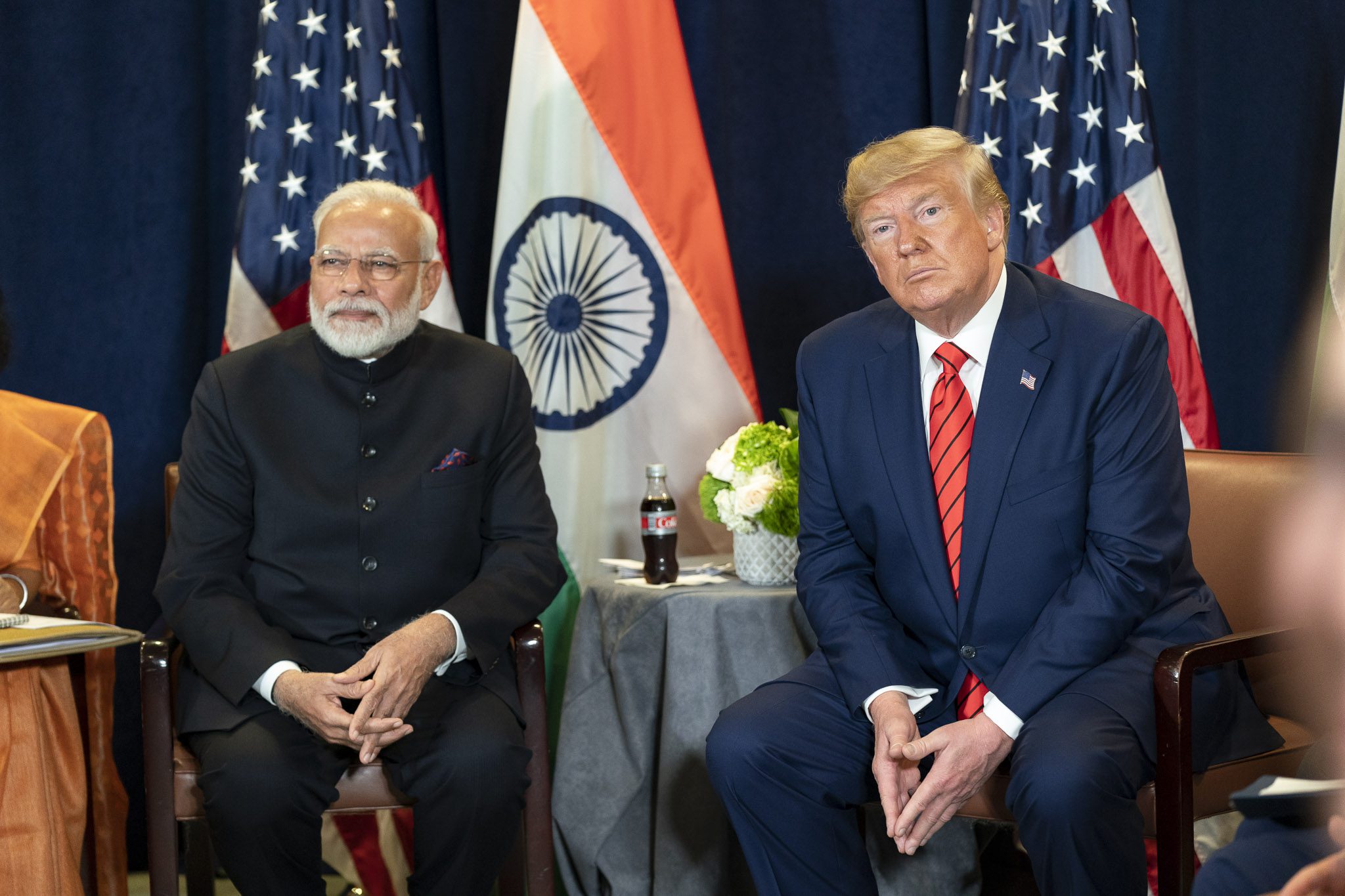
On 24 June 2026, India and the United States wrapped up two days of negotiations in New Delhi and announced a “comprehensive review” of the core elements of a Bilateral Trade Agreement (BTA) — covering enhanced market access, digital trade, supply-chain resilience and the reduction of non-tariff barriers. US Trade Representative Jamieson Greer led the American side and met Finance Minister Nirmala Sitharaman and Commerce Minister Piyush Goyal. Crucially, the US is preparing a new tariff architecture under Section 301 of the US Trade Act, 1974 to replace the “reciprocal tariffs” that the US Supreme Court deemed illegal in February 2026. Both sides are racing to finalise a working deal before next month’s US tariff deadline.
Background: What Is Section 301?
Section 301 of the US Trade Act of 1974 is a unilateral trade-retaliation tool that empowers the US Trade Representative to investigate and act against foreign trade practices deemed “unjustifiable” or “unreasonable.” Because the earlier “reciprocal tariffs” were struck down domestically, Washington is pivoting to Section 301 as a more legally durable basis for tariffs. This matters because such unilateral measures sit uneasily with core World Trade Organization (WTO) principles — the Most-Favoured-Nation (MFN) rule and National Treatment — which discourage discriminatory, country-specific tariff action outside the multilateral dispute framework.
Why It Matters
The negotiation distinguishes a BTA from a full Free Trade Agreement (FTA): a BTA can be narrower and faster, targeting specific sectors, market access and non-tariff barriers (NTBs) rather than near-total tariff elimination. The talks unfold within the broader India–US Comprehensive Global Strategic Partnership, where trade, technology and supply-chain “de-risking” are increasingly intertwined. For India, the strategic prize is locking in predictable market access for its exporters while resisting tariff coercion; for the US, it is reshaping supply chains away from competitors. The legality of unilateral Section 301 tariffs under WTO rules remains the central tension.
Constitutional / Legal Framework
Section 301, US Trade Act 1974 — a unilateral trade-retaliation mechanism, now being used to replace reciprocal tariffs struck down by the US Supreme Court (Feb 2026). WTO principles — Most-Favoured-Nation (no discrimination between trading partners) and National Treatment (no discrimination between imports and like domestic goods) constrain such unilateral action. A Bilateral Trade Agreement (BTA) is narrower than a full FTA; both must contend with non-tariff barriers (NTBs). The talks advance the India–US Comprehensive Global Strategic Partnership.
CLAT Angle
This is a clean international-trade-law and IR question set: the difference between a BTA and an FTA, the WTO’s MFN and National Treatment pillars, and the legality of unilateral tariffs under Section 301. CLAT Legal Reasoning passages often test whether a country-specific tariff violates MFN — a perfect application of this news. Note the names: USTR Jamieson Greer, Sitharaman, Goyal.
Key Facts
| Date of talks | 23–24 June 2026, New Delhi |
| US negotiator | USTR Jamieson Greer |
| Indian ministers | Nirmala Sitharaman, Piyush Goyal |
| Tariff tool | Section 301, US Trade Act 1974 |
| WTO pillars | MFN, National Treatment |
Mnemonic / Memory Hook
“301 = unilateral retaliation” (US’s own weapon), while “WTO = MFN + National Treatment” (no discrimination). And remember: BTA is the fast lane, FTA is the highway.
Practice Quiz — 10 CLAT-Style Questions
Click an option to reveal the answer and explanation.