CURRENT AFFAIRS | 18 JUNE 2026
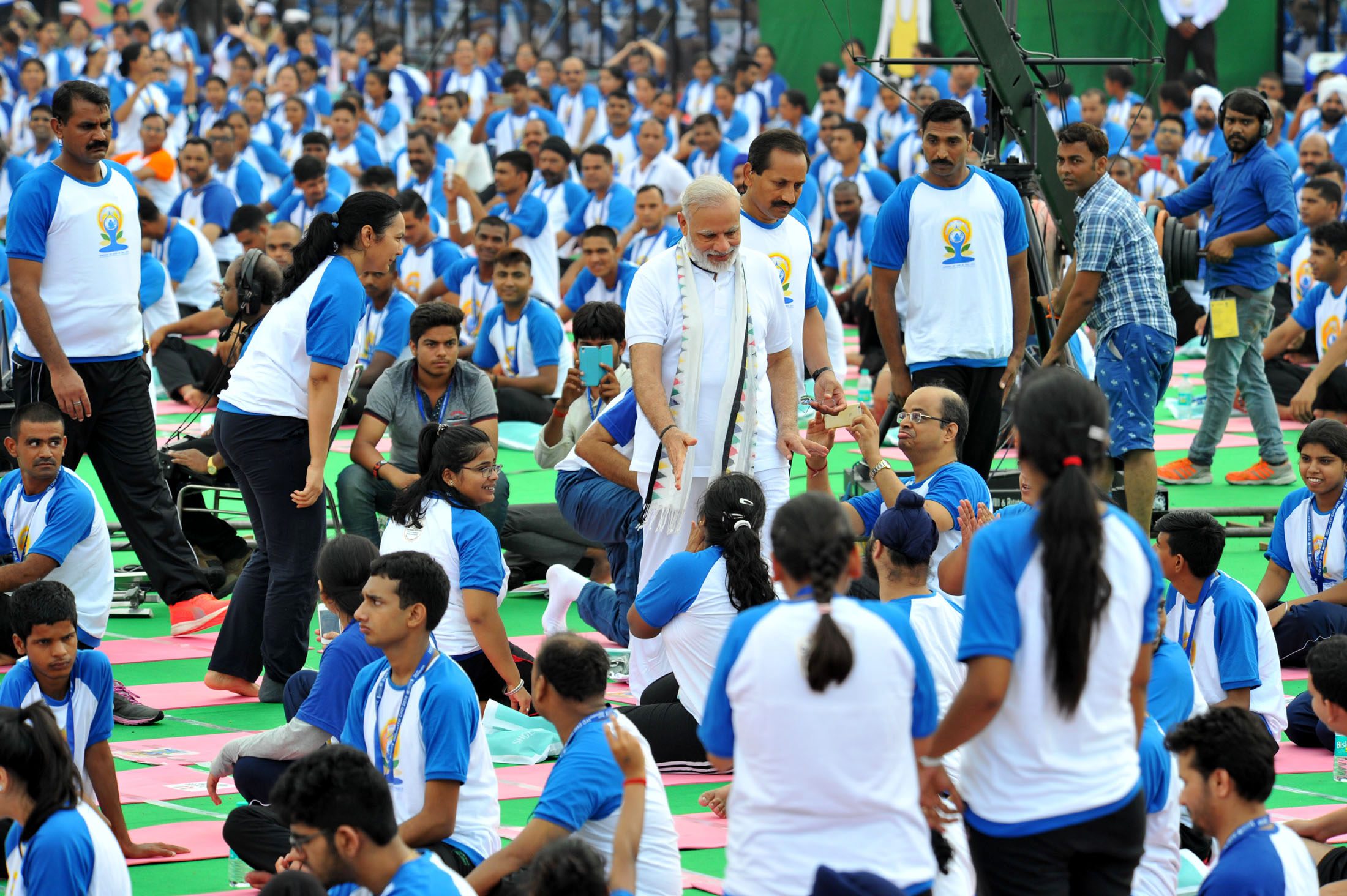
The International Day of Yoga falls on June 21, now just days away, and an Indian Express editorial — “In yoga’s stress on discipline, a health roadmap for young” — frames yoga as a discipline-led health practice for a generation contending with screen addiction, sedentary lifestyles and metabolic disorders. Beyond the wellness message, the Day is a cornerstone of India’s cultural diplomacy and a frequently tested General Knowledge anchor, making it essential reading for any CLAT aspirant in the run-up to the examination season.
The institutional history is precise and worth committing to memory. The International Day of Yoga was proclaimed by the United Nations General Assembly (UNGA) in December 2014 through Resolution 69/131, following a proposal Prime Minister Narendra Modi made in his maiden address to the UNGA in September 2014. The resolution was co-sponsored by a record 177 countries — the highest number of co-sponsors for any UNGA resolution of its kind — and the first observance was held on June 21, 2015. The choice of June 21 is deliberate: it is the summer solstice in the Northern Hemisphere, the longest day of the year, and carries symbolic weight in yogic tradition as the day from which the Sun begins its southward journey, or dakshinayana.
Yoga itself is rooted in classical Indian philosophy. Its systematic foundation is traditionally attributed to the sage Patanjali, whose Yoga Sutras codify the eight limbs, or ashtanga — yama, niyama, asana, pranayama, pratyahara, dharana, dhyana and samadhi — a progression from ethical restraint to deep meditative absorption. At the level of governance, the Ministry of AYUSH (an acronym for Ayurveda, Yoga and Naturopathy, Unani, Siddha and Homeopathy), which was carved out as a full-fledged ministry in 2014, serves as the nodal coordinator for the national observance and for promoting traditional systems of medicine and wellness. Yoga thus sits at the intersection of heritage, public health and statecraft.
For the CLAT aspirant, the value of the Yoga Day lies in its dense cluster of pairable static-GK facts: a UNGA resolution and its number, a record number of co-sponsors, a symbolic astronomical date, a classical philosophical lineage, and a nodal ministry. The strongest two-fact combination links the 2014 UNGA proclamation with the 2016 UNESCO decision to inscribe Yoga on the Representative List of the Intangible Cultural Heritage of Humanity — a pairing examiners reach for repeatedly. Read in this way, what looks like a soft “days and themes” item becomes a reliable source of marks and a neat illustration of how India projects soft power through cultural assets.
The International Day of Yoga rests on UNGA Resolution 69/131 (December 2014), a non-binding resolution adopted under the UN General Assembly’s deliberative competence. Such resolutions are recommendatory rather than legally binding (unlike binding UN Security Council decisions under Article 25 of the UN Charter). The Ministry of AYUSH, established as a full ministry in 2014, is the nodal coordinator. In 2016, UNESCO inscribed Yoga on the Representative List of the Intangible Cultural Heritage of Humanity under the 2003 Convention for the Safeguarding of Intangible Cultural Heritage.
Static GK and India’s soft-power diplomacy regularly surface in CLAT Current Affairs. Expect MCQs on the UNGA resolution number (69/131), the year of proclamation (2014) versus first observance (2015), the number of co-sponsoring countries (177), the significance of June 21 (summer solstice), and the 2016 UNESCO inscription. A common pairing tests the 2014 UNGA and 2016 UNESCO facts together.
| Day | International Day of Yoga — June 21 |
| Proclaimed by | UNGA Resolution 69/131, December 2014 |
| Proposed by | PM Narendra Modi at UNGA, September 2014 |
| Co-sponsors | Record 177 countries |
| First observed | June 21, 2015 (summer solstice) |
| Nodal ministry / UNESCO | Ministry of AYUSH; UNESCO Intangible Heritage list (2016) |
“2014 proposed, 177 co-sponsors, 2015 first observed, June 21 solstice.” The number string locks the timeline: proposed and proclaimed in 2014, backed by 177 co-sponsors, first celebrated in 2015, on the June 21 summer solstice — and pair it with UNESCO 2016.
Why This Matters for CLAT: The Yoga Day packs a high density of pairable static-GK facts — a resolution number, a co-sponsor record, a symbolic date, a classical lineage and a UNESCO inscription — into one easily revised story. Mastering this cluster trains the exam discipline CLAT 2027 rewards: bundling related facts (2014 UNGA + 2016 UNESCO) so a single current-affairs item yields several quick, certain marks.
Practice Quiz — 10 CLAT-Style Questions
Click an option to reveal the answer and explanation.